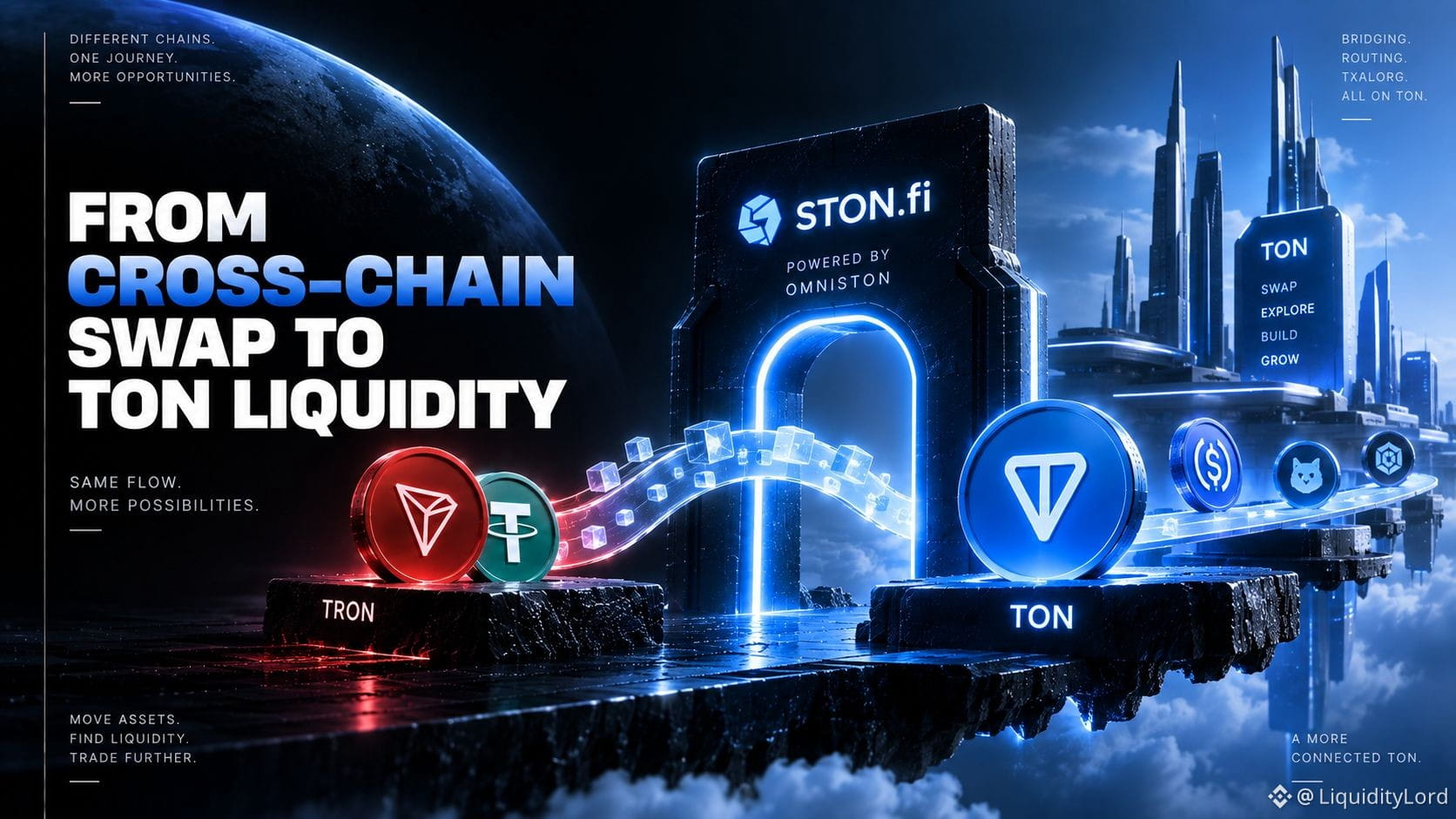
🌉 FROM CROSS-CHAIN SWAP TO TON LIQUIDITY
Moving assets to TON and finding a good route after arrival are usually separate jobs. STONfi connects them into one sequence, using Omniston for two stages.
🔄 FIRST, GET ONTO TON
Imagine holding USDT on TRON and wanting a specific TON jetton. The first step is a cross-chain swap from TRON/USDT into TON/USDT. Omniston coordinates settlement across both networks, while STONfi presents the process through one quote and confirmation.
Once that leg completes, you hold TON-native USDT. The network problem is solved. The next question is where the TON-side trade should execute.
🧭 THEN, FIND THE TON-SIDE ROUTE
This is where Omniston changes jobs. After USDT arrives on TON, it can aggregate liquidity across connected TON sources, including STONfi pools and other available liquidity. The user can request the next swap through STONfi and receive a route based on current conditions.
These are different technical problems, but STONfi keeps both stages inside one session.
🧩 TWO SWAPS, TWO DECISIONS
Convenience should not mean skipping the checks. Review the first quote for fees, destination wallet and output. After the asset arrives on TON, review the second quote independently, including output and price impact.
A good cross-chain rate does not guarantee the best TON-side route. Each leg has its own liquidity conditions.
🔐 ONE FLOW, STILL SELF-CUSTODIAL
The convenience comes from continuity, not custody. STONfi does not take control of the funds between these steps. The cross-chain action and the following TON-side swap remain separate wallet-signed actions.
The result is a simpler journey: move value to TON, then search TON liquidity without another application.
STONfi does not make two different trading problems identical. It makes the transition between them less fragmented.
Not financial advice. DYOR.
$GRAM
Moving assets to TON and finding a good route after arrival are usually separate jobs. STONfi connects them into one sequence, using Omniston for two stages.
🔄 FIRST, GET ONTO TON
Imagine holding USDT on TRON and wanting a specific TON jetton. The first step is a cross-chain swap from TRON/USDT into TON/USDT. Omniston coordinates settlement across both networks, while STONfi presents the process through one quote and confirmation.
Once that leg completes, you hold TON-native USDT. The network problem is solved. The next question is where the TON-side trade should execute.
🧭 THEN, FIND THE TON-SIDE ROUTE
This is where Omniston changes jobs. After USDT arrives on TON, it can aggregate liquidity across connected TON sources, including STONfi pools and other available liquidity. The user can request the next swap through STONfi and receive a route based on current conditions.
These are different technical problems, but STONfi keeps both stages inside one session.
🧩 TWO SWAPS, TWO DECISIONS
Convenience should not mean skipping the checks. Review the first quote for fees, destination wallet and output. After the asset arrives on TON, review the second quote independently, including output and price impact.
A good cross-chain rate does not guarantee the best TON-side route. Each leg has its own liquidity conditions.
🔐 ONE FLOW, STILL SELF-CUSTODIAL
The convenience comes from continuity, not custody. STONfi does not take control of the funds between these steps. The cross-chain action and the following TON-side swap remain separate wallet-signed actions.
The result is a simpler journey: move value to TON, then search TON liquidity without another application.
STONfi does not make two different trading problems identical. It makes the transition between them less fragmented.
Not financial advice. DYOR.
$GRAM