
ZIA BARKI
35 投稿

ZIA BARKI
報告
ユーザーをブロック
18 フォロー
1 フォロワー
0 いいね
投稿
·
--
翻訳参照
WHAT IS MARSCOINKuCoin
Knowledge Base
Concepts
What is Marscoin (MARS) in crypto?
What is Marscoin (MARS) in crypto?
Last Updated September 10, 2026
marscoin-in-crypto
As humanity advances toward becoming a multi-planetary species, visionary technologists have explored how independent financial systems might operate beyond Earth. Marscoin (MARS) is a pioneering, open-source cryptocurrency established in 2014 to serve as the native decentralized currency and economic ledger for future settlements on Mars. Derived as a fork of Litecoin, Marscoin operates its own independent Proof-of-Work (PoW) blockchain. It is designed to tackle the physical communication delays of interplanetary financial settlement, while simultaneously funding space colonization research and grassroots non-profit space advocacy initiatives on Earth.
Key Takeaways
Pioneering 2014 Heritage: Launched on January 1, 2014, Marscoin is among the earliest cryptocurrencies dedicated specifically to space exploration and Mars settlement.
Independent Proof-of-Work: Deriving from Litecoin, Marscoin uses the Scrypt consensus algorithm with fast 2-minute block target times.
Interplanetary Purpose: Designed to operate autonomously without Earth-based financial rails to overcome the 4-to-24 minute space telecommunications latency.
The Martian Republic: Integrates on-chain governance frameworks designed for direct democratic voting and peer-attested digital citizenship.
Elevated Market Risk: Marscoin maintains micro-cap liquidity and is frequently conflated with lookalike meme tokens across other blockchains.
The Origin and Philosophy of Marscoin (MARS)
Solving Interplanetary Commerce and Latency
The conceptual foundation of Marscoin addresses a fundamental limitation in astrophysics: the speed of light. Real-time telecommunication between Earth and Mars experiences an unavoidable propagation delay ranging from 4 to 24 minutes each way depending on orbital alignments. Consequently, traditional Earth-based payment rails, centralized banking portals, and high-frequency settlement channels cannot function smoothly on Mars.
Marscoin was engineered to function as a self-sovereign economic ledger that colonists could operate natively on the red planet, completely detached from Earth's terrestrial banking infrastructure.
The Mars Society Alignment and Founding
Marscoin was launched in early 2014 by developers including Lennart Lopin and James Burk. During its genesis, a substantial allocation of initial tokens was donated directly to The Mars Society—one of the world's most prominent space exploration advocacy organizations. The overarching premise was collaborative: as early adopters mine and hold MARS on Earth, the value appreciation helps fund space science research, analog Mars habitats, and educational programs, laying the operational groundwork for humanity's multi-planetary transition.
Technical Infrastructure and Consensus Architecture
Marscoin relies on a battle-tested Proof-of-Work consensus mechanism optimized for decentralization and accessibility.
Scrypt Consensus and AuxPoW Merged Mining
Rather than relying on SHA-256 (like Bitcoin), Marscoin adopted the Scrypt cryptographic hashing algorithm. This design allows block validation to remain energy-efficient while maintaining network integrity. To further safeguard the blockchain against 51% attacks, the network introduced Auxiliary Proof-of-Work (AuxPoW) merged mining. This protocol feature allows miners to simultaneously validate Marscoin blocks alongside Litecoin and Dogecoin hash pools without expending additional electrical power.
The Martian Republic On-Chain Governance
Beyond simple transactional utility, the Marscoin blockchain supports the "Martian Republic" architecture. This system implements decentralized tools to model democratic self-governance for an off-world civilization, including:
Cryptographic Citizen Registration: Verified identity attestations recorded directly on-chain without centralized identity brokers.
Private Mathematical Voting: Utilizing CoinShuffle-based anonymous ballots to conduct tamper-resistant elections and policy referendums.
Transparent Proposal Archives: Direct integration with decentralized data storage networks like IPFS to archive civil records, patents, and colony public works funding transparently.
Tokenomics and Blockchain Specifications
Marscoin enforces fixed supply parameters to mirror the digital scarcity pioneered by Bitcoin while accommodating smaller transactional values with higher supply limits.
Specification Metric Parameter Details
Token Ticker Symbol MARS (Native Coin)
Blockchain Network Platform Marscoin Native Blockchain (Litecoin Fork)
Consensus Algorithm Scrypt Proof-of-Work (AuxPoW Supported)
Target Block Generation Time 2.0 Minutes
Maximum Programmatic Supply ~39.57 Million to 42 Million MARS
Difficulty Retargeting ASERT (Absolutely Scheduled Exponential Retarget)
Distinguishing Marscoin from Lookalike Tokens
A persistent challenge for market participants is differentiating between the authentic 2014 Marscoin blockchain and independent tokens using similar space-themed branding.
Marscoin (MARS): The original 2014 sovereign Layer-1 Scrypt blockchain.
MARSCOIN (BNB Chain Token): A separate micro-cap meme token deployed on BNB Chain that experienced viral trading surges.
MARS4 (MARS4): A virtual metaverse and gaming project operating as an ERC-20 token.
Traders navigating the space must review project documentation and network explorers to confirm whether an asset is an independent Layer-1 coin or an EVM/Solana smart contract token.
Conclusion
Marscoin (MARS) stands out as an imaginative economic and technological experiment in the cryptocurrency ecosystem. Conceived long before the modern explosion of space tourism and commercial aerospace ventures, it combines an independent Scrypt blockchain with forward-looking planetary governance mechanisms. Nevertheless, due to its specialized purpose, micro-cap liquidity profile, and the ongoing confusion surrounding lookalike tokens, prospective participants must exercise thorough due diligence and prioritize asset verification before committing capital.
FAQs
Is Marscoin (MARS) an ERC-20 token or an independent blockchain?
Marscoin operates its own independent Layer-1 Proof-of-Work blockchain derived from a Litecoin fork, rather than functioning as a smart contract token on Ethereum or Solana.
How does Marscoin solve communication delays between Earth and Mars?
Because radio signals take 4 to 24 minutes to travel between planets, Marscoin operates autonomously, allowing local Martian colonists to validate peer-to-peer transactions without Earth-based connectivity.
How can I mine Marscoin?
Marscoin uses the Scrypt hashing algorithm and supports AuxPoW merged mining, enabling miners to simultaneously mine MARS alongside Litecoin and Dogecoin without additional electricity consumption.
How do I avoid buying fake or lookalike Mars tokens?
Verify that you are interacting with the authentic 2014 Marscoin blockchain explorer rather than unverified smart contract meme tokens sharing the "MARS" ticker on BNB Chain or Solana.
Further Reading:
What is Non-Playable (NPC) in Crypto? - KuCoin Knowledge Base
What is Goatseus Maximus (GOAT) in Crypto? - KuCoin Knowledge Base
What is Sushi (SUSHI) in crypto? - KuCoin Knowledge Base
GemSlot
Complete Tasks to Earn Free Tokens Every Day
Go to GemSlot
GemSlot
Limited-time rewards for new users!
Up to
$10650
Already have an account?
Log In
Most Searched
Cryptocurrencies trending right now
BTC
$77,333.79
BTC
+0.30%
ETH
$2,534.24
ETH
+3.03%
XRP
$1.37
XRP
+2.97%
Top Gainers
Top gainers in the last 24 hours
LONGXIA
$0.1371
龙虾
+249.33%
POP
$0.001337
POP
+104.90%
LSK
$0.217
LSK
+67.64%
New Listings
Explore newly listed cryptos
MCAT
$0.5099
MCAT
-5.39%
LAPTOP
$0.3544
LAPTOP
-10.09%
4STOCK
$0.0299
4STOCK
+5.20%
Disclaimer: The information on this page may have been obtained from third parties and does not necessarily reflect the views or opinions of KuCoin. This content is provided for general informational purposes only, without any representation or warranty of any kind, nor shall it be construed as financial or investment advice. KuCoin shall not be liable for any errors or omissions, or for any outcomes resulting from the use of this information. Investments in digital assets can be risky. Please carefully evaluate the risks of a product and your risk tolerance based on your own financial circumstances. For more information, please refer to our Terms of Use and Risk Disclosure.
Share
KuCoin App
Trade safer and faster on the app
KuCoin
Corporate
Products
Service
Business
Crypto Prices
Learn
Developer
App Download
Community
X(Twitter)
Telegram
youtube
discord
Reddit
l
inkin
Instagram
coinmark
coin
Copyright © 2017 - 2026 KuCoin.com. All Rights Reserved.
Cookie Preferences
2026-09-12 20:03:56 (UTC+8)
24h Volume3,040,547,281USDT
WHAT IS MARSCOIN
KuCoin
Knowledge Base
Concepts
What is Marscoin (MARS) in crypto?
What is Marscoin (MARS) in crypto?
Last Updated September 10, 2026
marscoin-in-crypto
As humanity advances toward becoming a multi-planetary species, visionary technologists have explored how independent financial systems might operate beyond Earth. Marscoin (MARS) is a pioneering, open-source cryptocurrency established in 2014 to serve as the native decentralized currency and economic ledger for future settlements on Mars. Derived as a fork of Litecoin, Marscoin operates its own independent Proof-of-Work (PoW) blockchain. It is designed to tackle the physical communication delays of interplanetary financial settlement, while simultaneously funding space colonization research and grassroots non-profit space advocacy initiatives on Earth.
Key Takeaways
Pioneering 2014 Heritage: Launched on January 1, 2014, Marscoin is among the earliest cryptocurrencies dedicated specifically to space exploration and Mars settlement.
Independent Proof-of-Work: Deriving from Litecoin, Marscoin uses the Scrypt consensus algorithm with fast 2-minute block target times.
Interplanetary Purpose: Designed to operate autonomously without Earth-based financial rails to overcome the 4-to-24 minute space telecommunications latency.
The Martian Republic: Integrates on-chain governance frameworks designed for direct democratic voting and peer-attested digital citizenship.
Elevated Market Risk: Marscoin maintains micro-cap liquidity and is frequently conflated with lookalike meme tokens across other blockchains.
The Origin and Philosophy of Marscoin (MARS)
Solving Interplanetary Commerce and Latency
The conceptual foundation of Marscoin addresses a fundamental limitation in astrophysics: the speed of light. Real-time telecommunication between Earth and Mars experiences an unavoidable propagation delay ranging from 4 to 24 minutes each way depending on orbital alignments. Consequently, traditional Earth-based payment rails, centralized banking portals, and high-frequency settlement channels cannot function smoothly on Mars.
Marscoin was engineered to function as a self-sovereign economic ledger that colonists could operate natively on the red planet, completely detached from Earth's terrestrial banking infrastructure.
The Mars Society Alignment and Founding
Marscoin was launched in early 2014 by developers including Lennart Lopin and James Burk. During its genesis, a substantial allocation of initial tokens was donated directly to The Mars Society—one of the world's most prominent space exploration advocacy organizations. The overarching premise was collaborative: as early adopters mine and hold MARS on Earth, the value appreciation helps fund space science research, analog Mars habitats, and educational programs, laying the operational groundwork for humanity's multi-planetary transition.
Technical Infrastructure and Consensus Architecture
Marscoin relies on a battle-tested Proof-of-Work consensus mechanism optimized for decentralization and accessibility.
Scrypt Consensus and AuxPoW Merged Mining
Rather than relying on SHA-256 (like Bitcoin), Marscoin adopted the Scrypt cryptographic hashing algorithm. This design allows block validation to remain energy-efficient while maintaining network integrity. To further safeguard the blockchain against 51% attacks, the network introduced Auxiliary Proof-of-Work (AuxPoW) merged mining. This protocol feature allows miners to simultaneously validate Marscoin blocks alongside Litecoin and Dogecoin hash pools without expending additional electrical power.
The Martian Republic On-Chain Governance
Beyond simple transactional utility, the Marscoin blockchain supports the "Martian Republic" architecture. This system implements decentralized tools to model democratic self-governance for an off-world civilization, including:
Cryptographic Citizen Registration: Verified identity attestations recorded directly on-chain without centralized identity brokers.
Private Mathematical Voting: Utilizing CoinShuffle-based anonymous ballots to conduct tamper-resistant elections and policy referendums.
Transparent Proposal Archives: Direct integration with decentralized data storage networks like IPFS to archive civil records, patents, and colony public works funding transparently.
Tokenomics and Blockchain Specifications
Marscoin enforces fixed supply parameters to mirror the digital scarcity pioneered by Bitcoin while accommodating smaller transactional values with higher supply limits.
Specification Metric Parameter Details
Token Ticker Symbol MARS (Native Coin)
Blockchain Network Platform Marscoin Native Blockchain (Litecoin Fork)
Consensus Algorithm Scrypt Proof-of-Work (AuxPoW Supported)
Target Block Generation Time 2.0 Minutes
Maximum Programmatic Supply ~39.57 Million to 42 Million MARS
Difficulty Retargeting ASERT (Absolutely Scheduled Exponential Retarget)
Distinguishing Marscoin from Lookalike Tokens
A persistent challenge for market participants is differentiating between the authentic 2014 Marscoin blockchain and independent tokens using similar space-themed branding.
Marscoin (MARS): The original 2014 sovereign Layer-1 Scrypt blockchain.
MARSCOIN (BNB Chain Token): A separate micro-cap meme token deployed on BNB Chain that experienced viral trading surges.
MARS4 (MARS4): A virtual metaverse and gaming project operating as an ERC-20 token.
Traders navigating the space must review project documentation and network explorers to confirm whether an asset is an independent Layer-1 coin or an EVM/Solana smart contract token.
Conclusion
Marscoin (MARS) stands out as an imaginative economic and technological experiment in the cryptocurrency ecosystem. Conceived long before the modern explosion of space tourism and commercial aerospace ventures, it combines an independent Scrypt blockchain with forward-looking planetary governance mechanisms. Nevertheless, due to its specialized purpose, micro-cap liquidity profile, and the ongoing confusion surrounding lookalike tokens, prospective participants must exercise thorough due diligence and prioritize asset verification before committing capital.
FAQs
Is Marscoin (MARS) an ERC-20 token or an independent blockchain?
Marscoin operates its own independent Layer-1 Proof-of-Work blockchain derived from a Litecoin fork, rather than functioning as a smart contract token on Ethereum or Solana.
How does Marscoin solve communication delays between Earth and Mars?
Because radio signals take 4 to 24 minutes to travel between planets, Marscoin operates autonomously, allowing local Martian colonists to validate peer-to-peer transactions without Earth-based connectivity.
How can I mine Marscoin?
Marscoin uses the Scrypt hashing algorithm and supports AuxPoW merged mining, enabling miners to simultaneously mine MARS alongside Litecoin and Dogecoin without additional electricity consumption.
How do I avoid buying fake or lookalike Mars tokens?
Verify that you are interacting with the authentic 2014 Marscoin blockchain explorer rather than unverified smart contract meme tokens sharing the "MARS" ticker on BNB Chain or Solana.
Further Reading:
What is Non-Playable (NPC) in Crypto? - KuCoin Knowledge Base
What is Goatseus Maximus (GOAT) in Crypto? - KuCoin Knowledge Base
What is Sushi (SUSHI) in crypto? - KuCoin Knowledge Base
GemSlot
Complete Tasks to Earn Free Tokens Every Day
Go to GemSlot
GemSlot
Limited-time rewards for new users!
Up to
$10650
Already have an account?
Log In
Most Searched
Cryptocurrencies trending right now
BTC
$77,333.79
BTC
+0.30%
ETH
$2,534.24
ETH
+3.03%
XRP
$1.37
XRP
+2.97%
Top Gainers
Top gainers in the last 24 hours
LONGXIA
$0.1371
龙虾
+249.33%
POP
$0.001337
POP
+104.90%
LSK
$0.217
LSK
+67.64%
New Listings
Explore newly listed cryptos
MCAT
$0.5099
MCAT
-5.39%
LAPTOP
$0.3544
LAPTOP
-10.09%
4STOCK
$0.0299
4STOCK
+5.20%
Disclaimer: The information on this page may have been obtained from third parties and does not necessarily reflect the views or opinions of KuCoin. This content is provided for general informational purposes only, without any representation or warranty of any kind, nor shall it be construed as financial or investment advice. KuCoin shall not be liable for any errors or omissions, or for any outcomes resulting from the use of this information. Investments in digital assets can be risky. Please carefully evaluate the risks of a product and your risk tolerance based on your own financial circumstances. For more information, please refer to our Terms of Use and Risk Disclosure.
Share
KuCoin App
Trade safer and faster on the app
KuCoin
Corporate
Products
Service
Business
Crypto Prices
Learn
Developer
App Download
Community
X(Twitter)
Telegram
youtube
discord
Reddit
l
inkin
Instagram
coinmark
coin
Copyright © 2017 - 2026 KuCoin.com. All Rights Reserved.
Cookie Preferences
2026-09-12 20:03:56 (UTC+8)
24h Volume3,040,547,281USDT
Knowledge Base
Concepts
What is Marscoin (MARS) in crypto?
What is Marscoin (MARS) in crypto?
Last Updated September 10, 2026
marscoin-in-crypto
As humanity advances toward becoming a multi-planetary species, visionary technologists have explored how independent financial systems might operate beyond Earth. Marscoin (MARS) is a pioneering, open-source cryptocurrency established in 2014 to serve as the native decentralized currency and economic ledger for future settlements on Mars. Derived as a fork of Litecoin, Marscoin operates its own independent Proof-of-Work (PoW) blockchain. It is designed to tackle the physical communication delays of interplanetary financial settlement, while simultaneously funding space colonization research and grassroots non-profit space advocacy initiatives on Earth.
Key Takeaways
Pioneering 2014 Heritage: Launched on January 1, 2014, Marscoin is among the earliest cryptocurrencies dedicated specifically to space exploration and Mars settlement.
Independent Proof-of-Work: Deriving from Litecoin, Marscoin uses the Scrypt consensus algorithm with fast 2-minute block target times.
Interplanetary Purpose: Designed to operate autonomously without Earth-based financial rails to overcome the 4-to-24 minute space telecommunications latency.
The Martian Republic: Integrates on-chain governance frameworks designed for direct democratic voting and peer-attested digital citizenship.
Elevated Market Risk: Marscoin maintains micro-cap liquidity and is frequently conflated with lookalike meme tokens across other blockchains.
The Origin and Philosophy of Marscoin (MARS)
Solving Interplanetary Commerce and Latency
The conceptual foundation of Marscoin addresses a fundamental limitation in astrophysics: the speed of light. Real-time telecommunication between Earth and Mars experiences an unavoidable propagation delay ranging from 4 to 24 minutes each way depending on orbital alignments. Consequently, traditional Earth-based payment rails, centralized banking portals, and high-frequency settlement channels cannot function smoothly on Mars.
Marscoin was engineered to function as a self-sovereign economic ledger that colonists could operate natively on the red planet, completely detached from Earth's terrestrial banking infrastructure.
The Mars Society Alignment and Founding
Marscoin was launched in early 2014 by developers including Lennart Lopin and James Burk. During its genesis, a substantial allocation of initial tokens was donated directly to The Mars Society—one of the world's most prominent space exploration advocacy organizations. The overarching premise was collaborative: as early adopters mine and hold MARS on Earth, the value appreciation helps fund space science research, analog Mars habitats, and educational programs, laying the operational groundwork for humanity's multi-planetary transition.
Technical Infrastructure and Consensus Architecture
Marscoin relies on a battle-tested Proof-of-Work consensus mechanism optimized for decentralization and accessibility.
Scrypt Consensus and AuxPoW Merged Mining
Rather than relying on SHA-256 (like Bitcoin), Marscoin adopted the Scrypt cryptographic hashing algorithm. This design allows block validation to remain energy-efficient while maintaining network integrity. To further safeguard the blockchain against 51% attacks, the network introduced Auxiliary Proof-of-Work (AuxPoW) merged mining. This protocol feature allows miners to simultaneously validate Marscoin blocks alongside Litecoin and Dogecoin hash pools without expending additional electrical power.
The Martian Republic On-Chain Governance
Beyond simple transactional utility, the Marscoin blockchain supports the "Martian Republic" architecture. This system implements decentralized tools to model democratic self-governance for an off-world civilization, including:
Cryptographic Citizen Registration: Verified identity attestations recorded directly on-chain without centralized identity brokers.
Private Mathematical Voting: Utilizing CoinShuffle-based anonymous ballots to conduct tamper-resistant elections and policy referendums.
Transparent Proposal Archives: Direct integration with decentralized data storage networks like IPFS to archive civil records, patents, and colony public works funding transparently.
Tokenomics and Blockchain Specifications
Marscoin enforces fixed supply parameters to mirror the digital scarcity pioneered by Bitcoin while accommodating smaller transactional values with higher supply limits.
Specification Metric Parameter Details
Token Ticker Symbol MARS (Native Coin)
Blockchain Network Platform Marscoin Native Blockchain (Litecoin Fork)
Consensus Algorithm Scrypt Proof-of-Work (AuxPoW Supported)
Target Block Generation Time 2.0 Minutes
Maximum Programmatic Supply ~39.57 Million to 42 Million MARS
Difficulty Retargeting ASERT (Absolutely Scheduled Exponential Retarget)
Distinguishing Marscoin from Lookalike Tokens
A persistent challenge for market participants is differentiating between the authentic 2014 Marscoin blockchain and independent tokens using similar space-themed branding.
Marscoin (MARS): The original 2014 sovereign Layer-1 Scrypt blockchain.
MARSCOIN (BNB Chain Token): A separate micro-cap meme token deployed on BNB Chain that experienced viral trading surges.
MARS4 (MARS4): A virtual metaverse and gaming project operating as an ERC-20 token.
Traders navigating the space must review project documentation and network explorers to confirm whether an asset is an independent Layer-1 coin or an EVM/Solana smart contract token.
Conclusion
Marscoin (MARS) stands out as an imaginative economic and technological experiment in the cryptocurrency ecosystem. Conceived long before the modern explosion of space tourism and commercial aerospace ventures, it combines an independent Scrypt blockchain with forward-looking planetary governance mechanisms. Nevertheless, due to its specialized purpose, micro-cap liquidity profile, and the ongoing confusion surrounding lookalike tokens, prospective participants must exercise thorough due diligence and prioritize asset verification before committing capital.
FAQs
Is Marscoin (MARS) an ERC-20 token or an independent blockchain?
Marscoin operates its own independent Layer-1 Proof-of-Work blockchain derived from a Litecoin fork, rather than functioning as a smart contract token on Ethereum or Solana.
How does Marscoin solve communication delays between Earth and Mars?
Because radio signals take 4 to 24 minutes to travel between planets, Marscoin operates autonomously, allowing local Martian colonists to validate peer-to-peer transactions without Earth-based connectivity.
How can I mine Marscoin?
Marscoin uses the Scrypt hashing algorithm and supports AuxPoW merged mining, enabling miners to simultaneously mine MARS alongside Litecoin and Dogecoin without additional electricity consumption.
How do I avoid buying fake or lookalike Mars tokens?
Verify that you are interacting with the authentic 2014 Marscoin blockchain explorer rather than unverified smart contract meme tokens sharing the "MARS" ticker on BNB Chain or Solana.
Further Reading:
What is Non-Playable (NPC) in Crypto? - KuCoin Knowledge Base
What is Goatseus Maximus (GOAT) in Crypto? - KuCoin Knowledge Base
What is Sushi (SUSHI) in crypto? - KuCoin Knowledge Base
GemSlot
Complete Tasks to Earn Free Tokens Every Day
Go to GemSlot
GemSlot
Limited-time rewards for new users!
Up to
$10650
Already have an account?
Log In
Most Searched
Cryptocurrencies trending right now
BTC
$77,333.79
BTC
+0.30%
ETH
$2,534.24
ETH
+3.03%
XRP
$1.37
XRP
+2.97%
Top Gainers
Top gainers in the last 24 hours
LONGXIA
$0.1371
龙虾
+249.33%
POP
$0.001337
POP
+104.90%
LSK
$0.217
LSK
+67.64%
New Listings
Explore newly listed cryptos
MCAT
$0.5099
MCAT
-5.39%
LAPTOP
$0.3544
LAPTOP
-10.09%
4STOCK
$0.0299
4STOCK
+5.20%
Disclaimer: The information on this page may have been obtained from third parties and does not necessarily reflect the views or opinions of KuCoin. This content is provided for general informational purposes only, without any representation or warranty of any kind, nor shall it be construed as financial or investment advice. KuCoin shall not be liable for any errors or omissions, or for any outcomes resulting from the use of this information. Investments in digital assets can be risky. Please carefully evaluate the risks of a product and your risk tolerance based on your own financial circumstances. For more information, please refer to our Terms of Use and Risk Disclosure.
Share
KuCoin App
Trade safer and faster on the app
KuCoin
Corporate
Products
Service
Business
Crypto Prices
Learn
Developer
App Download
Community
X(Twitter)
Telegram
youtube
discord
l
inkin
coinmark
coin
Copyright © 2017 - 2026 KuCoin.com. All Rights Reserved.
Cookie Preferences
2026-09-12 20:03:56 (UTC+8)
24h Volume3,040,547,281USDT
10
·
--
2026年のAI構築に最適なブロックチェーン記事
コース
学んで稼ぐ
パートナーシップ
開発者アカデミー
テーマ
英語
学びながら無料で暗号資産を獲得
AIブロックチェーン
2026年にAIアプリケーションを構築するための最適なブロックチェーン
ホーム
記事
2026年にAIアプリケーションを構築するための最適なブロックチェーン
2026年にAIアプリケーションを構築するための最適なブロックチェーン
中級
2026年9月10日更新
9分
要点
人工知能(AI)にとって「唯一の最適な」ブロックチェーンはありません。適切な選択は、アプリケーションが何をする必要があるか(計算の実行、AIエージェントの連携、支払いの決済など)によって決まります。
2026年のAI構築に最適なブロックチェーン
記事
コース
学んで稼ぐ
パートナーシップ
開発者アカデミー
テーマ
英語
学びながら無料で暗号資産を獲得
AIブロックチェーン
2026年にAIアプリケーションを構築するための最適なブロックチェーン
ホーム
記事
2026年にAIアプリケーションを構築するための最適なブロックチェーン
2026年にAIアプリケーションを構築するための最適なブロックチェーン
中級
2026年9月10日更新
9分
要点
人工知能(AI)にとって「唯一の最適な」ブロックチェーンはありません。適切な選択は、アプリケーションが何をする必要があるか(計算の実行、AIエージェントの連携、支払いの決済など)によって決まります。
コース
学んで稼ぐ
パートナーシップ
開発者アカデミー
テーマ
英語
学びながら無料で暗号資産を獲得
AIブロックチェーン
2026年にAIアプリケーションを構築するための最適なブロックチェーン
ホーム
記事
2026年にAIアプリケーションを構築するための最適なブロックチェーン
2026年にAIアプリケーションを構築するための最適なブロックチェーン
中級
2026年9月10日更新
9分
要点
人工知能(AI)にとって「唯一の最適な」ブロックチェーンはありません。適切な選択は、アプリケーションが何をする必要があるか(計算の実行、AIエージェントの連携、支払いの決済など)によって決まります。
163
·
--
翻訳参照
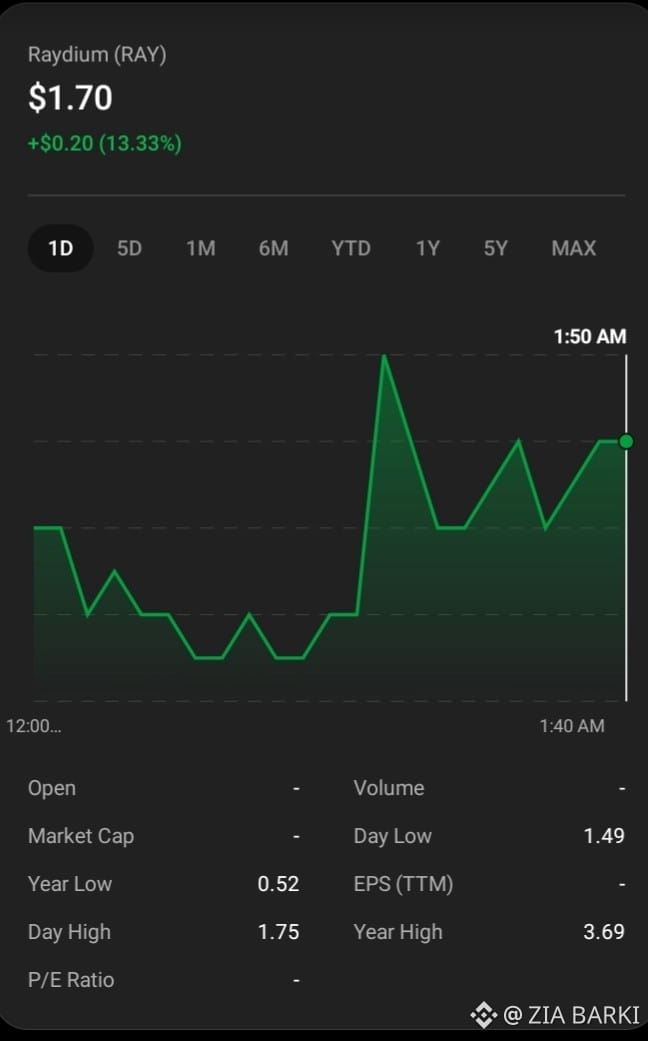
$RAY $RAY — Raydium Technical Analysis | 12 Sep 2026
Current price: around $1.70, with RAY up strongly over the last 24 hours. �
TradingView
Level
Zone
🟢 Low support
$1.49–$1.55
🟢 Strong support
$1.38–$1.45
🟡 Intermediate resistance
$1.73–$1.75
🔴 Strong resistance
$1.85–$2.00
🚀 Major breakout zone
$2.12
🐂 Bullish scenario
A sustained move above $1.75 could keep momentum positive. A clean breakout through $2.00–$2.12 would strengthen the bullish structure and potentially open the way toward higher levels. �
Coinpedia Fintech News +1
🐻 Bearish scenario
If RAY is rejected around $1.73–$1.75, a pullback toward $1.50 is possible. Losing the $1.38–$1.45 area would weaken the short-term bullish setup.
Summary: RAY is showing strong momentum, but after a sharp move higher, volatility ca
{spot}(RAYUSDT)
#USCoreCPIRises0.3%InAugustBeatingForecasts #SpotGoldRises0.87%SilverGains1.13% n be significant. Watch $1.75 as the immediate breakout/rejection area and $1.45–$1.50
$RAY $RAY — Raydium Technical Analysis | 12 Sep 2026
Current price: around $1.70, with RAY up strongly over the last 24 hours. �
TradingView
Level
Zone
🟢 Low support
$1.49–$1.55
🟢 Strong support
$1.38–$1.45
🟡 Intermediate resistance
$1.73–$1.75
🔴 Strong resistance
$1.85–$2.00
🚀 Major breakout zone
$2.12
🐂 Bullish scenario
A sustained move above $1.75 could keep momentum positive. A clean breakout through $2.00–$2.12 would strengthen the bullish structure and potentially open the way toward higher levels. �
Coinpedia Fintech News +1
🐻 Bearish scenario
If RAY is rejected around $1.73–$1.75, a pullback toward $1.50 is possible. Losing the $1.38–$1.45 area would weaken the short-term bullish setup.
Summary: RAY is showing strong momentum, but after a sharp move higher, volatility ca
#USCoreCPIRises0.3%InAugustBeatingForecasts #SpotGoldRises0.87%SilverGains1.13% n be significant. Watch $1.75 as the immediate breakout/rejection area and $1.45–$1.50
Current price: around $1.70, with RAY up strongly over the last 24 hours. �
TradingView
Level
Zone
🟢 Low support
$1.49–$1.55
🟢 Strong support
$1.38–$1.45
🟡 Intermediate resistance
$1.73–$1.75
🔴 Strong resistance
$1.85–$2.00
🚀 Major breakout zone
$2.12
🐂 Bullish scenario
A sustained move above $1.75 could keep momentum positive. A clean breakout through $2.00–$2.12 would strengthen the bullish structure and potentially open the way toward higher levels. �
Coinpedia Fintech News +1
🐻 Bearish scenario
If RAY is rejected around $1.73–$1.75, a pullback toward $1.50 is possible. Losing the $1.38–$1.45 area would weaken the short-term bullish setup.
Summary: RAY is showing strong momentum, but after a sharp move higher, volatility ca
#USCoreCPIRises0.3%InAugustBeatingForecasts #SpotGoldRises0.87%SilverGains1.13% n be significant. Watch $1.75 as the immediate breakout/rejection area and $1.45–$1.50
103
·
--
翻訳参照
$BNB BToken BNB
Price $712.4333
down -0.68%
Market Cap $ 94,868,422,228.21
24h Volume $ 1,512,963,461.5218
Circulating Supply 133,161,128BNB experienced a prolonged markdown phase following its October 2025 peak, bottoming out near the $535 support zone by the end of H1 2026.
A strong rebound initiated in July and extended to $725 by late August, allowing price action to reclaim short-term moving averages and cross above the long-term 200-day EMA band, signaling a shift in market momentum.
In early September it pushed to $780 and sustained around $725. If bullish momentum continues through September, BNB price could push past $780, with a successful breakout it might pave the way for a rally toward $850. These key horizontal and dynamic levels represent significant supply zones moving forward. Also, the golden cross has formed between 50-day and 200-day EMA bay#SpotGoldRises0.87%SilverGains1.13% #USCoreCPIRises0.3%InAugustBeatingForecasts ynd that confirm the bullish trend has begun.
Conversely, if in case sell pressure outweighs bullish pressure then failing to sustain upside momentum could result in a rejection, if $700 loses as a support level. Then a breakdown may invalidate the recent recovery structure, that could expose BNB to downside risk and a potential retest of the foundational $535 demand level.
Binance Coin (BNB) Price Prediction September 2026.85
Total Supply 133,161,128.85
All-Time High $ 1,370.5460 on 13 October 2025
All-Time Low $ 0.0961 on 01 August 2017
{future}(BNBUSDT)
$BNB BToken BNB
Price $712.4333
down -0.68%
Market Cap $ 94,868,422,228.21
24h Volume $ 1,512,963,461.5218
Circulating Supply 133,161,128BNB experienced a prolonged markdown phase following its October 2025 peak, bottoming out near the $535 support zone by the end of H1 2026.
A strong rebound initiated in July and extended to $725 by late August, allowing price action to reclaim short-term moving averages and cross above the long-term 200-day EMA band, signaling a shift in market momentum.
In early September it pushed to $780 and sustained around $725. If bullish momentum continues through September, BNB price could push past $780, with a successful breakout it might pave the way for a rally toward $850. These key horizontal and dynamic levels represent significant supply zones moving forward. Also, the golden cross has formed between 50-day and 200-day EMA bay#SpotGoldRises0.87%SilverGains1.13% #USCoreCPIRises0.3%InAugustBeatingForecasts ynd that confirm the bullish trend has begun.
Conversely, if in case sell pressure outweighs bullish pressure then failing to sustain upside momentum could result in a rejection, if $700 loses as a support level. Then a breakdown may invalidate the recent recovery structure, that could expose BNB to downside risk and a potential retest of the foundational $535 demand level.
Binance Coin (BNB) Price Prediction September 2026.85
Total Supply 133,161,128.85
All-Time High $ 1,370.5460 on 13 October 2025
All-Time Low $ 0.0961 on 01 August 2017
Price $712.4333
down -0.68%
Market Cap $ 94,868,422,228.21
24h Volume $ 1,512,963,461.5218
Circulating Supply 133,161,128BNB experienced a prolonged markdown phase following its October 2025 peak, bottoming out near the $535 support zone by the end of H1 2026.
A strong rebound initiated in July and extended to $725 by late August, allowing price action to reclaim short-term moving averages and cross above the long-term 200-day EMA band, signaling a shift in market momentum.
In early September it pushed to $780 and sustained around $725. If bullish momentum continues through September, BNB price could push past $780, with a successful breakout it might pave the way for a rally toward $850. These key horizontal and dynamic levels represent significant supply zones moving forward. Also, the golden cross has formed between 50-day and 200-day EMA bay#SpotGoldRises0.87%SilverGains1.13% #USCoreCPIRises0.3%InAugustBeatingForecasts ynd that confirm the bullish trend has begun.
Conversely, if in case sell pressure outweighs bullish pressure then failing to sustain upside momentum could result in a rejection, if $700 loses as a support level. Then a breakdown may invalidate the recent recovery structure, that could expose BNB to downside risk and a potential retest of the foundational $535 demand level.
Binance Coin (BNB) Price Prediction September 2026.85
Total Supply 133,161,128.85
All-Time High $ 1,370.5460 on 13 October 2025
All-Time Low $ 0.0961 on 01 August 2017
60
·
--
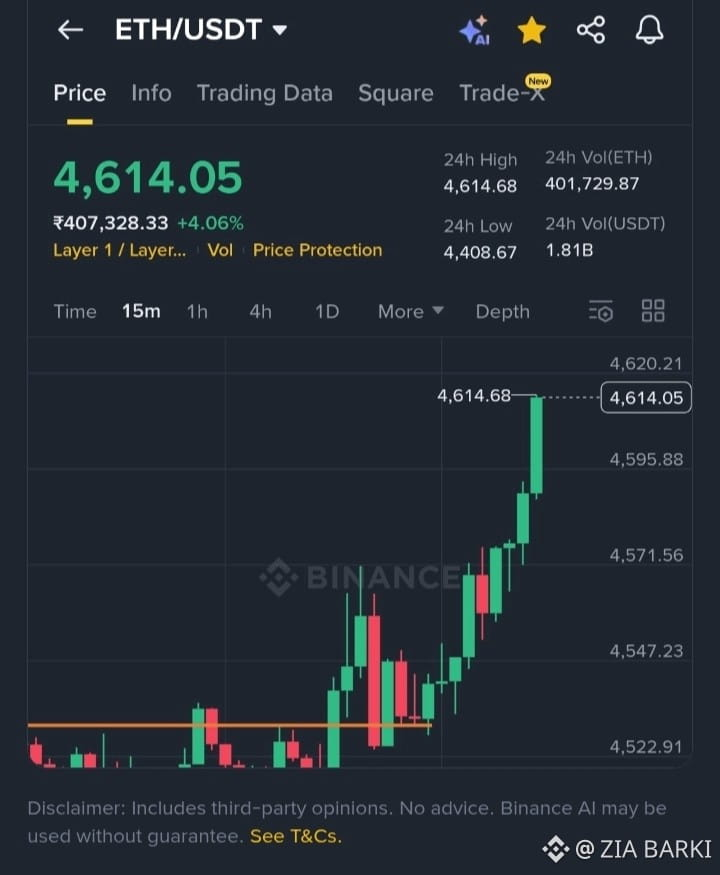
$ETH 💥✅ イーサリアム($ETH )ライブ価格予測 – 2025年9月12日🙏🙏🙏
💥現在の価格: 約$4,610
💥👉サポートレベル🔥
サポート1:$4,500
サポート2:$4,400
強いサポート:$4,200
💥👉レジスタンス🔥
レジスタンス1:$4,650
レジスタンス2:$4,700
主要レジスタンス:$4,800
💥👉短期見通し(次の24〜48時間):
まずは$4,500のサポートを試し、その後$4,650を突破しようとする可能性が高いです。
サポートが維持されれば、今後1〜2日で$4,700付近まで反発が見られるかもしれません。
💥👉中期目標(次の1週間)🔥
強気の勢いがETHを$4,750〜$4,800へ押し上げる可能性があります($4,650のレジスタンスがきれいに突破できることが条件)。
💥👉弱気シナリオ🔥
もしETHが$4,500のサポートを下抜けた場合、価格は$4,400へ、またはさらに$4,200へ向かう可能性があります。
その場合、下落トレンドが加速するかもしれません。
💥👉強気シナリオ🔥
強い買い圧力により、ETHは$4,600より上を維持し続けます。
目標:$4,700 → $4,750 → $4,800。
🔥💥⚡ まとめ🙏🙏🙏
ETHは約$4,610で取引されています。
注目サポート:$4,500、$4,400。
注目レジスタンス:$4,650、$4,700、$4,800。
次の大きな値動きは、ETHが$4,500を維持できるか、$4,650を突破できるかにかかっています。
#bearishmomentum
#bulishmoment
$ETH 💥✅ イーサリアム($ETH )ライブ価格予測 – 2025年9月12日🙏🙏🙏
💥現在の価格: 約$4,610
💥👉サポートレベル🔥
サポート1:$4,500
サポート2:$4,400
強いサポート:$4,200
💥👉レジスタンス🔥
レジスタンス1:$4,650
レジスタンス2:$4,700
主要レジスタンス:$4,800
💥👉短期見通し(次の24〜48時間):
まずは$4,500のサポートを試し、その後$4,650を突破しようとする可能性が高いです。
サポートが維持されれば、今後1〜2日で$4,700付近まで反発が見られるかもしれません。
💥👉中期目標(次の1週間)🔥
強気の勢いがETHを$4,750〜$4,800へ押し上げる可能性があります($4,650のレジスタンスがきれいに突破できることが条件)。
💥👉弱気シナリオ🔥
もしETHが$4,500のサポートを下抜けた場合、価格は$4,400へ、またはさらに$4,200へ向かう可能性があります。
その場合、下落トレンドが加速するかもしれません。
💥👉強気シナリオ🔥
強い買い圧力により、ETHは$4,600より上を維持し続けます。
目標:$4,700 → $4,750 → $4,800。
🔥💥⚡ まとめ🙏🙏🙏
ETHは約$4,610で取引されています。
注目サポート:$4,500、$4,400。
注目レジスタンス:$4,650、$4,700、$4,800。
次の大きな値動きは、ETHが$4,500を維持できるか、$4,650を突破できるかにかかっています。
#bearishmomentum
#bulishmoment
💥現在の価格: 約$4,610
💥👉サポートレベル🔥
サポート1:$4,500
サポート2:$4,400
強いサポート:$4,200
💥👉レジスタンス🔥
レジスタンス1:$4,650
レジスタンス2:$4,700
主要レジスタンス:$4,800
💥👉短期見通し(次の24〜48時間):
まずは$4,500のサポートを試し、その後$4,650を突破しようとする可能性が高いです。
サポートが維持されれば、今後1〜2日で$4,700付近まで反発が見られるかもしれません。
💥👉中期目標(次の1週間)🔥
強気の勢いがETHを$4,750〜$4,800へ押し上げる可能性があります($4,650のレジスタンスがきれいに突破できることが条件)。
💥👉弱気シナリオ🔥
もしETHが$4,500のサポートを下抜けた場合、価格は$4,400へ、またはさらに$4,200へ向かう可能性があります。
その場合、下落トレンドが加速するかもしれません。
💥👉強気シナリオ🔥
強い買い圧力により、ETHは$4,600より上を維持し続けます。
目標:$4,700 → $4,750 → $4,800。
🔥💥⚡ まとめ🙏🙏🙏
ETHは約$4,610で取引されています。
注目サポート:$4,500、$4,400。
注目レジスタンス:$4,650、$4,700、$4,800。
次の大きな値動きは、ETHが$4,500を維持できるか、$4,650を突破できるかにかかっています。
#bearishmomentum
#bulishmoment
887
·
--
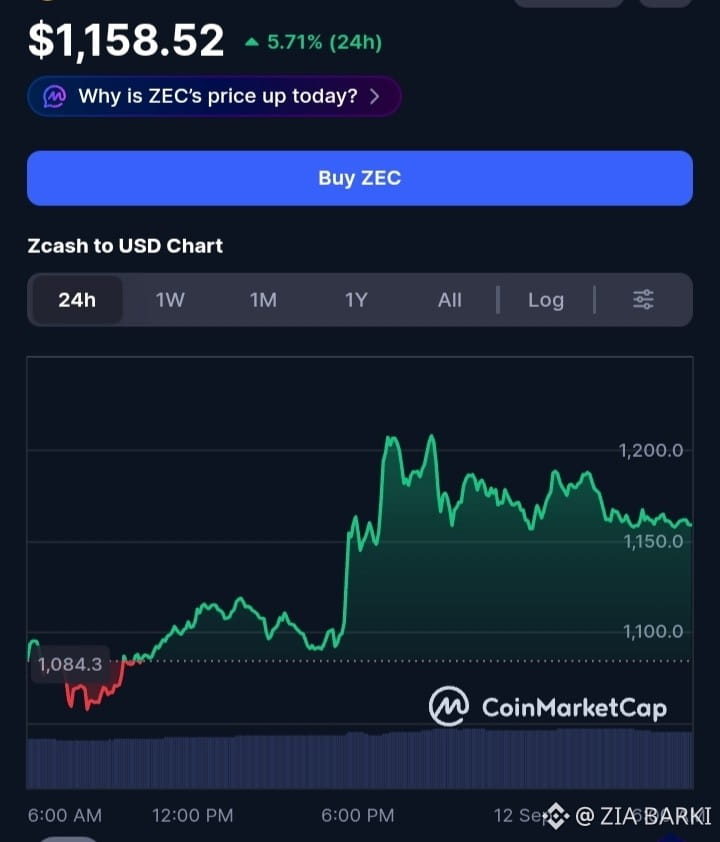
$ZEC Zcash(ZEC)は9月3日に16.5%上昇し、時価総額上位50の暗号資産の中でトップの値動きとなりました。Cardano(ADA)は13%上昇し、一方でDogecoin(DOGE)とCRAPはそれぞれ約10%の上昇でした。Bitcoin(BTC)は1日あたり5.4%高の8万1460ドル近辺で取引されました。
これらの動きにより、グローバルな暗号資産の時価総額は2.82兆ドルに到達し、7か月以上で最も高い水準となりました。この数値は、1月中旬に始まった売りの回復を示しています。売りは、2月の最初の週に時価総額が約3.4兆ドルから約2.3兆ドルへと下落したことにより始まりました。
{future}(ZECUSDT)
$ZEC Zcash(ZEC)は9月3日に16.5%上昇し、時価総額上位50の暗号資産の中でトップの値動きとなりました。Cardano(ADA)は13%上昇し、一方でDogecoin(DOGE)とCRAPはそれぞれ約10%の上昇でした。Bitcoin(BTC)は1日あたり5.4%高の8万1460ドル近辺で取引されました。
これらの動きにより、グローバルな暗号資産の時価総額は2.82兆ドルに到達し、7か月以上で最も高い水準となりました。この数値は、1月中旬に始まった売りの回復を示しています。売りは、2月の最初の週に時価総額が約3.4兆ドルから約2.3兆ドルへと下落したことにより始まりました。
これらの動きにより、グローバルな暗号資産の時価総額は2.82兆ドルに到達し、7か月以上で最も高い水準となりました。この数値は、1月中旬に始まった売りの回復を示しています。売りは、2月の最初の週に時価総額が約3.4兆ドルから約2.3兆ドルへと下落したことにより始まりました。
180
·
--
$ZEC なぜZcash(ZEC)は今日下落しているのか?
Zcash(ZEC)の価格は過去24時間で12.42%下落しました。これは、取引活動の低下や、暗号資産全体に対する慎重な市場心理が影響している可能性があります。
最近の市場動向では、購入の勢いがやや抑えられていることが示唆されており、直近の価格変動に続く短期的な取引活動の調整を反映しているかもしれません。
同時に、暗号資産市場全体に見られるより広範なトレンドが、通常の価格変動に寄与し、Zcash(ZEC)の値動きが他のデジタル資産と並行して影響を受けている可能性もあります。
{future}(ZECUSDT)
#OracleJumpsOver6%OnEarningsBeat
$ZEC なぜZcash(ZEC)は今日下落しているのか?
Zcash(ZEC)の価格は過去24時間で12.42%下落しました。これは、取引活動の低下や、暗号資産全体に対する慎重な市場心理が影響している可能性があります。
最近の市場動向では、購入の勢いがやや抑えられていることが示唆されており、直近の価格変動に続く短期的な取引活動の調整を反映しているかもしれません。
同時に、暗号資産市場全体に見られるより広範なトレンドが、通常の価格変動に寄与し、Zcash(ZEC)の値動きが他のデジタル資産と並行して影響を受けている可能性もあります。
#OracleJumpsOver6%OnEarningsBeat
Zcash(ZEC)の価格は過去24時間で12.42%下落しました。これは、取引活動の低下や、暗号資産全体に対する慎重な市場心理が影響している可能性があります。
最近の市場動向では、購入の勢いがやや抑えられていることが示唆されており、直近の価格変動に続く短期的な取引活動の調整を反映しているかもしれません。
同時に、暗号資産市場全体に見られるより広範なトレンドが、通常の価格変動に寄与し、Zcash(ZEC)の値動きが他のデジタル資産と並行して影響を受けている可能性もあります。
#OracleJumpsOver6%OnEarningsBeat
88
·
--
$BNB BNB(BNB)が今日下落している理由は?
BNB(BNB)の価格は過去24時間で0.5%下落しており、取引活動の低下や、暗号資産全体に対する慎重な市場ムードが影響している可能性があります。
最近の市場動向では、買いの勢いが弱まりつつあることが示唆されており、これは直近の価格変動後の短期的な取引活動の調整を反映しているかもしれません。
同時に、暗号資産市場全体のより広範なトレンドも、通常の価格変動に寄与しており、BNB(BNB)は他のデジタル資産とともにパフォーマンスに影響を受けている可能性があります。
{future}(BNBUSDT)
#AppleRises3.56%AfterIPhoneDuoLaunch ##CPIWatch
$BNB BNB(BNB)が今日下落している理由は?
BNB(BNB)の価格は過去24時間で0.5%下落しており、取引活動の低下や、暗号資産全体に対する慎重な市場ムードが影響している可能性があります。
最近の市場動向では、買いの勢いが弱まりつつあることが示唆されており、これは直近の価格変動後の短期的な取引活動の調整を反映しているかもしれません。
同時に、暗号資産市場全体のより広範なトレンドも、通常の価格変動に寄与しており、BNB(BNB)は他のデジタル資産とともにパフォーマンスに影響を受けている可能性があります。
#AppleRises3.56%AfterIPhoneDuoLaunch ##CPIWatch
BNB(BNB)の価格は過去24時間で0.5%下落しており、取引活動の低下や、暗号資産全体に対する慎重な市場ムードが影響している可能性があります。
最近の市場動向では、買いの勢いが弱まりつつあることが示唆されており、これは直近の価格変動後の短期的な取引活動の調整を反映しているかもしれません。
同時に、暗号資産市場全体のより広範なトレンドも、通常の価格変動に寄与しており、BNB(BNB)は他のデジタル資産とともにパフォーマンスに影響を受けている可能性があります。
#AppleRises3.56%AfterIPhoneDuoLaunch ##CPIWatch

28
·
--
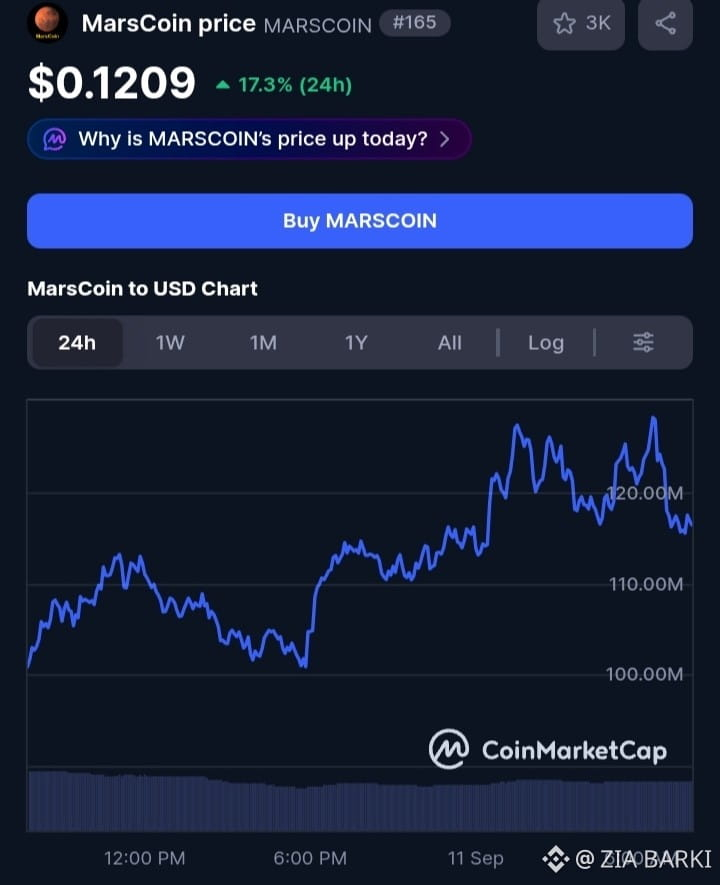
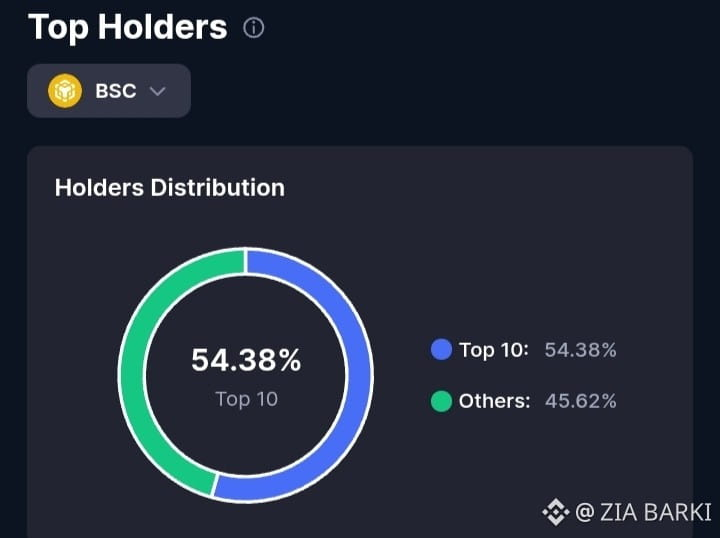
$MARSCOIN MarsCoinは24時間で15.27%上昇し、$0.116となりました。Bitcoinが1.78%下落するような下落相場の中で、強くアウトパフォームしています。この動きは主に、最近のBinance上場とそれに伴うソーシャルメディア上の話題(ハイプ)によるモメンタムです。
主な理由:Binanceのスポット上場による触媒。アクセス性と投機的な関心を高めています。
副次的な理由:SHIBのような過去のミーム・ラリーになぞらえるソーシャルメディア上の物語。
短期的な市場見通し:MarsCoinが$0.10のサポートを維持できれば、$0.15を再テストする可能性があります。
{future}(MARSCOINUSDT)
#SaudiCrudeOutputHitsLowestSince1990 rea; 一方で$0.10を割り込むと、より深い下落が起こり、$0.08方向への下押しリスクがあります。
$MARSCOIN MarsCoinは24時間で15.27%上昇し、$0.116となりました。Bitcoinが1.78%下落するような下落相場の中で、強くアウトパフォームしています。この動きは主に、最近のBinance上場とそれに伴うソーシャルメディア上の話題(ハイプ)によるモメンタムです。
主な理由:Binanceのスポット上場による触媒。アクセス性と投機的な関心を高めています。
副次的な理由:SHIBのような過去のミーム・ラリーになぞらえるソーシャルメディア上の物語。
短期的な市場見通し:MarsCoinが$0.10のサポートを維持できれば、$0.15を再テストする可能性があります。
#SaudiCrudeOutputHitsLowestSince1990 rea; 一方で$0.10を割り込むと、より深い下落が起こり、$0.08方向への下押しリスクがあります。
主な理由:Binanceのスポット上場による触媒。アクセス性と投機的な関心を高めています。
副次的な理由:SHIBのような過去のミーム・ラリーになぞらえるソーシャルメディア上の物語。
短期的な市場見通し:MarsCoinが$0.10のサポートを維持できれば、$0.15を再テストする可能性があります。
#SaudiCrudeOutputHitsLowestSince1990 rea; 一方で$0.10を割り込むと、より深い下落が起こり、$0.08方向への下押しリスクがあります。
97
·
--
#Top7AssetsHold92.1%OfCryptoTop100 $SUI.US 今日なぜSui(SUI)が上がっているのですか?
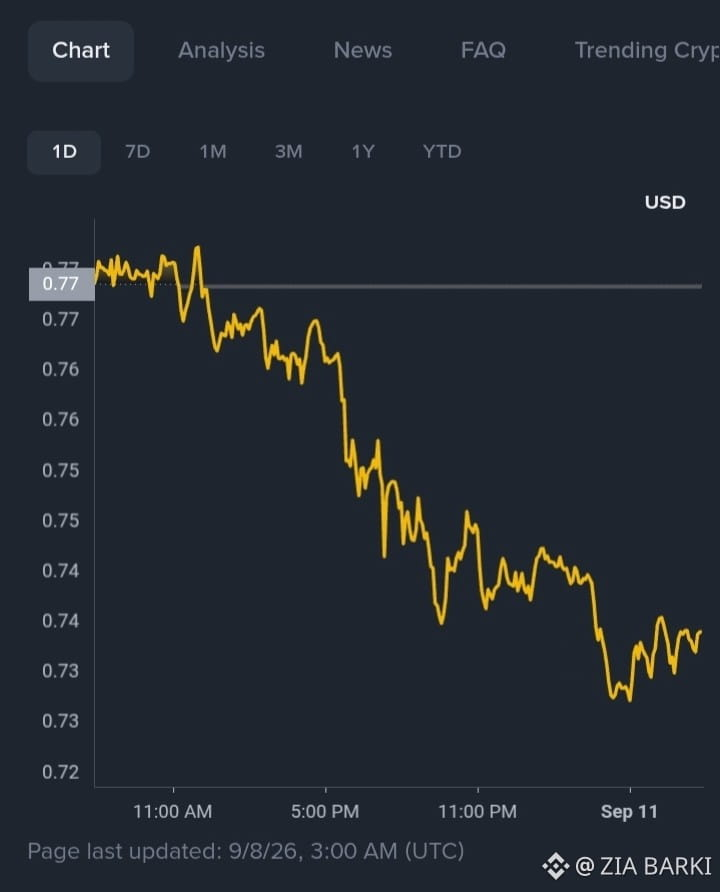
Sui(SUI)の価格は過去24時間で1.29%上昇しており、市場のセンチメント改善や取引活動の増加の影響が考えられます。
最近の市場データでは、買いの関心が高まっていることが示唆されており、トレーダーが新たなポジションに入ったり、直近の市場モメンタムに反応したりしている可能性があります。
さらに、より広範な市場動向や、デジタル資産全体におけるポジティブなセンチメントが、短期的な価格の強さに寄与しているかもしれません。これにより、暗号資産市場全体とともにSui(SUI)の上昇が支えられています。
{future}(SUIUSDT)
#Top7AssetsHold92.1%OfCryptoTop100 $SUI.US 今日なぜSui(SUI)が上がっているのですか?
Sui(SUI)の価格は過去24時間で1.29%上昇しており、市場のセンチメント改善や取引活動の増加の影響が考えられます。
最近の市場データでは、買いの関心が高まっていることが示唆されており、トレーダーが新たなポジションに入ったり、直近の市場モメンタムに反応したりしている可能性があります。
さらに、より広範な市場動向や、デジタル資産全体におけるポジティブなセンチメントが、短期的な価格の強さに寄与しているかもしれません。これにより、暗号資産市場全体とともにSui(SUI)の上昇が支えられています。
Sui(SUI)の価格は過去24時間で1.29%上昇しており、市場のセンチメント改善や取引活動の増加の影響が考えられます。
最近の市場データでは、買いの関心が高まっていることが示唆されており、トレーダーが新たなポジションに入ったり、直近の市場モメンタムに反応したりしている可能性があります。
さらに、より広範な市場動向や、デジタル資産全体におけるポジティブなセンチメントが、短期的な価格の強さに寄与しているかもしれません。これにより、暗号資産市場全体とともにSui(SUI)の上昇が支えられています。
46
·
--
$ZEC (ZEC)の価格は過去24時間で0.96%下落し、取引活動の低下や、暗号資産全体に対する慎重な市場ムードが影響している可能性があります。
最近の市場動向は、買いの勢いがやや落ち着いていることを示しており、直近の価格変動を受けた短期的な取引活動の調整を反映しているかもしれません。
同時に、暗号資産市場全体におけるより広範なトレンドも、通常の価格変動に寄与しており、Zcash(ZEC)のパフォーマンスは他のデジタル資産とともに影響を受けている可能性があります。
{future}(ZECUSDT)
#CryptoSectorsFallSecondDay #IranBlocksStraitOfHormuz #Top7AssetsHold92.1%OfCryptoTop100
$ZEC (ZEC)の価格は過去24時間で0.96%下落し、取引活動の低下や、暗号資産全体に対する慎重な市場ムードが影響している可能性があります。
最近の市場動向は、買いの勢いがやや落ち着いていることを示しており、直近の価格変動を受けた短期的な取引活動の調整を反映しているかもしれません。
同時に、暗号資産市場全体におけるより広範なトレンドも、通常の価格変動に寄与しており、Zcash(ZEC)のパフォーマンスは他のデジタル資産とともに影響を受けている可能性があります。
#CryptoSectorsFallSecondDay #IranBlocksStraitOfHormuz #Top7AssetsHold92.1%OfCryptoTop100
最近の市場動向は、買いの勢いがやや落ち着いていることを示しており、直近の価格変動を受けた短期的な取引活動の調整を反映しているかもしれません。
同時に、暗号資産市場全体におけるより広範なトレンドも、通常の価格変動に寄与しており、Zcash(ZEC)のパフォーマンスは他のデジタル資産とともに影響を受けている可能性があります。
#CryptoSectorsFallSecondDay #IranBlocksStraitOfHormuz #Top7AssetsHold92.1%OfCryptoTop100


172
·
--
{future}(BTCUSDT)
#USADPWeeklyEmploymentRises12000 $BTC ビットコインは約79,000ドルで取引されており、直近データでは24時間のレンジが約77.6Kドル〜79.7Kドルの間にある。 �
ザ・エージェント・タイムズ +1
テクニカル・スナップショット
トレンド:横ばい / 約79Kドル付近でボラティリティが高い
サポート:約77.6Kドル〜78Kドル
レジスタンス:約79.7Kドル〜80Kドル
重要な水準:80Kドルを上抜けて持続すれば強気シナリオが強まる。約77.6Kドルを下回ると弱まる。
市場リスク:原油価格の上昇、米国債利回り、そして近く予定されているFRBの決定をめぐる不透明感が、リスク資産への圧力となっている。 �
ロイター +1
重要:これらは市場水準であり、売買の保証となるシグナルではない。
#USADPWeeklyEmploymentRises12000 $BTC ビットコインは約79,000ドルで取引されており、直近データでは24時間のレンジが約77.6Kドル〜79.7Kドルの間にある。 �
ザ・エージェント・タイムズ +1
テクニカル・スナップショット
トレンド:横ばい / 約79Kドル付近でボラティリティが高い
サポート:約77.6Kドル〜78Kドル
レジスタンス:約79.7Kドル〜80Kドル
重要な水準:80Kドルを上抜けて持続すれば強気シナリオが強まる。約77.6Kドルを下回ると弱まる。
市場リスク:原油価格の上昇、米国債利回り、そして近く予定されているFRBの決定をめぐる不透明感が、リスク資産への圧力となっている。 �
ロイター +1
重要:これらは市場水準であり、売買の保証となるシグナルではない。
ザ・エージェント・タイムズ +1
テクニカル・スナップショット
トレンド:横ばい / 約79Kドル付近でボラティリティが高い
サポート:約77.6Kドル〜78Kドル
レジスタンス:約79.7Kドル〜80Kドル
重要な水準:80Kドルを上抜けて持続すれば強気シナリオが強まる。約77.6Kドルを下回ると弱まる。
市場リスク:原油価格の上昇、米国債利回り、そして近く予定されているFRBの決定をめぐる不透明感が、リスク資産への圧力となっている。 �
ロイター +1
重要:これらは市場水準であり、売買の保証となるシグナルではない。
9
·
--

記事
NEAR PROTOCOL 完全概要執筆
NEARプロトコル:完全概要と基礎分析
はじめに
NEARプロトコルは、分散型アプリケーションをより高速に、より安く、そして使いやすくすることを目的に設計されたブロックチェーン・プラットフォームです。支払い、または基本的なスマートコントラクトに主に注力していた初期の多くのブロックチェーンネットワークとは異なり、NEARはスケーラビリティ、クロスチェーン・アプリケーション、そして台頭するAIエージェント・エコノミーの領域にますます重点を置いています。
そのアーキテクチャはシャーディングに基づいており、すべてのバリデータにすべてのアクティビティの処理を強いるのではなく、ネットワークの処理を複数のシャードに分散できます。NEARの現在のアーキテクチャは、約600msのブロックタイム、約1.2秒のファイナリティ、シャーディングによるスケーラビリティを示しています。
NEAR PROTOCOL 完全概要
執筆
NEARプロトコル:完全概要と基礎分析
はじめに
NEARプロトコルは、分散型アプリケーションをより高速に、より安く、そして使いやすくすることを目的に設計されたブロックチェーン・プラットフォームです。支払い、または基本的なスマートコントラクトに主に注力していた初期の多くのブロックチェーンネットワークとは異なり、NEARはスケーラビリティ、クロスチェーン・アプリケーション、そして台頭するAIエージェント・エコノミーの領域にますます重点を置いています。
そのアーキテクチャはシャーディングに基づいており、すべてのバリデータにすべてのアクティビティの処理を強いるのではなく、ネットワークの処理を複数のシャードに分散できます。NEARの現在のアーキテクチャは、約600msのブロックタイム、約1.2秒のファイナリティ、シャーディングによるスケーラビリティを示しています。
NEARプロトコル:完全概要と基礎分析
はじめに
NEARプロトコルは、分散型アプリケーションをより高速に、より安く、そして使いやすくすることを目的に設計されたブロックチェーン・プラットフォームです。支払い、または基本的なスマートコントラクトに主に注力していた初期の多くのブロックチェーンネットワークとは異なり、NEARはスケーラビリティ、クロスチェーン・アプリケーション、そして台頭するAIエージェント・エコノミーの領域にますます重点を置いています。
そのアーキテクチャはシャーディングに基づいており、すべてのバリデータにすべてのアクティビティの処理を強いるのではなく、ネットワークの処理を複数のシャードに分散できます。NEARの現在のアーキテクチャは、約600msのブロックタイム、約1.2秒のファイナリティ、シャーディングによるスケーラビリティを示しています。
22
·
--
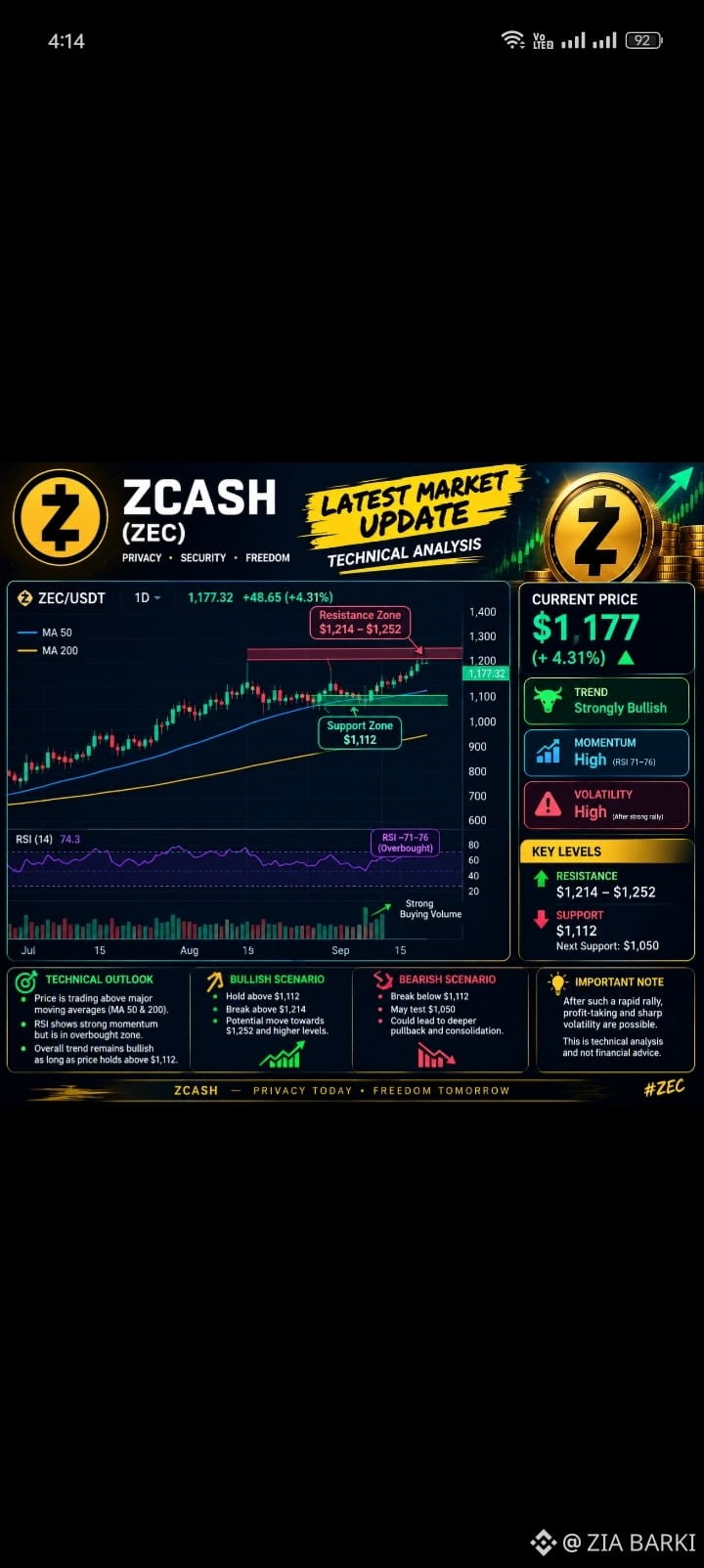
$ZEC 2026年9月9日時点で、ZECは約1,177ドルで取引されており、直近の非常に強い上昇ラリーの後に続いています。�
CentralCharts +1
トレンド: 🟢 強い買い — 価格は主要移動平均線を大きく上回ったままです。�
Moneycontrol +1
モメンタム: RSIは約71〜76で、強いモメンタムを示す一方で買われ過ぎの状態も示唆されています。�
Moneycontrol +1
レジスタンス: 1,214〜1,252ドル。これを持続的に上抜けると、より高い水準への道が開かれる可能性があります。�
CentralCharts
サポート: 1,112ドル、その後は約1,050ドル。�
CentralCharts
リスク: このように急速な上昇の後は、利確と急激なボラティリティが起こり得ます。Z
{future}(ZECUSDT)
ECは最近、約1,249ドルまで到達した後、いったん値固めしています。�
crypto.news
📊 短期見通し
1,112ドルを上回っている場合 → 1,214〜1,252ドルのテストの可能性。
1,112ドルを下回る場合 → モメンタムが弱まり、より深い押し目が起きやすくなる可能性#RippleLobbiesToAdvanceCLARITYActVote #USStrikesTargetsNearHormuzAndJask #AEROSurges17%In24Hours 。
$ZEC 2026年9月9日時点で、ZECは約1,177ドルで取引されており、直近の非常に強い上昇ラリーの後に続いています。�
CentralCharts +1
トレンド: 🟢 強い買い — 価格は主要移動平均線を大きく上回ったままです。�
Moneycontrol +1
モメンタム: RSIは約71〜76で、強いモメンタムを示す一方で買われ過ぎの状態も示唆されています。�
Moneycontrol +1
レジスタンス: 1,214〜1,252ドル。これを持続的に上抜けると、より高い水準への道が開かれる可能性があります。�
CentralCharts
サポート: 1,112ドル、その後は約1,050ドル。�
CentralCharts
リスク: このように急速な上昇の後は、利確と急激なボラティリティが起こり得ます。Z
ECは最近、約1,249ドルまで到達した後、いったん値固めしています。�
crypto.news
📊 短期見通し
1,112ドルを上回っている場合 → 1,214〜1,252ドルのテストの可能性。
1,112ドルを下回る場合 → モメンタムが弱まり、より深い押し目が起きやすくなる可能性#RippleLobbiesToAdvanceCLARITYActVote #USStrikesTargetsNearHormuzAndJask #AEROSurges17%In24Hours 。
CentralCharts +1
トレンド: 🟢 強い買い — 価格は主要移動平均線を大きく上回ったままです。�
Moneycontrol +1
モメンタム: RSIは約71〜76で、強いモメンタムを示す一方で買われ過ぎの状態も示唆されています。�
Moneycontrol +1
レジスタンス: 1,214〜1,252ドル。これを持続的に上抜けると、より高い水準への道が開かれる可能性があります。�
CentralCharts
サポート: 1,112ドル、その後は約1,050ドル。�
CentralCharts
リスク: このように急速な上昇の後は、利確と急激なボラティリティが起こり得ます。Z
ECは最近、約1,249ドルまで到達した後、いったん値固めしています。�
crypto.news
📊 短期見通し
1,112ドルを上回っている場合 → 1,214〜1,252ドルのテストの可能性。
1,112ドルを下回る場合 → モメンタムが弱まり、より深い押し目が起きやすくなる可能性#RippleLobbiesToAdvanceCLARITYActVote #USStrikesTargetsNearHormuzAndJask #AEROSurges17%In24Hours 。
25
·
--
$BTC ₿ BTC — 最新のマーケットアップデート
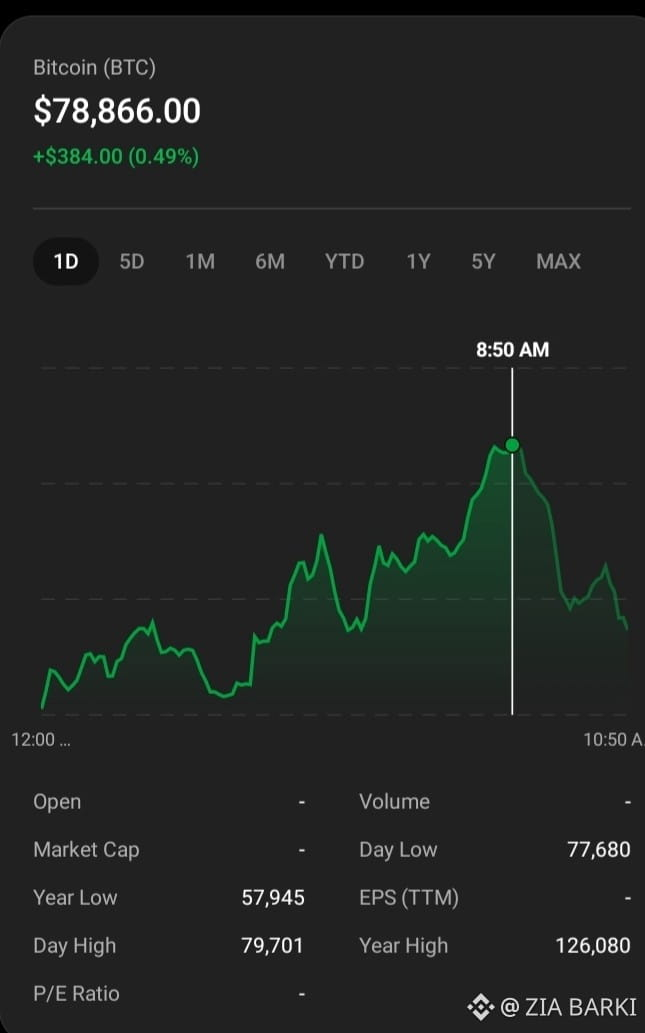
ビットコインは現在約78.9Kドルで取引されており、本日は控えめに上昇しています。 �
CoinDesk +1
短期トレンド:横ばいの動きに、わずかな回復バイアス。
サポート:およそ77K〜78Kドル
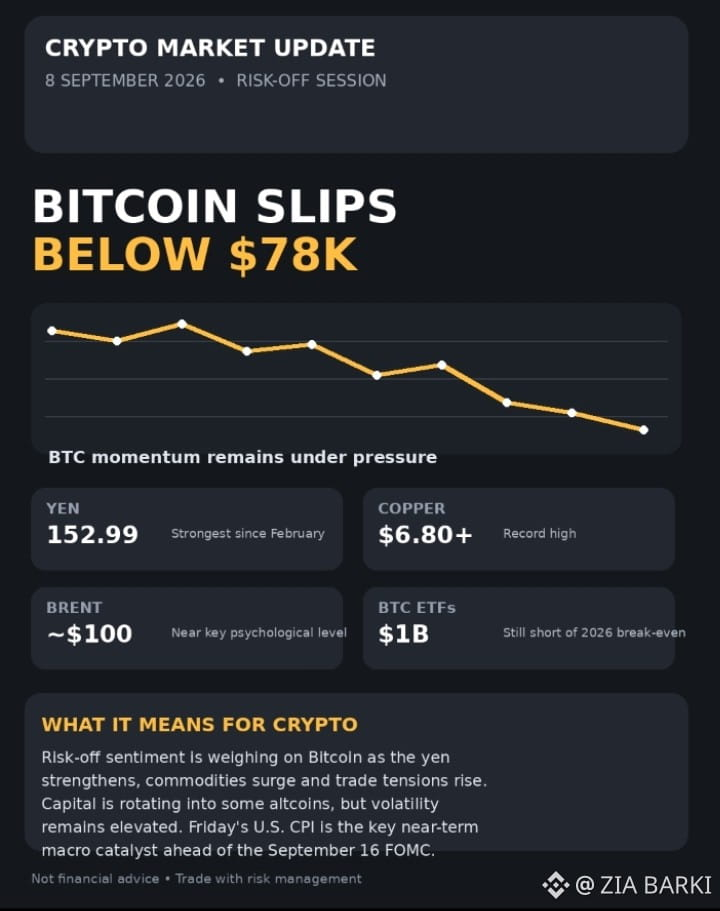
レジスタンス:およそ80Kドル、その後およそ81K〜81.5Kドル
市場リスク:原油価格の上昇と、間近の米FRB(連邦準備制度)決定をめぐる不確実性
{future}(BTCUSDT)
#USStrikesTargetsNearHormuzAndJask #RippleLobbiesToAdvanceCLARITYActVote #ChinaAugustCPIRises0.8%YoY により、ボラティリティが高止まりしています。 �
Reuters +1
総括:BTCは依然としてレンジ相場の範囲内です。77Kドル付近を維持できている限り、短期の構造は比較的建設的であり、一方で80Kドルを上回る持続的なブレイクが起きればモメンタムが強まるでしょう。これは市場分析であり、金融アドバイスではありません。
$BTC ₿ BTC — 最新のマーケットアップデート
ビットコインは現在約78.9Kドルで取引されており、本日は控えめに上昇しています。 �
CoinDesk +1
短期トレンド:横ばいの動きに、わずかな回復バイアス。
サポート:およそ77K〜78Kドル
レジスタンス:およそ80Kドル、その後およそ81K〜81.5Kドル
市場リスク:原油価格の上昇と、間近の米FRB(連邦準備制度)決定をめぐる不確実性
#USStrikesTargetsNearHormuzAndJask #RippleLobbiesToAdvanceCLARITYActVote #ChinaAugustCPIRises0.8%YoY により、ボラティリティが高止まりしています。 �
Reuters +1
総括:BTCは依然としてレンジ相場の範囲内です。77Kドル付近を維持できている限り、短期の構造は比較的建設的であり、一方で80Kドルを上回る持続的なブレイクが起きればモメンタムが強まるでしょう。これは市場分析であり、金融アドバイスではありません。
ビットコインは現在約78.9Kドルで取引されており、本日は控えめに上昇しています。 �
CoinDesk +1
短期トレンド:横ばいの動きに、わずかな回復バイアス。
サポート:およそ77K〜78Kドル
レジスタンス:およそ80Kドル、その後およそ81K〜81.5Kドル
市場リスク:原油価格の上昇と、間近の米FRB(連邦準備制度)決定をめぐる不確実性
#USStrikesTargetsNearHormuzAndJask #RippleLobbiesToAdvanceCLARITYActVote #ChinaAugustCPIRises0.8%YoY により、ボラティリティが高止まりしています。 �
Reuters +1
総括:BTCは依然としてレンジ相場の範囲内です。77Kドル付近を維持できている限り、短期の構造は比較的建設的であり、一方で80Kドルを上回る持続的なブレイクが起きればモメンタムが強まるでしょう。これは市場分析であり、金融アドバイスではありません。
24
·
--
$ZEC $ZEC 最新のマーケットアップデート — 2026年9月9日 📊
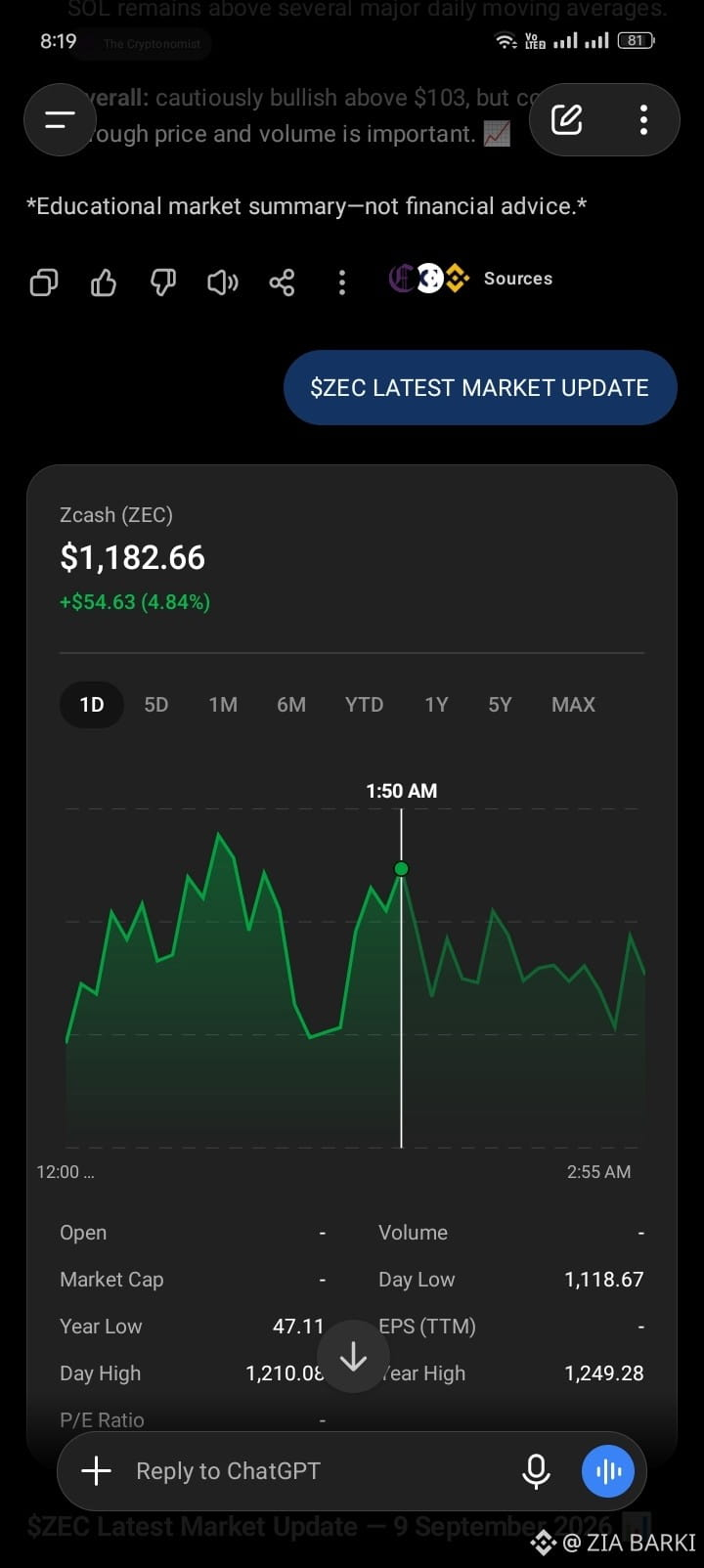
ZECは約$1,183で推移しており、今日はおよそ4.8%上昇。日中の値動きは約$1,119〜$1,210です。 �
CoinGecko
モメンタムは非常に強いです。ZECは過去7日で約43%上昇しており、直近では2016年以来の最高水準に到達しました。 �
CoinGecko +1
今回の上昇は、GrayscaleのZCASH ETFを含む機関投資家の関心に加え、プライバシー重視の暗号資産エッセイへの強い関心によって支えられています。 �
クリプトの時価総額
重要なテクニカル領域:〜$1,020〜$1,000は重要な過去のブレイク/サポートゾーンです。ここを上回って維持できれば、より広い上昇の構造はさらに強く保たれます。 �
CoinDesk
{spot}(ZECUSDT)
#USStocksCloseLowerIntelRises9% +1
リスク:これほど急速な上昇の後は、ボラティリティ(変動性)や利益確定が大きくなる可能性があります。直近の高値を継続的に上抜ければモメンタムは強まりますが、大きなサポートを失うと、より深い調整につながる恐れがあります。
結論:🔥 ZECは依然として強気ですが、非常にボラティリティが高い状態です。今の最大の問いは、直近の大幅な上昇の後に、改めての買いがその上昇トレンドを維持できるかどうかです。 �
CoinGecko
$ZEC $ZEC 最新のマーケットアップデート — 2026年9月9日 📊
ZECは約$1,183で推移しており、今日はおよそ4.8%上昇。日中の値動きは約$1,119〜$1,210です。 �
CoinGecko
モメンタムは非常に強いです。ZECは過去7日で約43%上昇しており、直近では2016年以来の最高水準に到達しました。 �
CoinGecko +1
今回の上昇は、GrayscaleのZCASH ETFを含む機関投資家の関心に加え、プライバシー重視の暗号資産エッセイへの強い関心によって支えられています。 �
クリプトの時価総額
重要なテクニカル領域:〜$1,020〜$1,000は重要な過去のブレイク/サポートゾーンです。ここを上回って維持できれば、より広い上昇の構造はさらに強く保たれます。 �
CoinDesk
#USStocksCloseLowerIntelRises9% +1
リスク:これほど急速な上昇の後は、ボラティリティ(変動性)や利益確定が大きくなる可能性があります。直近の高値を継続的に上抜ければモメンタムは強まりますが、大きなサポートを失うと、より深い調整につながる恐れがあります。
結論:🔥 ZECは依然として強気ですが、非常にボラティリティが高い状態です。今の最大の問いは、直近の大幅な上昇の後に、改めての買いがその上昇トレンドを維持できるかどうかです。 �
CoinGecko
ZECは約$1,183で推移しており、今日はおよそ4.8%上昇。日中の値動きは約$1,119〜$1,210です。 �
CoinGecko
モメンタムは非常に強いです。ZECは過去7日で約43%上昇しており、直近では2016年以来の最高水準に到達しました。 �
CoinGecko +1
今回の上昇は、GrayscaleのZCASH ETFを含む機関投資家の関心に加え、プライバシー重視の暗号資産エッセイへの強い関心によって支えられています。 �
クリプトの時価総額
重要なテクニカル領域:〜$1,020〜$1,000は重要な過去のブレイク/サポートゾーンです。ここを上回って維持できれば、より広い上昇の構造はさらに強く保たれます。 �
CoinDesk
#USStocksCloseLowerIntelRises9% +1
リスク:これほど急速な上昇の後は、ボラティリティ(変動性)や利益確定が大きくなる可能性があります。直近の高値を継続的に上抜ければモメンタムは強まりますが、大きなサポートを失うと、より深い調整につながる恐れがあります。
結論:🔥 ZECは依然として強気ですが、非常にボラティリティが高い状態です。今の最大の問いは、直近の大幅な上昇の後に、改めての買いがその上昇トレンドを維持できるかどうかです。 �
CoinGecko
39
·
--
ETHERIUM ETH/USDT Comprehensive Market Update — September 9, 2026
ETH/USDTはイーサリアム価格を表しますETH/USDTは、テザー(USDT)建てで価格が示されたイーサリアムを表します。イーサリアムは、そのエコシステムがスマートコントラクト、分散型アプリケーション、ステーブルコイン、トークン化資産、そしてレイヤー2ネットワークを支えているため、暗号資産市場で最も重要な資産の一つであり続けています。
現在の市場概況
直近の市場データでは、イーサリアムは約2,480〜2,500ドルの水準にあります。CoinDeskによれば約2,485ドルで、24時間の取引高は約58.3億ドルです。したがって、イーサリアムは過去最高値である約4,946ドルを大きく下回っており、市場は史上最高値の局面というより、回復/調整(コンソリデーション)のフェーズにあります。
ETHERIUM ETH/USDT Comprehensive Market Update — September 9, 2026 ETH/USDTはイーサリアム価格を表します
ETH/USDTは、テザー(USDT)建てで価格が示されたイーサリアムを表します。イーサリアムは、そのエコシステムがスマートコントラクト、分散型アプリケーション、ステーブルコイン、トークン化資産、そしてレイヤー2ネットワークを支えているため、暗号資産市場で最も重要な資産の一つであり続けています。
現在の市場概況
直近の市場データでは、イーサリアムは約2,480〜2,500ドルの水準にあります。CoinDeskによれば約2,485ドルで、24時間の取引高は約58.3億ドルです。したがって、イーサリアムは過去最高値である約4,946ドルを大きく下回っており、市場は史上最高値の局面というより、回復/調整(コンソリデーション)のフェーズにあります。
現在の市場概況
直近の市場データでは、イーサリアムは約2,480〜2,500ドルの水準にあります。CoinDeskによれば約2,485ドルで、24時間の取引高は約58.3億ドルです。したがって、イーサリアムは過去最高値である約4,946ドルを大きく下回っており、市場は史上最高値の局面というより、回復/調整(コンソリデーション)のフェーズにあります。
78
·
--
$ZCASH🤖 Zcash:プライバシー重視のデジタルキャッシュ
Zcashは、分散型の暗号通貨で、素早く...🤖 Zcash:プライバシー重視のデジタルキャッシュ
Zcashは、速く、安全で、そしてプライベートなデジタル決済を提供するために設計された分散型暗号通貨です。2016年にローンチされ、公的ブロックチェーン上に構築されていますが、送信者、受取人、金額などの取引明細を非表示にするためのオプションをユーザーに提供します。
zk-SNARKsと呼ばれるゼロ知識証明技術を使うことで、Zcashは機密性の高い金融情報を開示することなく、取引を検証可能にします。ユーザーは、活動が公開される透明なアドレスと、プライバシーを強化するシールド型アドレスの間で選択できます。
$ZCASH🤖 Zcash:プライバシー重視のデジタルキャッシュ Zcashは、分散型の暗号通貨で、素早く...
🤖 Zcash:プライバシー重視のデジタルキャッシュ
Zcashは、速く、安全で、そしてプライベートなデジタル決済を提供するために設計された分散型暗号通貨です。2016年にローンチされ、公的ブロックチェーン上に構築されていますが、送信者、受取人、金額などの取引明細を非表示にするためのオプションをユーザーに提供します。
zk-SNARKsと呼ばれるゼロ知識証明技術を使うことで、Zcashは機密性の高い金融情報を開示することなく、取引を検証可能にします。ユーザーは、活動が公開される透明なアドレスと、プライバシーを強化するシールド型アドレスの間で選択できます。
Zcashは、速く、安全で、そしてプライベートなデジタル決済を提供するために設計された分散型暗号通貨です。2016年にローンチされ、公的ブロックチェーン上に構築されていますが、送信者、受取人、金額などの取引明細を非表示にするためのオプションをユーザーに提供します。
zk-SNARKsと呼ばれるゼロ知識証明技術を使うことで、Zcashは機密性の高い金融情報を開示することなく、取引を検証可能にします。ユーザーは、活動が公開される透明なアドレスと、プライバシーを強化するシールド型アドレスの間で選択できます。
162
·
--
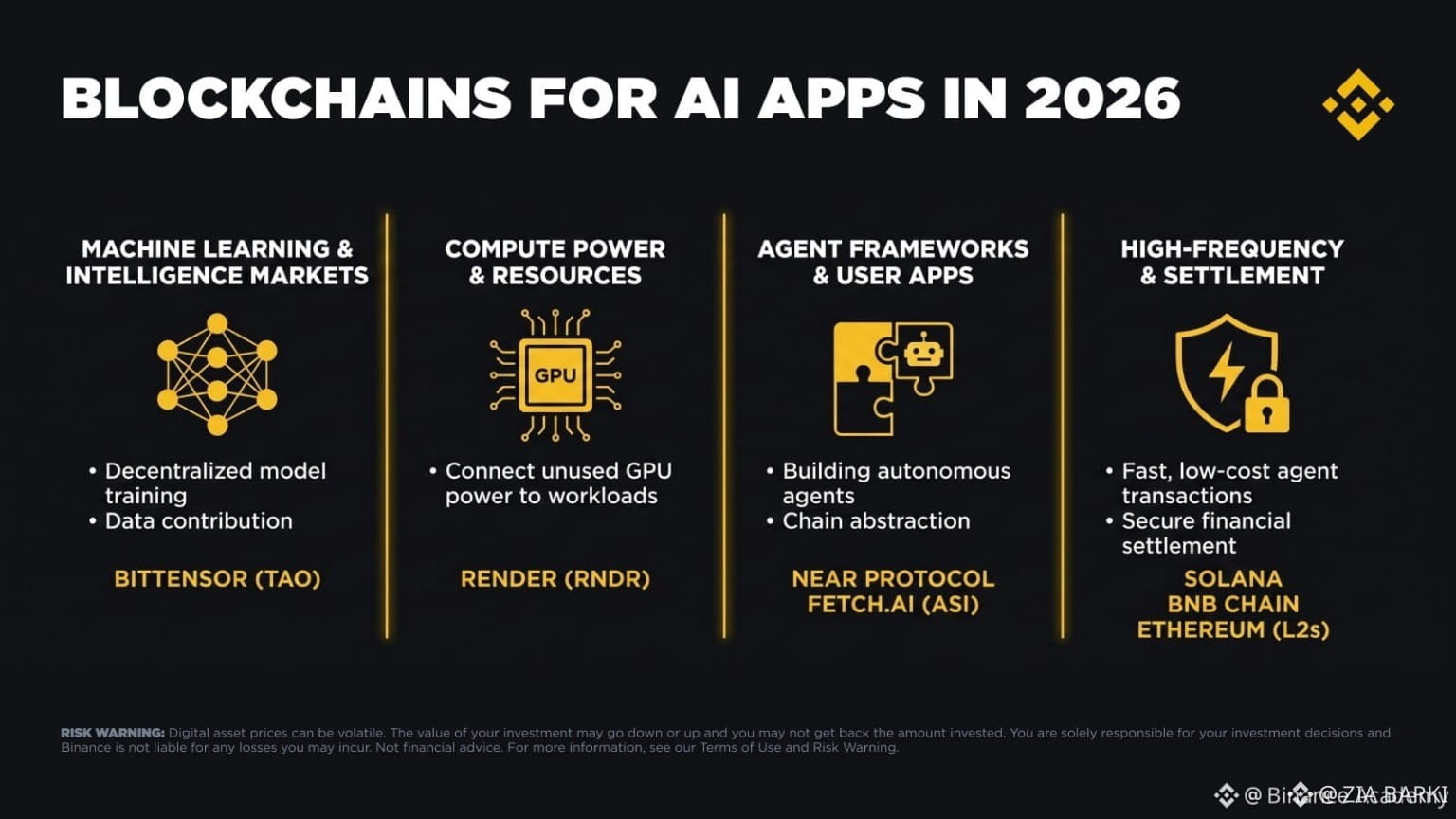
AIアプリケーションにおける「最適な」ブロックチェーンは一つではありません。理想的なネットワークは、具体的なユースケースによって変わります。重い計算を動かす場合、自律型AIエージェントを連携させる場合、あるいは決済を処理する場合などです。
👉 AIのワークロードに最も合うブロックチェーンを選びましょう。単に
{spot}(AIUSDT)
#t その話題に乗るだけではありません。
#AI #Blockchain #Crypto #Web3 #ArtificialIntelligence #Binance
AIアプリケーションにおける「最適な」ブロックチェーンは一つではありません。理想的なネットワークは、具体的なユースケースによって変わります。重い計算を動かす場合、自律型AIエージェントを連携させる場合、あるいは決済を処理する場合などです。
👉 AIのワークロードに最も合うブロックチェーンを選びましょう。単に
#t その話題に乗るだけではありません。
#AI #Blockchain #Crypto #Web3 #ArtificialIntelligence #Binance
👉 AIのワークロードに最も合うブロックチェーンを選びましょう。単に
#t その話題に乗るだけではありません。
#AI #Blockchain #Crypto #Web3 #ArtificialIntelligence #Binance
22
ログインして、さらにコンテンツを読む
厳選トピックで世界の暗号資産トレーダーの仲間入り
⚡️ 暗号資産に関する最新かつ有益な情報が見つかります。
💬 世界最大の暗号資産取引所から信頼されています。
👍 認証を受けたクリエイターから、有益なインサイトを得られます。
メール / 電話番号
トレンドトピック
ClarityActFacesProceduralVoteSept15
閲覧回数 28,535
490人が討論中
9月15日(火)午後2時15分(ET)。メモしておいて。🗓️
上院が、米国法においてどのコインが証券か、または商品かを最終的に定義する法案「CLARITY Act」について、そもそも討論するべきかどうかを決める投票を行います。
60票が必要です。共和党は53票。複数の民主党員が越境(造反)して賛成に回る必要があり、その結果は確実ではありません。
この投票に否決されると、2026年は法案が事実上死文化し、2029年頃まで(この後の中間選挙がカレンダーを食い尽くすため)成立の見込みはないでしょう。
この投票に可決されると、実際の討論に向けた扉が開きますが、それでも実際の法律になるにはまだ長い道のりがあります。
今年最大級の仮想通貨規制の節目が、数日後に訪れます。
#ClarityActFacesProceduralVoteSept15
NewbieToNode
·いいね:3件
·閲覧回数 1.8k
US2YearYieldRisesTo4.61%
閲覧回数 26,168
533人が討論中
US10YearTreasuryYieldNears5%
閲覧回数 13,766
303人が討論中