CPI may be getting most of the attention today, but I think the bigger question is what changing financial conditions mean for the infrastructure being built underneath crypto and AI.
These sectors are usually discussed around technology, speed, and adoption. I’m more interested in the economics that keep them running.
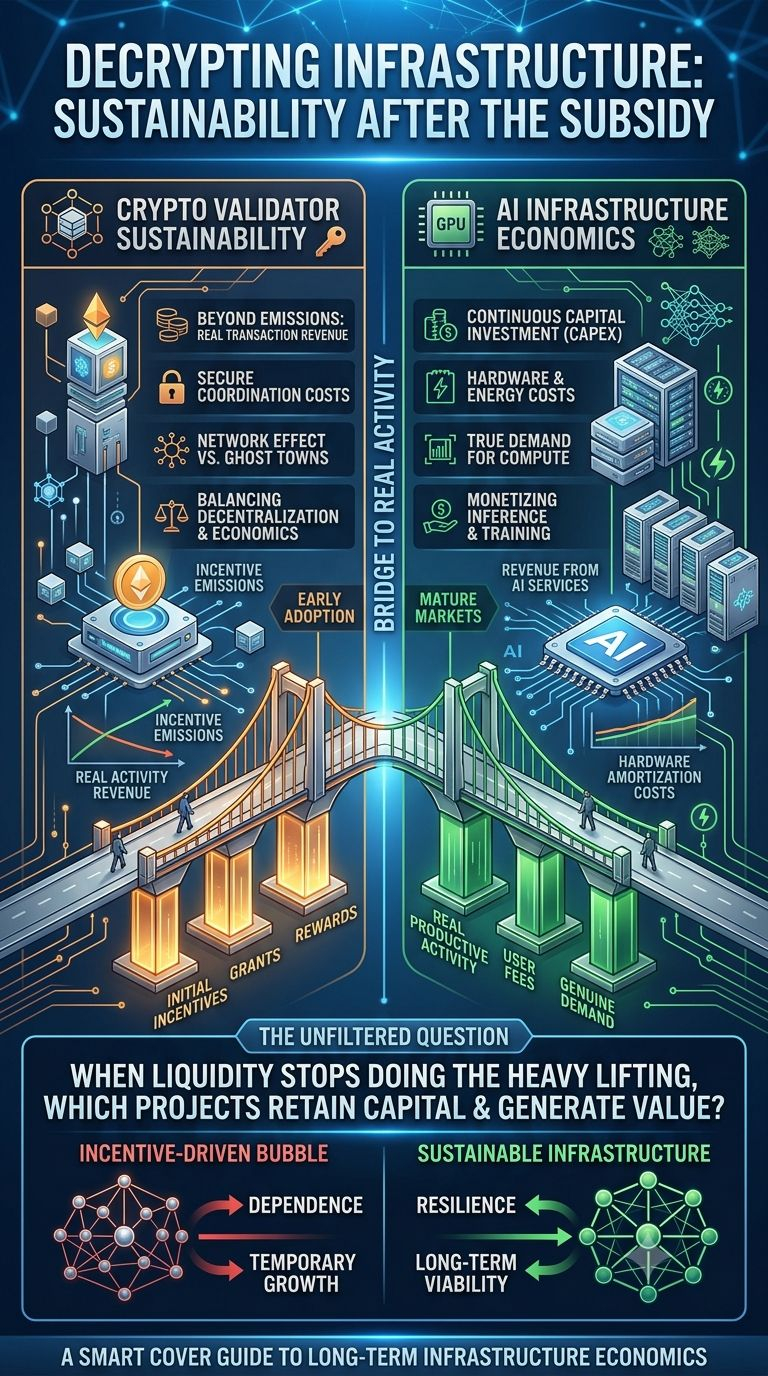
Validators need sustainable rewards. AI infrastructure requires continuous capital, energy, and hardware investment. Networks need enough real activity to justify the cost of coordination and security.
The overlooked issue is how dependent early infrastructure can become on incentives.
Subsidies, emissions, grants, and rewards can attract participants quickly, but they don’t necessarily prove that genuine demand exists. Eventually, users and productive activity have to carry more of the economic burden.
That creates a difficult long-term balance:
Aggressive incentives can help a network reach critical mass, but cutting them too quickly can hurt participation. Keep them too long, and they may hide whether the underlying model is actually sustainable.
So I’m less interested in whether today’s CPI creates a short-term move in crypto.
I’m more interested in what happens when liquidity stops doing the heavy lifting.
Which crypto and AI infrastructure projects can still attract capital, retain participants, and generate real activity when incentives become less generous?
$LAB
$RAYSOL
#CPIWatch
These sectors are usually discussed around technology, speed, and adoption. I’m more interested in the economics that keep them running.
Validators need sustainable rewards. AI infrastructure requires continuous capital, energy, and hardware investment. Networks need enough real activity to justify the cost of coordination and security.
The overlooked issue is how dependent early infrastructure can become on incentives.
Subsidies, emissions, grants, and rewards can attract participants quickly, but they don’t necessarily prove that genuine demand exists. Eventually, users and productive activity have to carry more of the economic burden.
That creates a difficult long-term balance:
Aggressive incentives can help a network reach critical mass, but cutting them too quickly can hurt participation. Keep them too long, and they may hide whether the underlying model is actually sustainable.
So I’m less interested in whether today’s CPI creates a short-term move in crypto.
I’m more interested in what happens when liquidity stops doing the heavy lifting.
Which crypto and AI infrastructure projects can still attract capital, retain participants, and generate real activity when incentives become less generous?
$LAB
$RAYSOL
#CPIWatch