BITCOIN GRID TRADING STRATEGY: +2.12% IN 30 DAYS—BUT WHAT ARE THE RISKS?
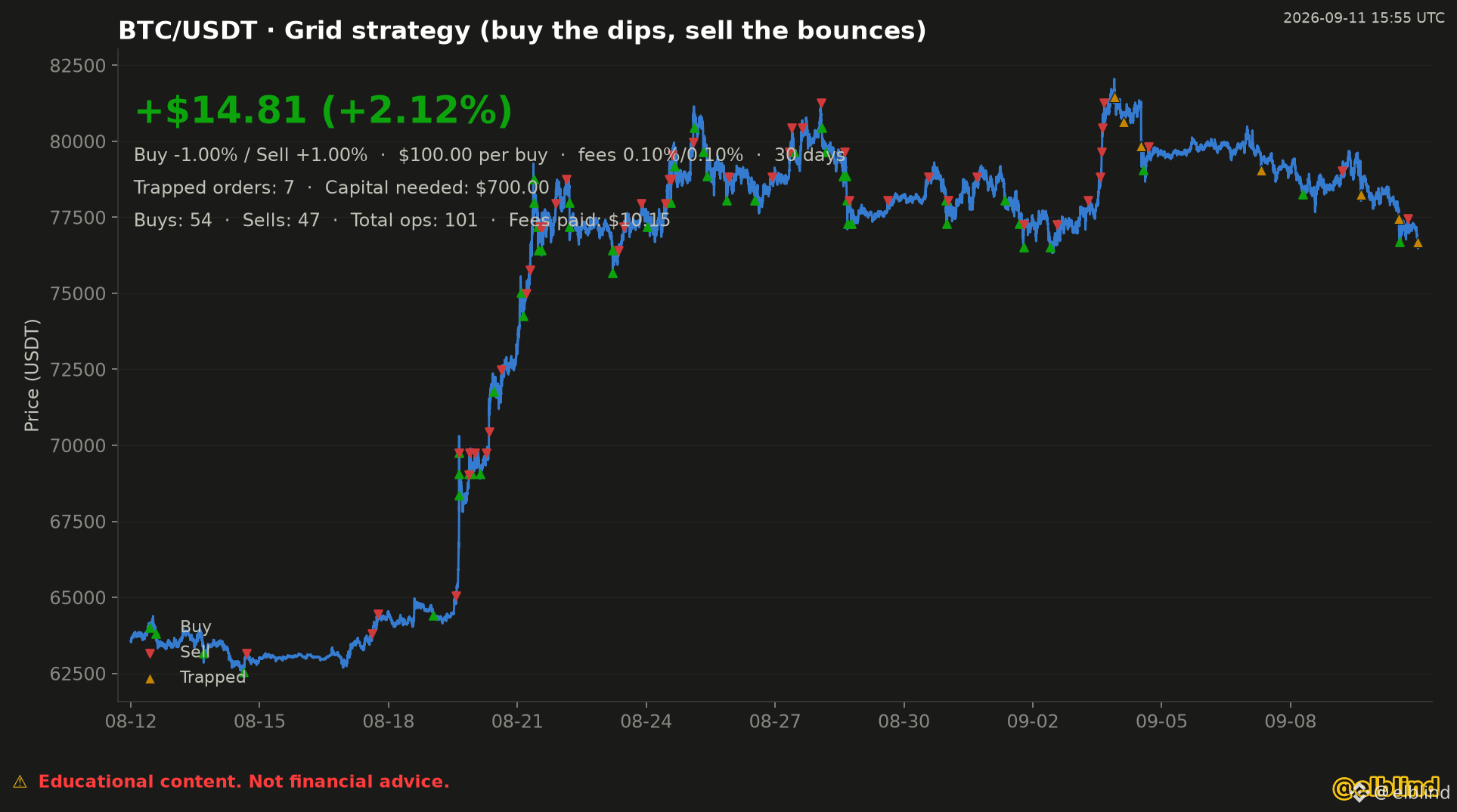
This BTC/USDT grid strategy produced a reported profit of $14.81, or +2.12%, over 30 days using a “buy the dips, sell the bounces” approach.
Strategy settings and results:
• Buy trigger: -1.00%
• Sell trigger: +1.00%
• Capital per buy: $100
• Total operations: 101
• Buys: 54
• Sells: 47
• Trading fees: $10.15
• Trapped orders: 7
• Capital required: $700
The strategy benefited from repeated BTC price fluctuations, particularly during the consolidation between approximately $77,000 and $81,000. Grid systems generally perform best in volatile, range-bound markets because they repeatedly monetize short-term price reversals.
However, the results also reveal important risks. The difference between 54 buys and 47 sells left seven unmatched positions, tying up $700 in capital. If Bitcoin continues falling, these orders may remain underwater for longer. Fees were also significant relative to the reported return, showing how frequent trading can reduce profitability.
The initial rally from around $63K to above $78K demonstrates another grid limitation: the strategy can sell too early during a powerful uptrend and therefore capture less upside than simply holding the asset. Conversely, a sustained downtrend may accumulate increasingly unprofitable positions.
Key takeaway: The strategy generated a positive result, but performance should be evaluated alongside capital exposure, trapped orders, fees and market regime—not profit alone. Grid trading requires clear range limits, sufficient liquidity and strict risk controls.
Would you use this Bitcoin grid strategy in the current market? Comment your opinion, like this post, and follow me for more BTC strategy tests and crypto market analysis.
⚠️ Past performance does not guarantee future results. Educational content only. Not financial advice.
#Bitcoin #BTC #BTCUSDT #GridTrading #CryptoTrading
This BTC/USDT grid strategy produced a reported profit of $14.81, or +2.12%, over 30 days using a “buy the dips, sell the bounces” approach.
Strategy settings and results:
• Buy trigger: -1.00%
• Sell trigger: +1.00%
• Capital per buy: $100
• Total operations: 101
• Buys: 54
• Sells: 47
• Trading fees: $10.15
• Trapped orders: 7
• Capital required: $700
The strategy benefited from repeated BTC price fluctuations, particularly during the consolidation between approximately $77,000 and $81,000. Grid systems generally perform best in volatile, range-bound markets because they repeatedly monetize short-term price reversals.
However, the results also reveal important risks. The difference between 54 buys and 47 sells left seven unmatched positions, tying up $700 in capital. If Bitcoin continues falling, these orders may remain underwater for longer. Fees were also significant relative to the reported return, showing how frequent trading can reduce profitability.
The initial rally from around $63K to above $78K demonstrates another grid limitation: the strategy can sell too early during a powerful uptrend and therefore capture less upside than simply holding the asset. Conversely, a sustained downtrend may accumulate increasingly unprofitable positions.
Key takeaway: The strategy generated a positive result, but performance should be evaluated alongside capital exposure, trapped orders, fees and market regime—not profit alone. Grid trading requires clear range limits, sufficient liquidity and strict risk controls.
Would you use this Bitcoin grid strategy in the current market? Comment your opinion, like this post, and follow me for more BTC strategy tests and crypto market analysis.
⚠️ Past performance does not guarantee future results. Educational content only. Not financial advice.
#Bitcoin #BTC #BTCUSDT #GridTrading #CryptoTrading