From 0.5% to 23%: Wall Street’s crypto perps takeover explained
After a lot of objection, criticism, and denial, Wall Street is moving onto crypto rails.
According to Bloomberg, crypto exchanges are expanding beyond cryptocurrencies into round-the-clock markets for stocks and commodities. The huge increase in “perpetual futures” trading linked to stocks and commodities further confirmed this sentiment.
How did one month change things for good?
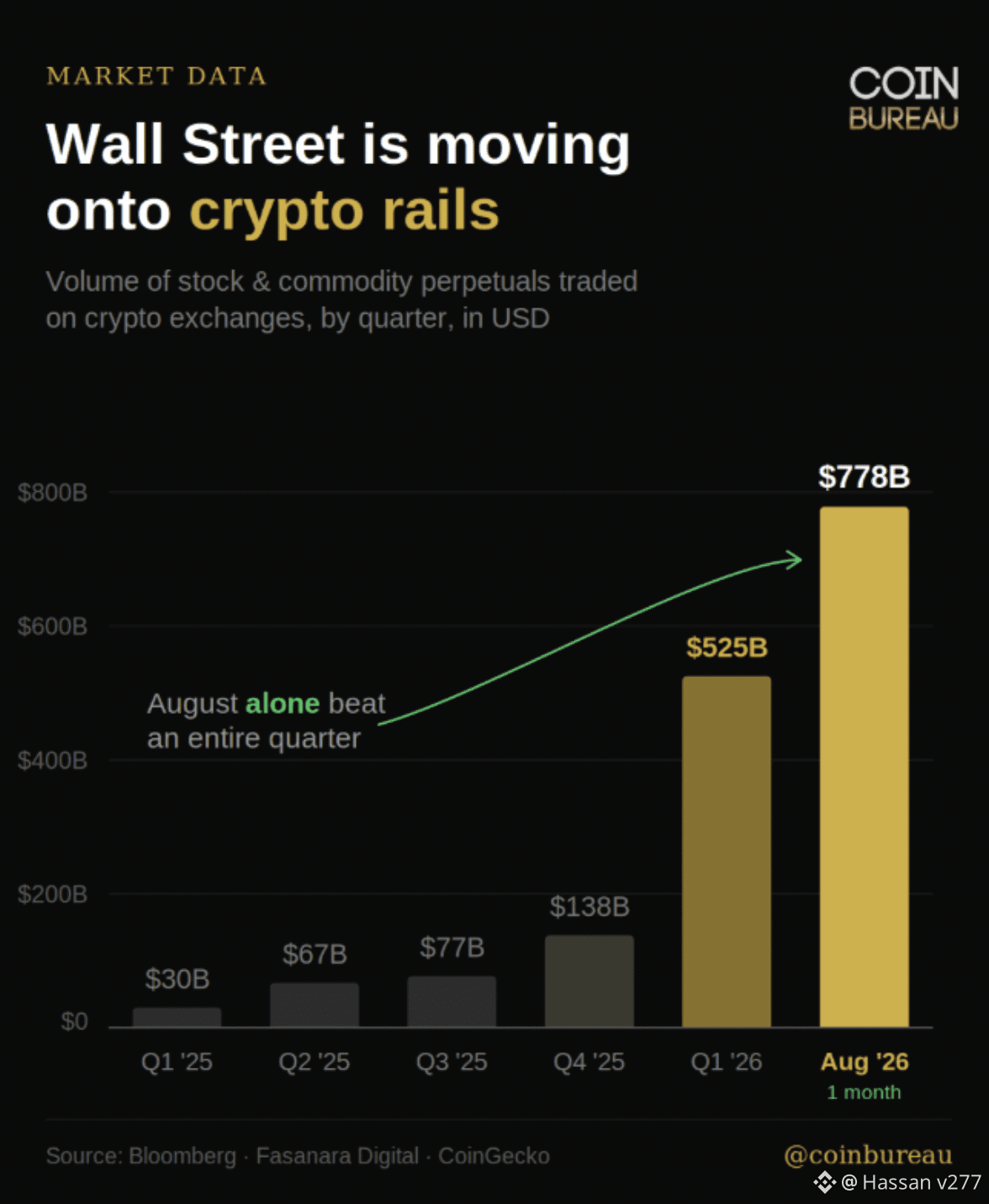
In August, these contracts generated $778 billion in Trading Volume across major crypto venues. They represented 23.48% of all Perpetual Futures activity, compared with only 0.5% in November 2025.
At the same time, their centralized-exchange volume reached $665.42 billion in August, up from only $11.58 billion in January.
The main reason behind this surge is that crypto platforms are attracting traditional-asset trading because perpetual futures offer 24/7 access. This makes stocks, ETFs, and commodities easier to trade through crypto infrastructure.
For instance, though the SpaceX-linked SPCX contract is private, investors can speculate on its valuation without owning the actual stock—thanks to crypto perpetuals trading.
This was further validated by Binance accounting for about $433.4 billion of TradFi perpetual volume, with most of that coming from equity-linked contracts.
That said, the list also includes Bybit and Hyperliquid, as even these are becoming important venues for traditional-asset speculation.
After a lot of objection, criticism, and denial, Wall Street is moving onto crypto rails.
According to Bloomberg, crypto exchanges are expanding beyond cryptocurrencies into round-the-clock markets for stocks and commodities. The huge increase in “perpetual futures” trading linked to stocks and commodities further confirmed this sentiment.
How did one month change things for good?
In August, these contracts generated $778 billion in Trading Volume across major crypto venues. They represented 23.48% of all Perpetual Futures activity, compared with only 0.5% in November 2025.
At the same time, their centralized-exchange volume reached $665.42 billion in August, up from only $11.58 billion in January.
The main reason behind this surge is that crypto platforms are attracting traditional-asset trading because perpetual futures offer 24/7 access. This makes stocks, ETFs, and commodities easier to trade through crypto infrastructure.
For instance, though the SpaceX-linked SPCX contract is private, investors can speculate on its valuation without owning the actual stock—thanks to crypto perpetuals trading.
This was further validated by Binance accounting for about $433.4 billion of TradFi perpetual volume, with most of that coming from equity-linked contracts.
That said, the list also includes Bybit and Hyperliquid, as even these are becoming important venues for traditional-asset speculation.