

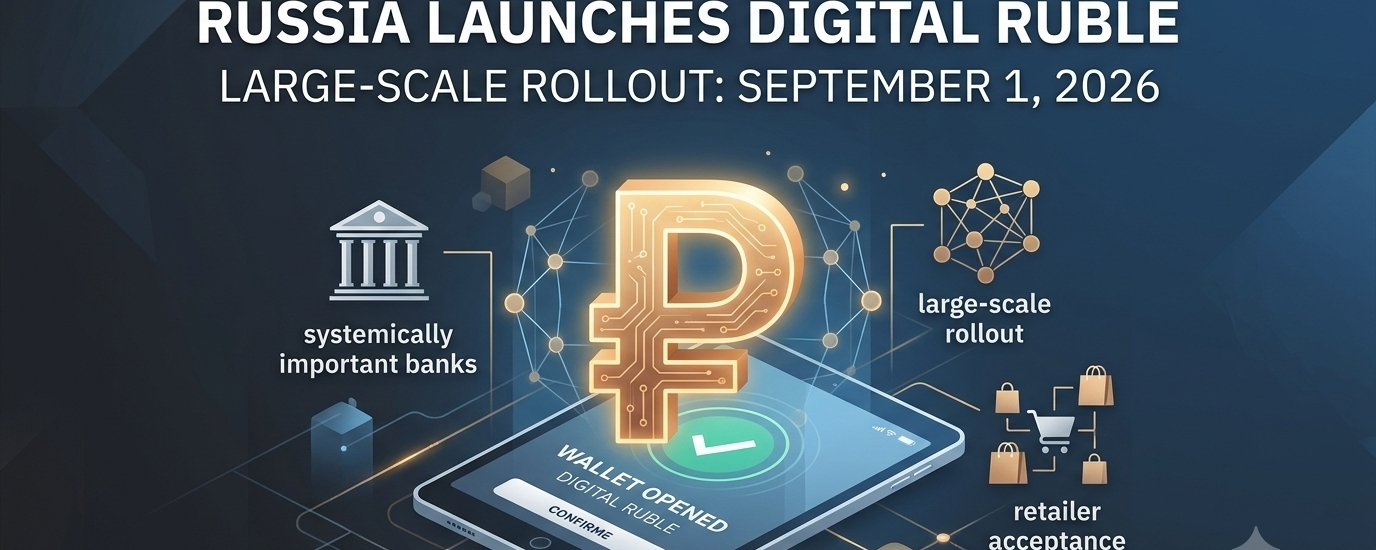

ロシアは、中央銀行デジタル通貨(CBDC)であるデジタル・ルーブルの大規模な商業展開を2026年9月1日に開始する。これは、現金および非現金のルーブルに加えて、同国における第3の形態の通貨として広く国内で利用されるようになることを意味し、多年にわたる試験導入からの移行となる。
枠組みの下で、システム上重要なロシアの12の銀行(Sberbank、VTB、アルファ・バンクなどを含む)は、顧客がデジタル・ルーブルのウォレットを開設し、送金を行い、銀行アプリを通じて商品やサービスの支払いをできるようにする必要がある。年間売上高が1億2000万ルーブルを超える大規模小売業者およびサービス提供者には、デジタル・ルーブルでの支払いを受け入れることが求められる。Wildberries、Ozon、MTSなどの主要企業を含む、通信・eコマース企業各社は、対応の準備ができていることを確認している。統合は、数百万の店舗を対象とする既存のユニバーサルQRコード決済インフラを活用して行われる。
デジタル・ルーブルは、ロシア銀行が自社プラットフォーム上で発行・決済する。支払いと送金(国への送金を含む)に対応する一方で、利息を生み出すこと、預金として扱うこと、また貸し付けの裏付けとして利用することはできない。今後の段階では、2027年にユニバーサルライセンスの銀行や中堅規模の商人がオンラインに加わり、2028年により幅広い普及が見込まれる。
当局者は、実際の取引やスマートコントラクトの実験を含む広範なテストの後に技術的な準備が整っていることを強調している。この動きは、決済効率の向上、予算フローに関する透明性の確保、そして国内の決済システムにおけるより高い耐性の実現を目指している。
暗号資産およびデジタル資産コミュニティにとって、この展開は、ロシアが暗号資産の支払い手段としての利用を制限しつつも、世界的にCBDCの導入が加速していることを示すものだ。市場参加者は、普及率、ウォレット機能の拡充、そして今後の越境取引やスマートコントラクト関連の進展の有無を注意深く見守ることになるだろう。
#RussiaStartsLargeScaleDigitalRubleRolloutSep1 #DigitalRuble #CBDC #russia
#RussiaStartsLargeScaleDigitalRubleRolloutSep1