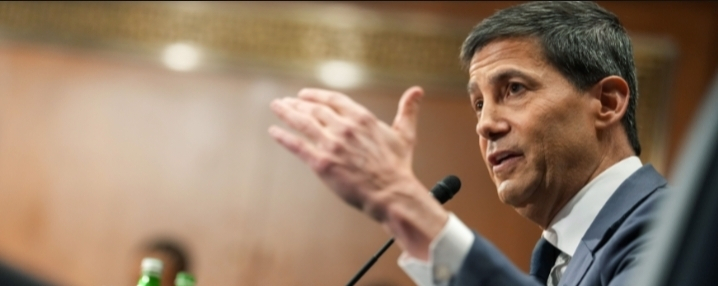

Federal Reserve Chair Kevin Warsh delivered a notably hawkish message at the Jackson Hole symposium, saying the U.S. central bank still has “work to do” to bring inflation firmly back toward its 2% target.
Warsh said inflation should remain the Fed’s “predominant focus”, arguing that the central bank must be confident that underlying inflation is moving toward its objective at a sufficient pace.
His comments quickly affected financial markets.
Bitcoin fell toward $78,700, while U.S. stocks also moved lower and Treasury yields edged higher as investors reassessed the outlook for monetary policy.
September Rate-Cut Expectations Shift
Markets also became less confident about a September rate cut following Warsh’s remarks.
According to CME FedWatch data cited in the report, the probability of a September rate move rose to 42% from 35% the previous day.
The shift highlights how sensitive markets remain to Federal Reserve communication. A more hawkish Fed generally means tighter financial conditions, which can put pressure on risk assets such as Bitcoin and cryptocurrencies.
Why Jackson Hole Matters
The annual Jackson Hole meeting is closely watched by investors because Federal Reserve officials have historically used the event to communicate important changes in monetary policy.
Warsh’s comments were therefore particularly significant as markets were already debating the timing and pace of future rate adjustments.
The speech also comes amid a debate over long-term U.S. Treasury yields.
Treasury Secretary Scott Bessent recently indicated that he wanted to intervene in the bond market to help push long-term borrowing costs lower, arguing that market inefficiencies may be keeping yields above levels they would otherwise reach.
Warsh, however, has generally supported allowing market forces to determine where interest rates and bond yields settle.
What It Means for Bitcoin
The immediate market reaction shows why Fed policy remains one of the biggest macro drivers for Bitcoin.
If inflation remains stubbornly high, the Fed may have less room to cut rates aggressively. Higher-for-longer interest rates can reduce liquidity and make speculative assets less attractive.
For Bitcoin traders, the key things to watch now are U.S. inflation data, labor-market conditions, Treasury yields and further Fed guidance.
Warsh’s message was clear: the fight against inflation is not over, and the Fed is not prepared to declare victory prematurely.
That hawkish stance is likely to keep markets on edge as investors look ahead to the Fed’s next policy decision.
