


すべての株式投資家が知っている「週末ブラックアウト」
金曜の午後、米東部時間16:00。ニューヨーク証券取引所(NYSE)では閉場のベルが鳴り、続く65時間、世界最大の株式市場は暗転します。ところが世界は止まりません。企業は土曜の朝でも決算を発表し続けます。中央銀行は驚きの声明を出し続けます。戦争は起き、停戦協定は結ばれ、地政学的な見出しも途切れません。そしてその間、従来の株主は手をこまねいています。月曜の寄り付きのベルを待つしかできないのです。
これは「週末ギャップ」の問題であり、伝統的な金融における最も古く、そして最もやるせない癖の一つです。ニュースを見られます。見出しも読めます。でも市場が再開するまで、それのどれも取引に使えません。しかもその時には、あなたが締め出されている間に起きた出来事を織り込むため、価格がすでに跳ね上がっていることがある—しかも時には激しく。
しかし、このギャップには新しい種類の市場が静かに入り込んでいます。オンチェーンbStocks—バイナンスが発行する米国株式のトークン化版—は、24時間365日、連続して取引されます。そしてBinance Researchの最新データによれば、これらのトークンは取引のための取引をしているだけではありません。実際の価格発見を行っており、しかもそれをうまくやっています。
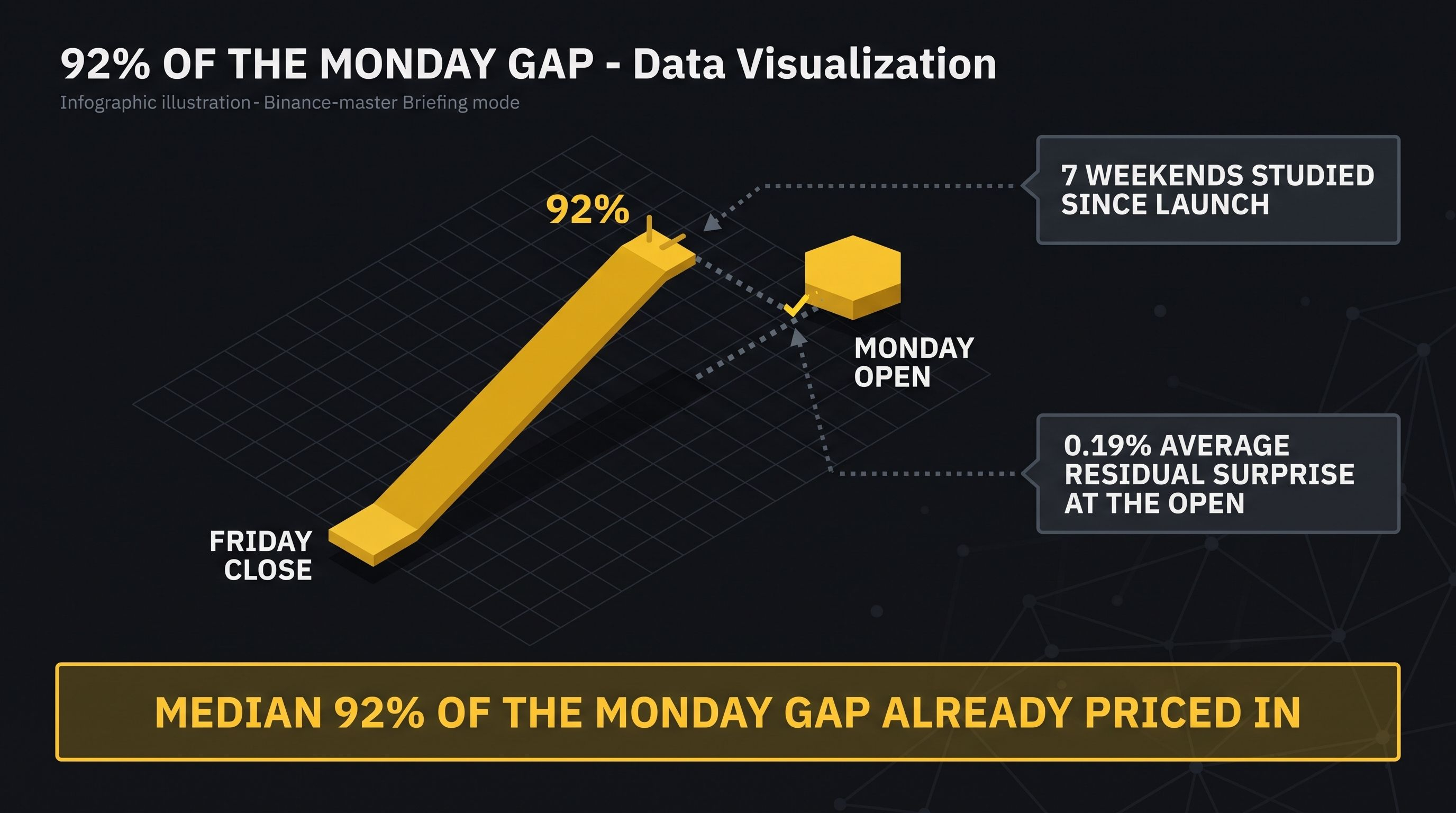
ローンチ以来の7つの週末において、bStocksは基礎となる株の次の月曜の始値ギャップを中央値92%織り込みました。最大級の動き(3%以上のギャップ)では、観測された41件すべてでbStocksは正しい方向を当てています。さらに別途、直近1週間だけでも、オンチェーンbStocks出来高の92%と、バイナンスでの15億ドル分の取引が、米国市場が完全に閉まっている間に発生しました。
価格発見—市場が果たす最も重要な機能の一つである可能性が高い—が、静かにオンチェーンへ移っています。ここでは、それが何を意味し、どう機能し、なぜ重要なのかを説明します。
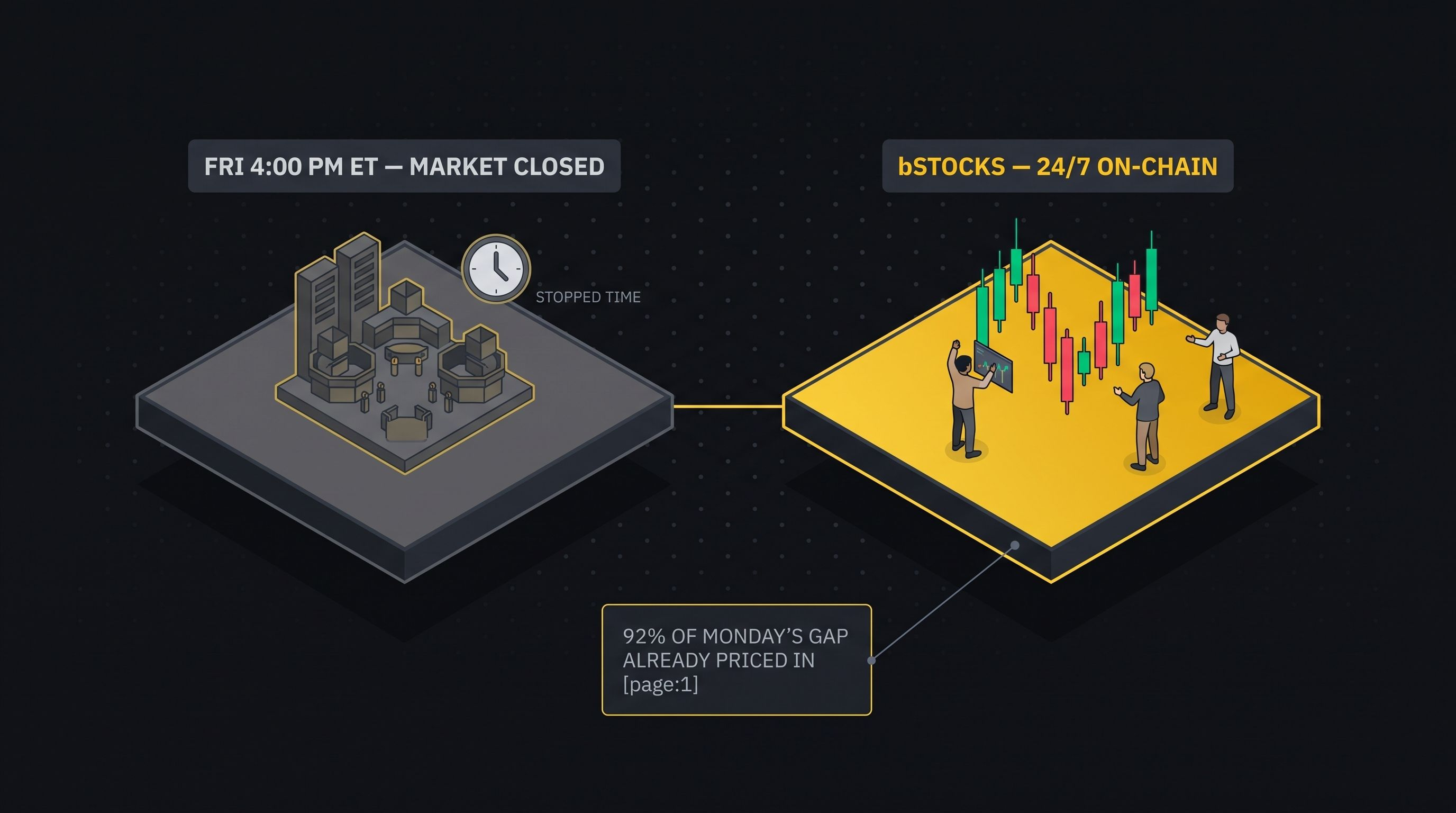
bStocksとは何か、そしてウォール街が動かないのにどうして取引されるのか
bStocksは、BNB Chain上で発行された米国株式およびETFのトークン化表現であり、バイナンスの取引所でも分散型取引所(DEX)でも直接取引できます。従来のブローカー口座を通じて株式を保有するのではなく、bStock保有者は基礎となる株式に追随するよう設計されたブロックチェーンベースのトークンを保有することになります。
鍵となる構造上の違いは「利用可能性」です。NYSEまたはNASDAQに紐づく証券口座は、市場時間に縛られます—東部時間の月曜〜金曜、9:30〜16:00で、さらに休日休場が上乗せされることもあります。bStockは、集中型取引所の板の中ではなくブロックチェーン上に存在するため、こうした制限がありません。日曜の午前3:00でも、火曜の正午でも、同じように買って売れます。
2026年6月11日にローンチして以来、bStocksは市場での存在感がゼロから始まり、マーケットシェアの面で世界最速の成長を遂げるトークン化株式プロダクトになりました[page:1]。時価総額は7週間足らずで5億ドルを超え、上場トークン56銘柄に分散しています。SNDKB、SPCXB、MUB、CRCLB、SOXLBのような銘柄が、運用資産(AUM)で最大規模を持っています[page:1]。成長は主要な“注目銘柄”に集中するのではなく広く分布しています—これは、1つか2つの銘柄で起きた投機的な急騰よりも、真の採用の広がりとより整合的なパターンです。

データ:bStocksは月曜のギャップの92%を織り込んでいた
ここからが、マーケット構造に注目している人にとって本当に面白い領域です。Binance Researchは、bStocksの週末の価格変動と、基礎となる株の実際の月曜寄り付きギャップを比較しました。つまり、金曜の終値と月曜の始値の差です。
立ち上げ以降、調査した7つの週末において、bStocksはその月曜のギャップの中央値92%を織り込み、実際の市場オープン時の平均残差サプライズはわずか0.19%にとどまりました[page:1]。平たく言えば、もしある株が月曜の朝に週末ニュースで5%ジャンプするはずだったなら、bStocks保有者は週末の時点でその動きをすでに約4.6ポイント取り込んでいた一方、従来の株主は寄り付きのベルを待っている最中だった—ということです。
これは重要な発見です。bStocksが単にノイズや恣意的なセンチメントを追っているだけではないことを示唆しているからです。彼らは現実の情報—決算サプライズ、マクロ指標の発表、地政学ショック—を吸収し、反映しています。しかも「公式」市場が反応する前に、その反映が起きています。
方向の精度:3%以上のギャップで100%正解
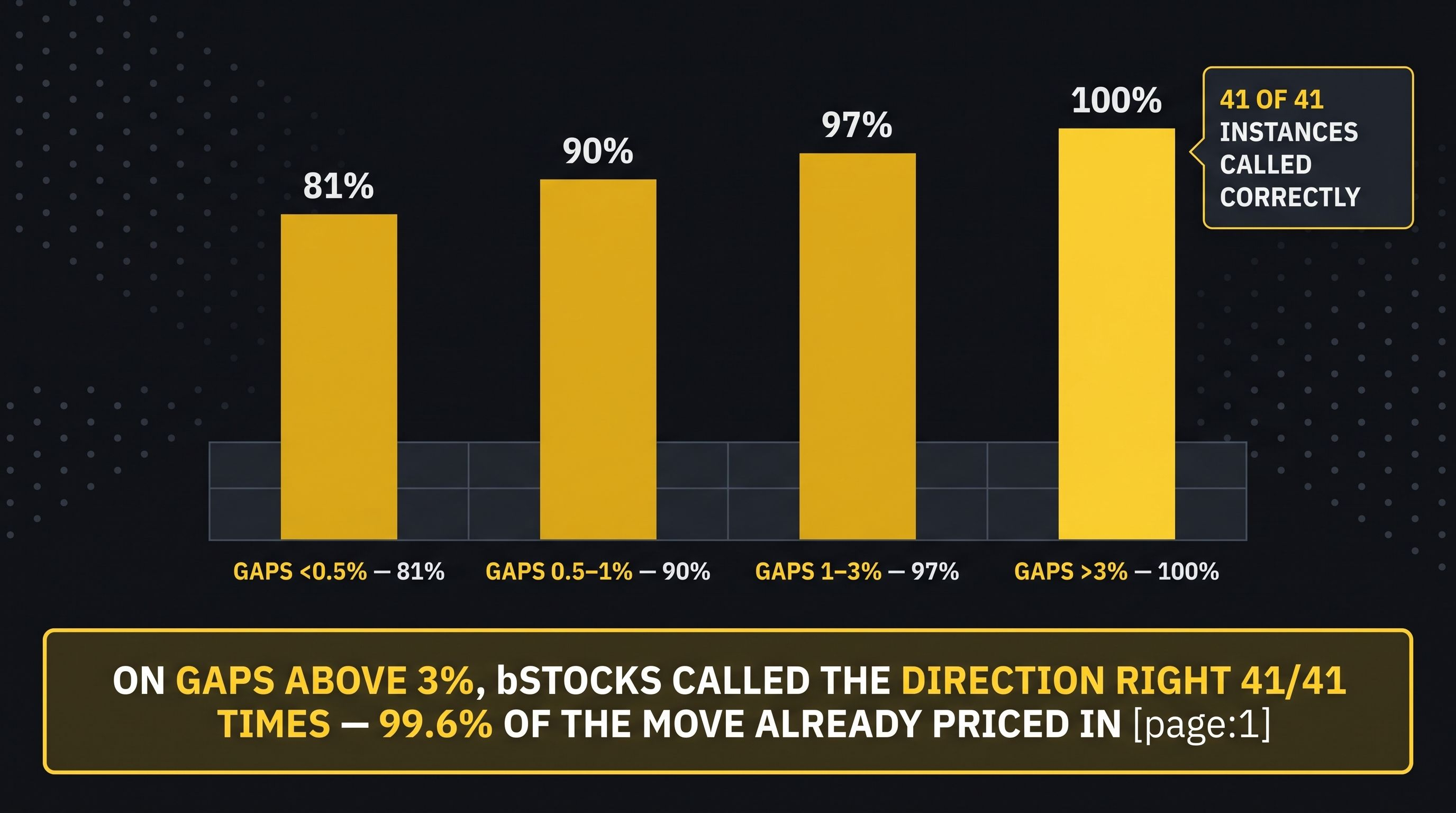
すべての値動きが同じというわけではありません。重要度(賭け金)が上がるほど、データはさらに説得力を増します。Binance Researchは、最終的な月曜のギャップの大きさ別に方向の精度を分解しました[page:1]:
ギャップ0.5%未満:bStocksは正しい方向を81%の確率で一致
ギャップ0.5%〜1%:精度は90%まで上昇
ギャップ1%〜3%:精度は97%まで上昇
3%以上のギャップ:bStocksは100%の確率で正しかった—ローンチ以降に観測された41件すべてで、すでに織り込み済みだったのはギャップ動きの中央値99.6%でした[page:1]
このパターンは直感的に理解できます。小さな夜間の揺れはノイズになりやすく、読みづらい—薄い週末の流動性、ランダムなフロー、短期のポジショニングなどが、価格をどちらの方向にも押し得ます。ですが、本当に重大な出来事が起きた場合—決算の大幅な上振れ(もしくは下振れ)、予想外のFRBコメント、大きな地政学的事件など—そのシグナルは十分に強く、薄い週末市場であっても、市場はほぼ毎回正しく読み取ります。Binance Researchは、極端側のサンプルサイズがまだ小さい点には言及していますが、トレンドの方向性は明確です。オンチェーンの価格は、「最も重要な瞬間」にこそ最も役に立つのです。
実際に取引が起きる場所:オンチェーン vs. バイナンス vs. ウォール街の時間
レポートの最も印象的な点は、bStocksが24時間365日取引されているだけではなく、その活動の多くが「ウォール街が閉まっている間」に起きていることです。
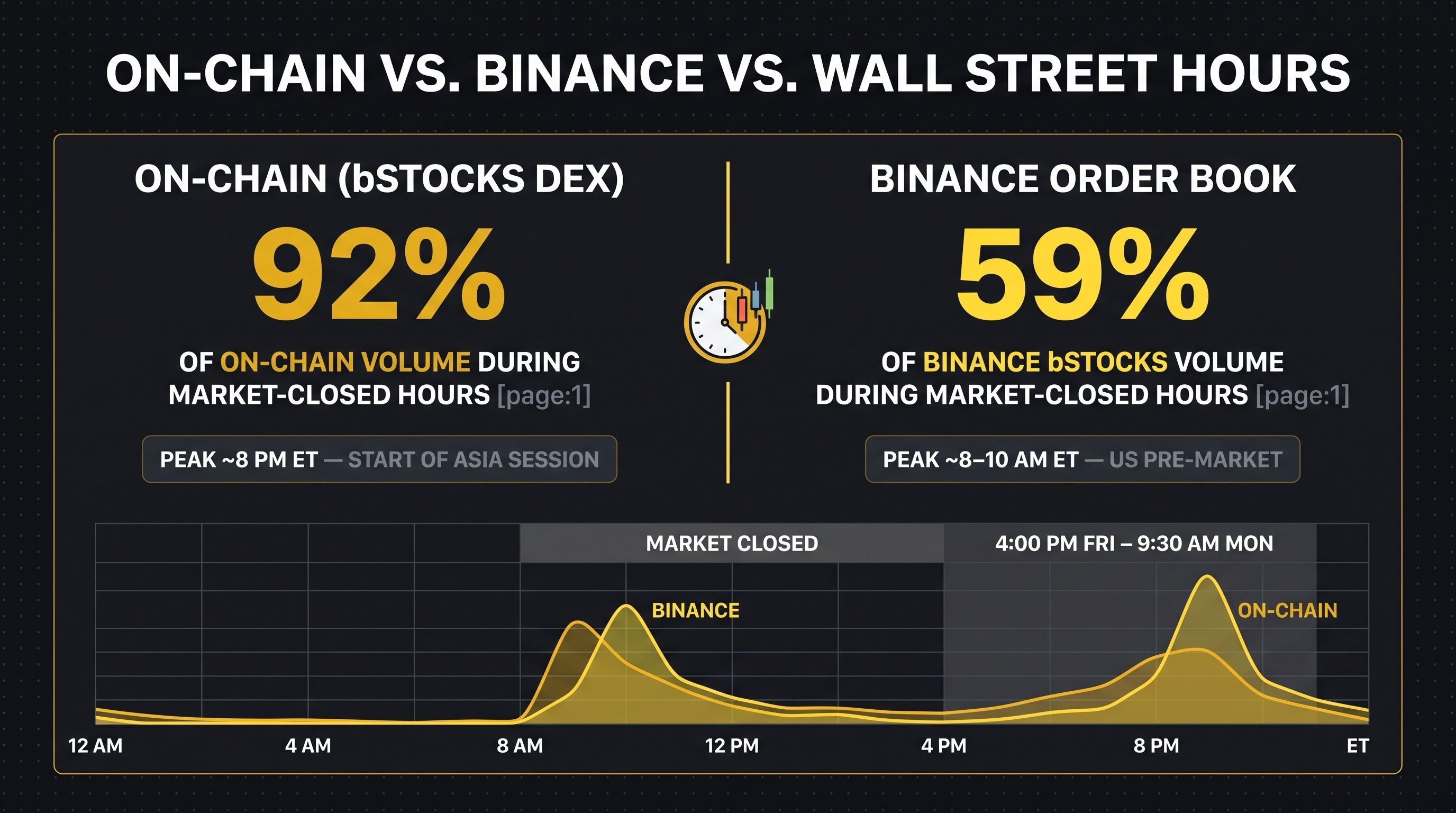
7月28日までの7日間で、オンチェーンbStocks出来高の92%とバイナンスbStocks出来高の59%が、米国の株式市場が閉じている間に実行されました[page:1]。累計で、基礎となる株式市場がまだ開いていない時間帯に、バイナンス上でbStocksが15億ドル分ハンドされました。これは、トークン化が存在する前には単純に同等のものがなかった活動です[page:1]。7月だけでも、市場クローズ時の取引がバイナンスのbStocks出来高の62%を占め、開始以来では58%でした[page:1]。
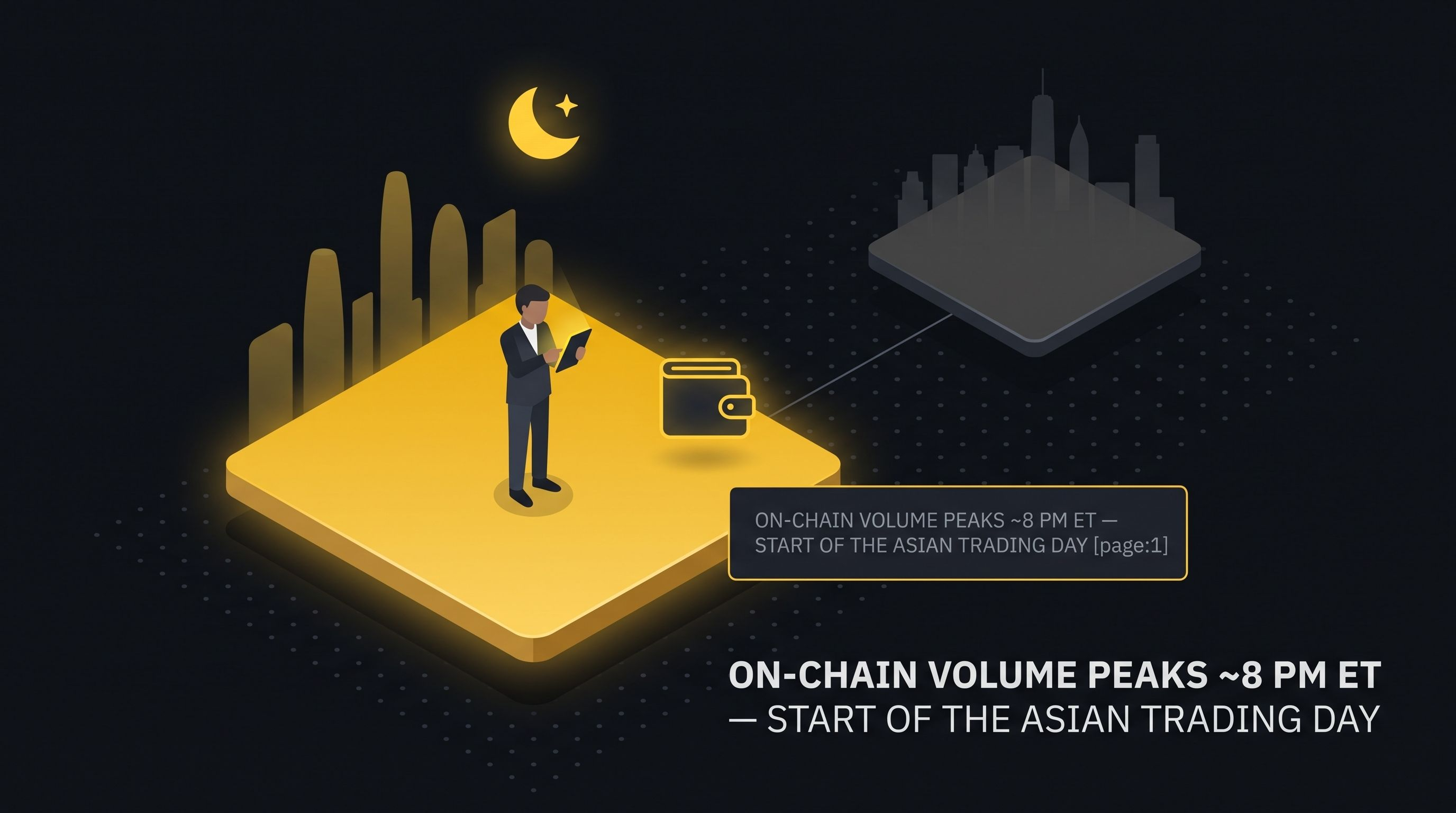
時間別データからは、2つの明確な取引集団が見えます。Binance側の活動は東部時間の午前8:00〜10:00頃に集中する傾向があり、米国のプレマーケットおよびオープニングオークションの時間帯と一致しています。つまり、トレーダーが米国セッションの近辺でポジショニングしていることを示唆します[page:1]。一方でオンチェーン出来高は、東部時間の午後8:00頃からピークを迎えます。これはアジアの取引日が始まるタイミングで、アジア・セッションを通じて高い水準が続きます[page:1]。これは、需要のかなりの部分が、現地の取引時間がニューヨークの時計と重ならない地域から来ていることを強く示す手がかりです。まさにその種の、十分に満たされていない需要をトークン化がうまく取り込める立場にあります。
ゼロから27%へ:トークン化株式はどれほど速く成長しているのか
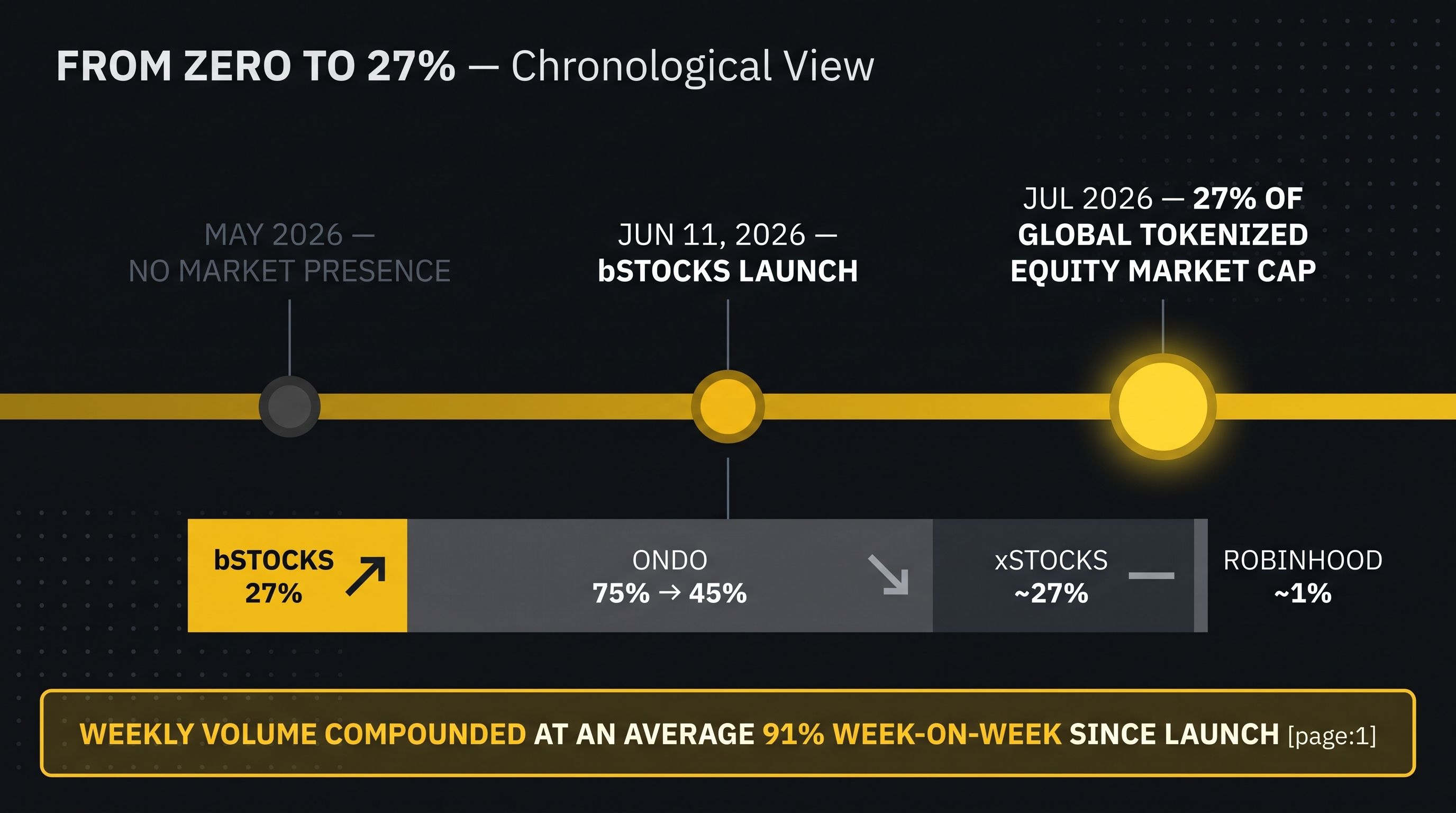
視点を広げると、bStocksの台頭はニッチな実験というより、明確な市場シェアの移行に見えます。2026年5月時点では、bStocksはトークン化株式領域に存在感がありませんでした。7月には、グローバルなトークン化株式の時価総額の27%を支配するまでになっています[page:1]。この伸びは主に前の首位であるOndoのシェアを削ることで生まれ、同期間でOndoの比率は75%から45%へ低下しました。一方、xStocksはおよそ27%でほぼ横ばい、ロビンフッドのトークン化提供は約1%と後れを取っていました[page:1]。
出来高は時価総額よりもさらに速いペースで拡大しています。週次のbStocks出来高は、開始以来、週ごとに平均91%で複利成長し、累計の総回転は87億ドルに到達しました[page:1]。そのうち72%(63億ドル)が、バイナンスの自社オーダーブックではなくオンチェーンで実行されました。この比率は、ローンチ当初ほぼゼロだったところから、7月中旬にはおよそ70%まで上昇しています[page:1]。特に7月に関しては、bStocksはDEX出来高で約74億ドルを生み、同月のトークン化株式DEX取引の85%を占めました[page:1]。
ここにはチェーンレベルの物語もあります。OndoのBNB Chain発行トークンと合わせて、BNB Chainは現在、時価総額ベースで世界のトークン化された株式およびETFのうち約30%をホストしており、2025年末の10%未満から増加しています[page:1]。それでもなお、これはまだ初期段階の市場です。バイナンスおよびオンチェーン取引拠点全体でのbStocksの総出来高は、実際の基礎となる株式およびETFの取引出来高の約0.3%にすぎず、6週間前の0.01%から増えたにとどまります[page:1]。なお、基礎出来高のまだ控えめな10%に到達するには、現状からさらに約33倍の拡大が必要です[page:1]。成長トレンドが続くなら、走れる余地は十分にあります。
アジアおよびそれ以外の地域のトレーダーにとって、なぜ重要なのか
米国のタイムゾーン外で取引する人にとって—特に現地の市場時間がNYSEの9:30〜16:00の枠と決して重ならないことが多いアジアの多くの人にとって—この変化はただの興味深い話ではありません。株式取引所が最初に発明された時から存在していた問題に対する“構造的な修正”だからです。つまり、地理とタイムゾーンが、いつ情報に反応できるかを左右してしまうという問題です。
フィノムペン、マニラ、またはシンガポールにいるトレーダーが、(歴史的には)金曜の取引終了後に米国の決算が下方修正されたのを見た場合、実際にその情報に基づいて行動するには、通常は自分の月曜の夜(米国の月曜の朝)まで待って、従来の証券ブローカーを通じて取引する必要がありました。bStocksなら、そのトレーダーはニュースが出た瞬間に見解を示せます。土曜の午後でも、現地時間の午前2時でも関係ありません。時間別出来高データがそれを裏づけています—オンチェーンの活動は、アジアの取引日が始まるタイミングとまさに一致して最も活発です[page:1]。
これはbStocksがリスクフリーであること、あるいは基礎となる株式そのものの完全な代替であることを意味しません。流動性は主市場より薄く、トラッキングは実際の株を保有することと同一ではなく、週末の価格変動も依然としてボラティリティを持ち得ます。ですが、どの取引所が開いているかにかかわらず、ニュースにリアルタイムで反応するためのツールとしては、本当に新しい能力です。
バイナンス・エコシステムの中での位置づけ
bStocksは、バイナンスによるトークン化された実世界資産(RWA)へのより広い取り組みの中に位置します。この領域はニッチなDeFiトピックから、暗号資産市場でより注目されるトレンドの一つへと成長しています。すでにバイナンスで活動しているユーザー向けに、押さえておくとよい実務的なポイントをいくつか挙げます:
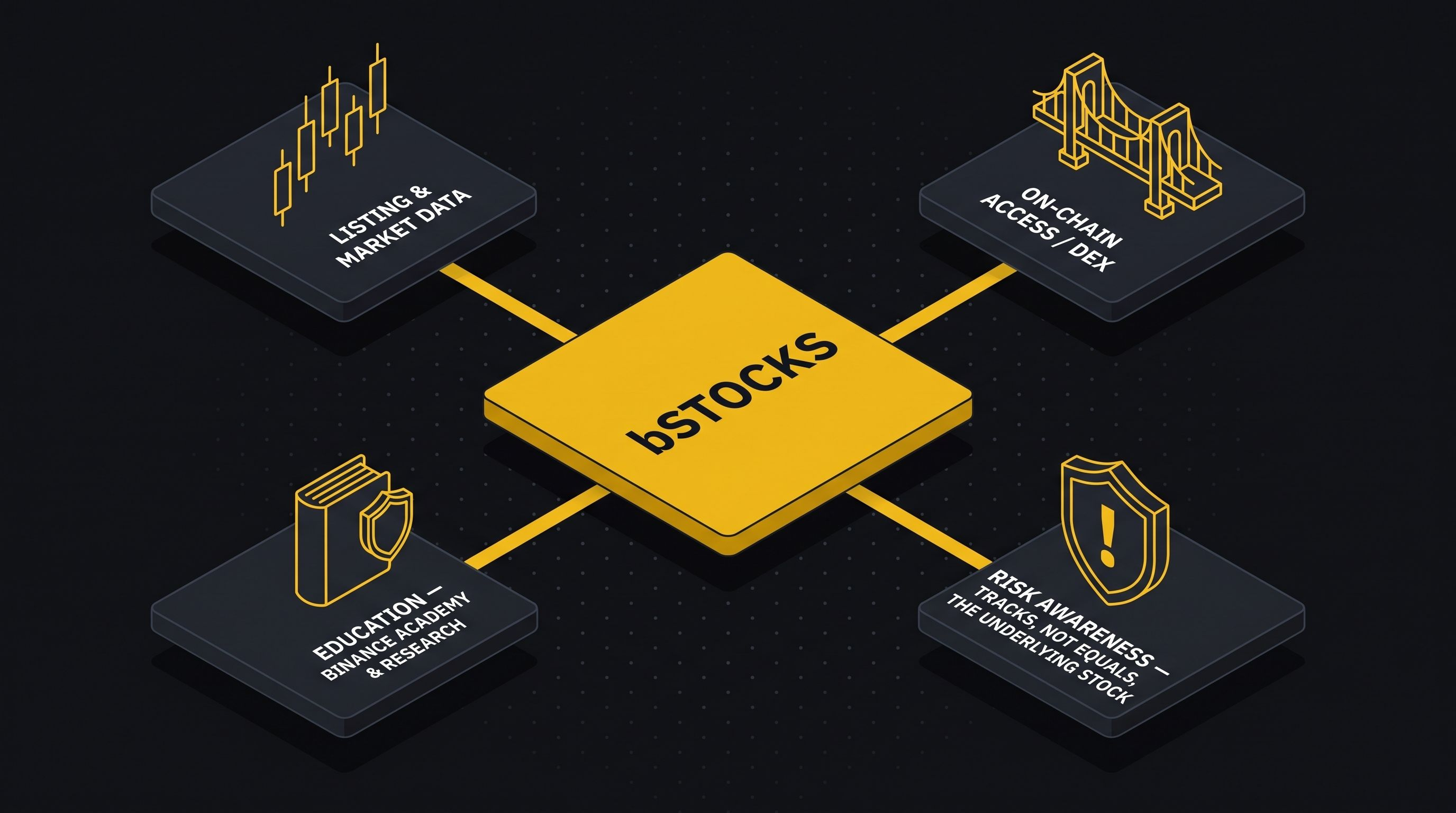
上場および市場データ:bStocksは暗号資産ペアと同じく、バイナンス上で直接上場されます。トレーダーがスポット取引で既に使っているのと同じオーダーブックおよび市場データツールを利用できます。
オンチェーンでのアクセス:bStocksはBNB Chain上で発行されるため、DEX経由でも利用可能です。これにより、ユーザーは好みに応じて、集中型のオーダーブックの流動性とオンチェーン取引のどちらを選ぶかができます。
教育リソース:Binance AcademyおよびBinance Researchは、トークン化資産の仕組み、そのリスク、そして基礎となる証券そのものを保有することとの違いについての解説やデータ駆動のレポートを定期的に公開しています(本記事が参照しているのもそのようなものです)。
リスク認識:いかなるトークン化された資産でも同様に、ユーザーはbStockが、基礎となる株価を追跡する請求権であり、直接の株式保有とは同一ではないこと、また流動性条件は特に週末において主市場と異なり得ることを理解すべきです。
これらはbStocksを保証された優位性として扱う理由にはなりません。しかし、すでに暗号資産を取引していて、株式とブロックチェーン基盤がどのように収束しているのかに興味がある人にとっては、これはそのトレンドがリアルタイムに現れている“生きた”データに裏打ちされた例です。
要点
ウォール街は閉まりますが、bStocksは閉まりません。オンチェーンのトークン化株は24/7で取引され、従来の市場が閉じている時間帯の価格変動を取り込みます。
bStocksは、データ7つの週末における次の月曜の始値ギャップに対して中央値92%を織り込み、オープン時のサプライズは平均0.19%にとどまりました[page:1]。
最大級の動き(3%以上のギャップ)では、bStocksは41/41回で正しい方向を当てており、既に織り込み済みだったのは99.6%でした[page:1]。
米国市場が閉じている間に、オンチェーン出来高の92%とバイナンス取引の15億ドルが発生しました。これは主にアジア取引セッションからの需要によって牽引された面があります[page:1]。
bStocksの時価総額は5億ドルを超え、2カ月足らずでグローバルなトークン化株式市場シェアの27%を獲得し、OndoやxStocksとの競争構図を塗り替えました[page:1]。
市場は依然として基礎となる株式に比べて小さい(出来高の0.3%)ため、今日のデータは説得力があるものの、初期かつ急速に進化しているプロダクトから来ています[page:1]。
FAQ
Q:bStocksとは何ですか?
A:bStocksは、BNB Chain上で発行される米国株式およびETFのトークン化版で、バイナンスおよび分散型取引所で取引可能です。基礎となる株式(アンダーライング)の価格を追跡するよう設計されています。
Q:米国の株式市場が閉まっているのに、bStocksはどうやって取引できるのですか?
A:bStocksは集中型取引所の板(オーダーブック)の株式ではなく、ブロックチェーン上のトークンとして存在するため、NYSEやNASDAQの取引時間に縛られません。週末を含め、いつでも売買できます。
Q:bStocksの値動きは、実際の株の月曜の価格を本当に予測していますか?
A:Binance Researchのデータ(7つの週末を対象)によると、bStocksの価格は実際の月曜の始値のギャップに対して中央値で92%を反映し、さらに発表以来観測された3%以上のギャップ41件すべてで方向性を正確に当てました[page:1]。
Q:bStocksの取引は、実際の株を保有するのと同じですか?
A:いいえ。bStockは基礎となる証券の価格を追跡するよう設計されたトークンですが、直接の株式保有ではありません。独自の流動性条件、発行体の構造、そしてトレーダーが実際の株の代替として使う前に理解すべきリスクがあります。
Q:なぜアジアでそれほど多くのbStocks取引が起きているのですか?
A:時間別の取引データを見ると、オンチェーンbStocksの出来高はアジアの取引時間が始まる頃にピークを迎えます。つまり、米国市場の営業時間と重ならないタイムゾーンのトレーダーからの需要が示唆されます。彼らはウォール街が再開するのを待たずにニュースへ反応したいのです[page:1]。
Q:トークン化された株式市場は、実際の株取引と比べてどれくらいの規模ですか?
A:まだかなり小さいです。bStocksの出来高は、基礎となる株式およびETFの出来高の約0.3%にとどまりますが、6週間前からは30倍に増えており、速いものの初期段階の成長を示しています[page:1]。
#bStocks #TokenizedStocks , #Binance , #RWA , #OnChainFinance