

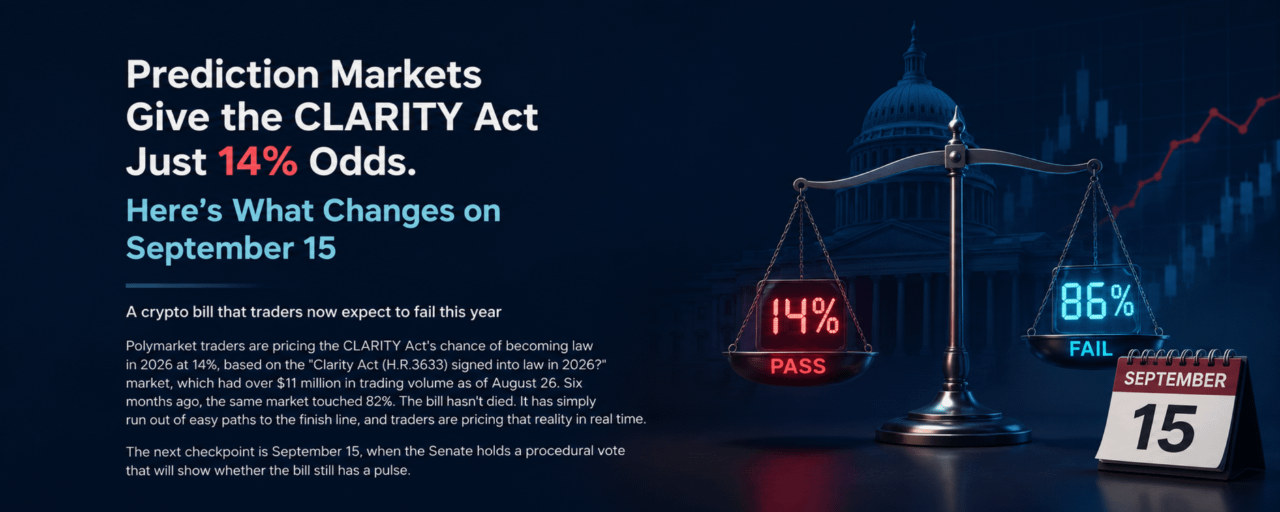


トレーダーが今年の失敗を見込む暗号資産(クリプト)法案
Polymarketのトレーダーは、2026年にCLARITY法案が成立する確率を14%と見積もっています。根拠は、"2026年に成立した『Clarity Act(H.R.3633)』"の市場で、8月26日時点で取引高は11百万ドル超でした。6か月前には同市場が82%に到達していました。法案は死んだわけではありません。ゴールまでの“簡単な道筋”が尽きただけで、トレーダーはその現実をリアルタイムで織り込んでいるのです。
次の節目は9月15日です。上院が手続き上の投票を行い、法案がまだ息をしているかどうかが示されます。
CLARITY法とは何か?
CLARITY法(正式名称:デジタル・アセット市場の明確性に関する法律、H.R. 3633)は、市場構造をめぐる争いを長年引きずってきたものに決着をつけるための法案です。つまり、どのデジタル資産をどの規制当局が監督するのか――SECかCFTCか、という点です。下院は2025年7月17日に、294対134の賛成で可決しました。それ以降は上院の銀行委員会に置かれ、暗号資産の倫理ルール、反マネーロンダリング条項、ステーブルコインの報酬スキームといった論点に関する交渉が進んでおらず、足踏みしています。
9月15日が重要な理由、そしてそれが終着点ではない理由
8月8日、上院多数党院内総務のジョン・トゥーン氏は、上院が8月休会へ出る直前に、CLARITY法に向けた手続きの動議に対するクローチャーを提出しました。この提出により、9月15日に手続き上の投票が設定されました。9月15日は、上院議員が戻ってくる日です。
投票については、あえて正確に言う価値があります。というのも、この投票は過大に見積もられがちだからです。9月15日のクローチャー(打ち切り)の成功は、議論が始まるだけで、法案が可決されるわけではありません。そこから先も、CLARITY法は本会議での討論や修正手続きを生き残り、最終可決で2度目の60票ラインをクリアし、下院版とすり合わせ、大みそか(12月31日)までに大統領のもとへ届く必要があります。12月31日は、2026年の期限が閉じるタイミングです。ホワイトハウスの暗号資産担当アドバイザーであるパトリック・ウィット氏は、9月15日を「上院が少なくとも法案を動かし続けられることを示すための厳格な期限」として扱ってきました。
ここで全てを決めるのが「60票」です。共和党は上院で多数派を持っていますが、フィリバスターを阻止できるほどの多数ではないため、可決には、まだ固まりきっていない、意味のある民主党の支持が必要です。
オッズが実際に意味するもの
14%の確率は、法案が失敗したことを意味しません。市場が現在、可決は「あり得ない」ではなく「可能性は低い」と見ているということです。予測市場は新しい情報に反応して動きますが、今回の動きは大きく:
2026年2月:委員会の進展による勢いが強く見えた頃で、オッズは約82%
7月下旬:上院の休会前の予定が、ロシア制裁パッケージや人事の積み残しで埋まり、法案のための本会議時間が取れなかったため、オッズは約28%〜38%へ下落
8月中旬:上院が投票を行わず休会に入ったため、オッズは20%を下回るまで低下
8月19日:予定されている9月15日の投票への再注目で、オッズは一時的に19.5%〜24.5%付近まで回復
8月26日:オッズは14%
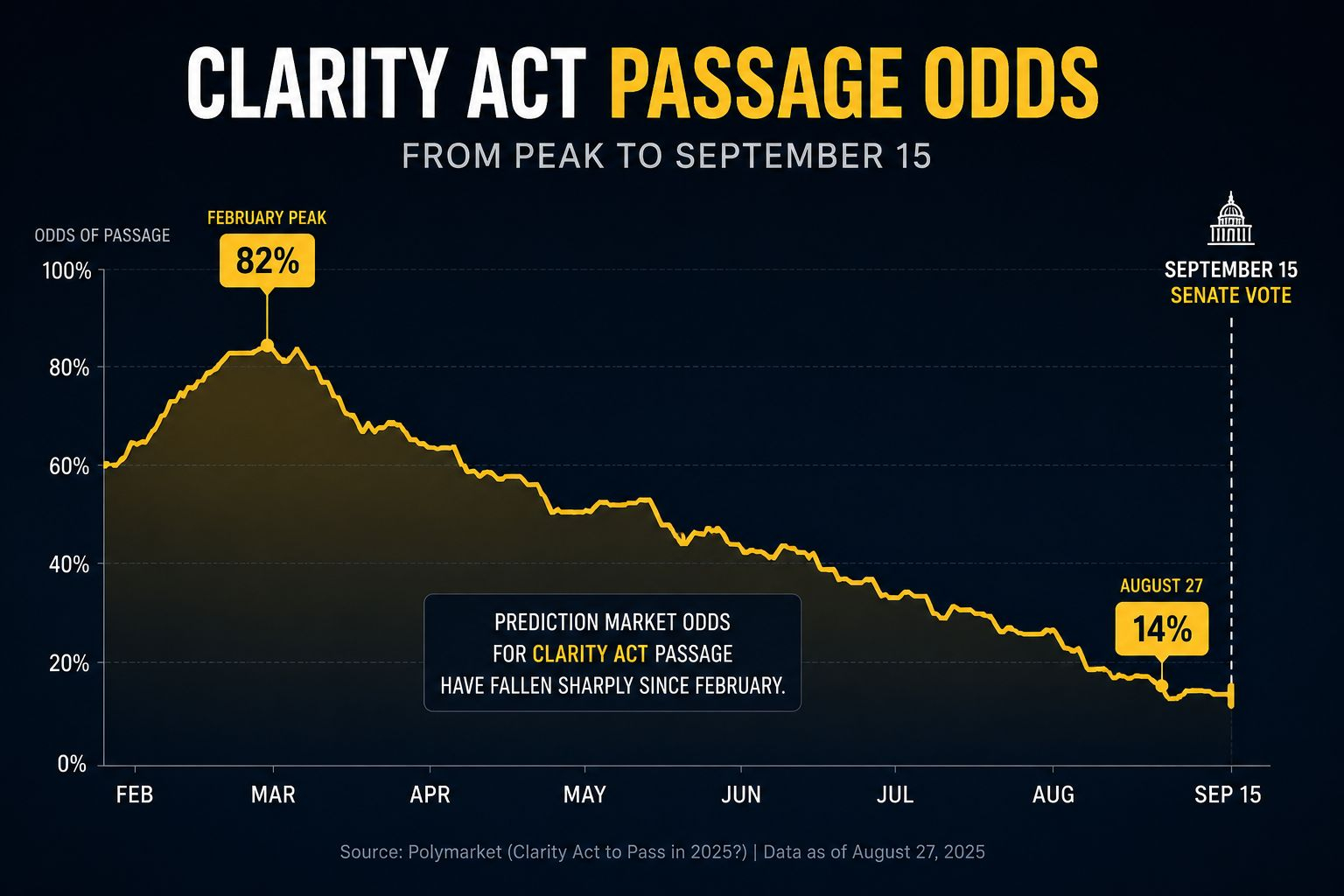
ほかの会場でも、似たような話が別の数字で語られています。カリシーのトレーダーは、60票超の上院支持を得る見通しを約23%に近い価格で織り込み、またXOマーケットの契約では、2026年の可決が8月中旬時点で19.5%と見積もられていました。プラットフォーム間の乖離は通常の範囲です。トレーダーの顔ぶれが違うこと、流動性が違うこと、そして決着条件の文言が少しずつ違うことが、機能的には同じ賭けに対して、わずかに異なる価格を生み出しています。どれも一貫しているのは方向性です。2月以降、上がっているのではなく、オッズは下がり続けています。
なぜ法案は時間を失い続けるのか
CLARITY法の「滑走路」が削られた要因は3つあります。
競合する上院の優先事項。フロア(本会議)の時間は限られており、上院は暗号資産の法案に先立って、制裁関連の立法や、行政・司法人事の積み残しなど、ほかの案件でそれを繰り返し埋めてきました。
未解決の政策論争。暗号資産の倫理条項、反マネーロンダリング基準、ステーブルコイン報酬をどう扱うべきかをめぐる争いが、両党の十分な上院議員を納得させる文言に法案が到達するのを妨げています。
選挙カレンダー。中間選挙の選挙運動シーズンが始まると、主要な法案を動かすのが政治的に難しくなるため、その前に議会に残された実働日数は限られています。ソラナ政策研究所CEOのミラー・ホワイトハウス=レヴァインは、中間選挙前の可決確率を10%まで低く見積もっており、法案の現状を「8月休会の地獄(August recess purgatory)」と呼んでいます。
上院が法案を前進させたら何が起きるか
9月15日のクローチャー(打ち切り)採決が成功すれば、オッズは素早く動くはずです。2月に、委員会の進展が市場を40台から80台へ押し上げたのと同じようにです。成功しても可決が保証されるわけではありませんが、法案にかかっていた最大の不確実性、つまり「上院がそもそも60票を集めて議論を始められるのか」という点が取り除かれます。
投票が失敗すれば、2026年の可決に現実的な窓は大幅に狭まります。Congress.govの公式記録には、下院を通過し、クローチャーの動議まで到達した法案として実績が残るでしょう。紙の上では前進が示されます。しかし選挙年には、修正し直して再交渉し、さらに2回可決する必要がある立法にとって、時計は不利に働きます。
これが暗号資産(クリプト)市場にとって意味すること
SECとCFTCの区分に関する規制の明確化は、業界が長く求めてきたものの一つで、その不在が、取引所、カストディアン(資産管理業者)、ステーブルコイン発行体が米国市場でどう計画するかを形作り続けています。足踏みしているCLARITY法は新しいルールを生み出しません。現在の曖昧さを延長するだけで、規制当局はそれを議会が解決するのを待っているつもりはないことを示唆しています。SEC議長のポール・アトキンス氏とCFTC議長のマイケル・セリグ氏はいずれも、立法ルートがさらに滞れば、各当局が独自に暗号資産のルールを動かし得ると示してきました。
注目すべき9月15日以降の「肝(緊張関係)」はそこです。米国の市場構造が議会によって定義されるのか、それとも議会なしに規制当局が動いて定義するのか。
FAQ
CLARITY法とは何か?それは米国の法案(H.R. 3633)で、デジタル・アセット市場のどの部分がSECとCFTCのどちらの監督下に入るかを定義しようとするものです。下院は2025年7月に可決済みで、それ以降は上院での交渉が続いています。
9月15日に何が起きるのか? 上院は、法案に進めるための動議についてクローチャー投票を行います。成功すれば議論は開かれますが、それだけで法案が可決されるわけではありません。成功には60票が必要です。
なぜ予測市場はそれをわずか14%のオッズでしか見ていないのですか? 今年可決させるには、上院が2つの別々の「60票」ラインをそれぞれクリアし、上院の文言を下院版とすり合わせ、大統領の署名を得る必要があります。しかも、その全てを、中間選挙の選挙運動シーズンに支配される前の、縮んでいくカレンダーの中で行わなければならないからです。2月以降、辿るべき道が狭まるにつれて、オッズは着実に下がってきました。
#CryptoRegulation #CLARITYAct #PredictionMarkets #Polymarket #CryptoPolicy