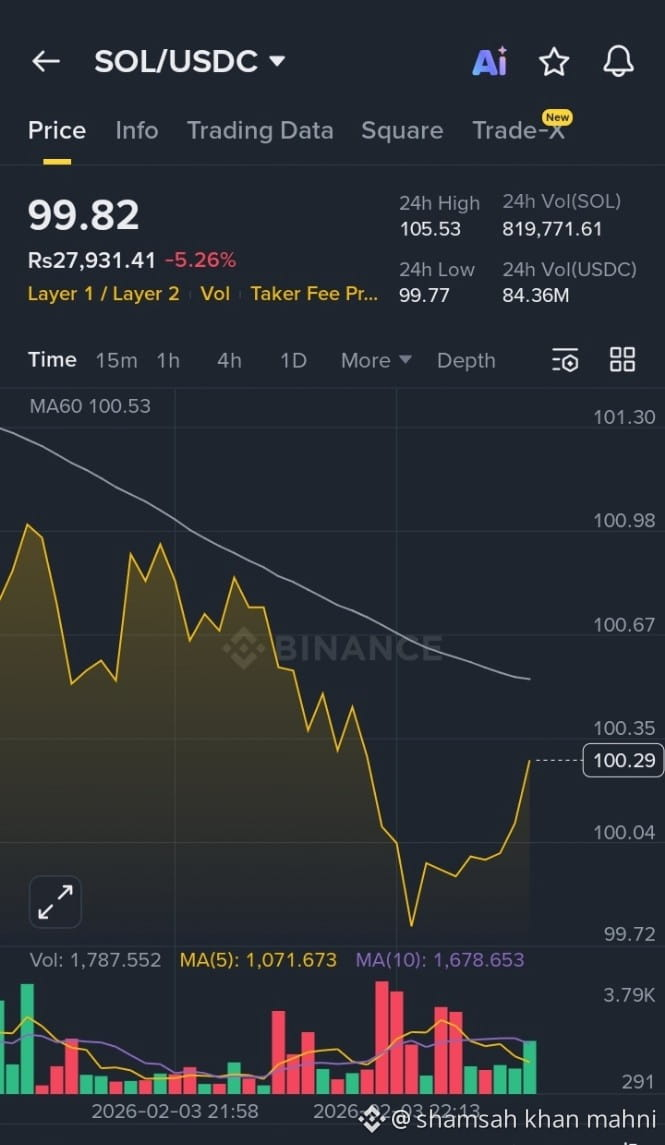
$SOL like most altcoins, follows the trend of Bitcoin (BTC) and Ethereum (ETH). When major assets sell off or risk appetite disappears, traders tend to reduce exposure to riskier assets first. Recently there has been a crypto-wide sell-off and liquidation event, which pushed prices lower across the board — including SOL. �
CoinDCX
So the first and most fundamental reason for SOL’s decline is market correlation — SOL cannot rise independently when BTC and the wider market are losing ground. This market risk-off dynamic fuels fear, prompting selling even from holders who previously believed in the long-term fundamentals. �
CoinDCX
2. Technical Breakdown – Key Support Levels Failed
Technical analysts have pointed out that SOL has broken important price support levels. Once these support zones are breached, automatic trades, stop-losses, and short positions accelerate selling. This kind of technical breakdown often leads to a cascade effect — where investors get stopped out and more selling pressure builds up. �
BTCC
In your chart screenshot, you can see that after testing resistance, the price fell below the moving average, indicating bearish momentum and reinforcing trader confidence in a short-term downtrend.
3. Liquidity Shift & On-Chain Activity Changes
On-chain data shows that network activity and decentralized exchange volumes have cooled off, which can reduce trader interest and decrease liquidity. When SOL’s trading volume drops, prices become more sensitive to selling pressure, leading to sharper declines. �
MEXC
Additionally, some data shows that stablecoin outflows have occurred, meaning liquidity is leaving Solana’s ecosystem — again reducing buying strength and increasing vulnerability to price drops. �
MEXC