I went into Dusk thinking privacy on a blockchain was basically just an on/off switch.
After digging through the architecture, I realized I was looking at it too simply.
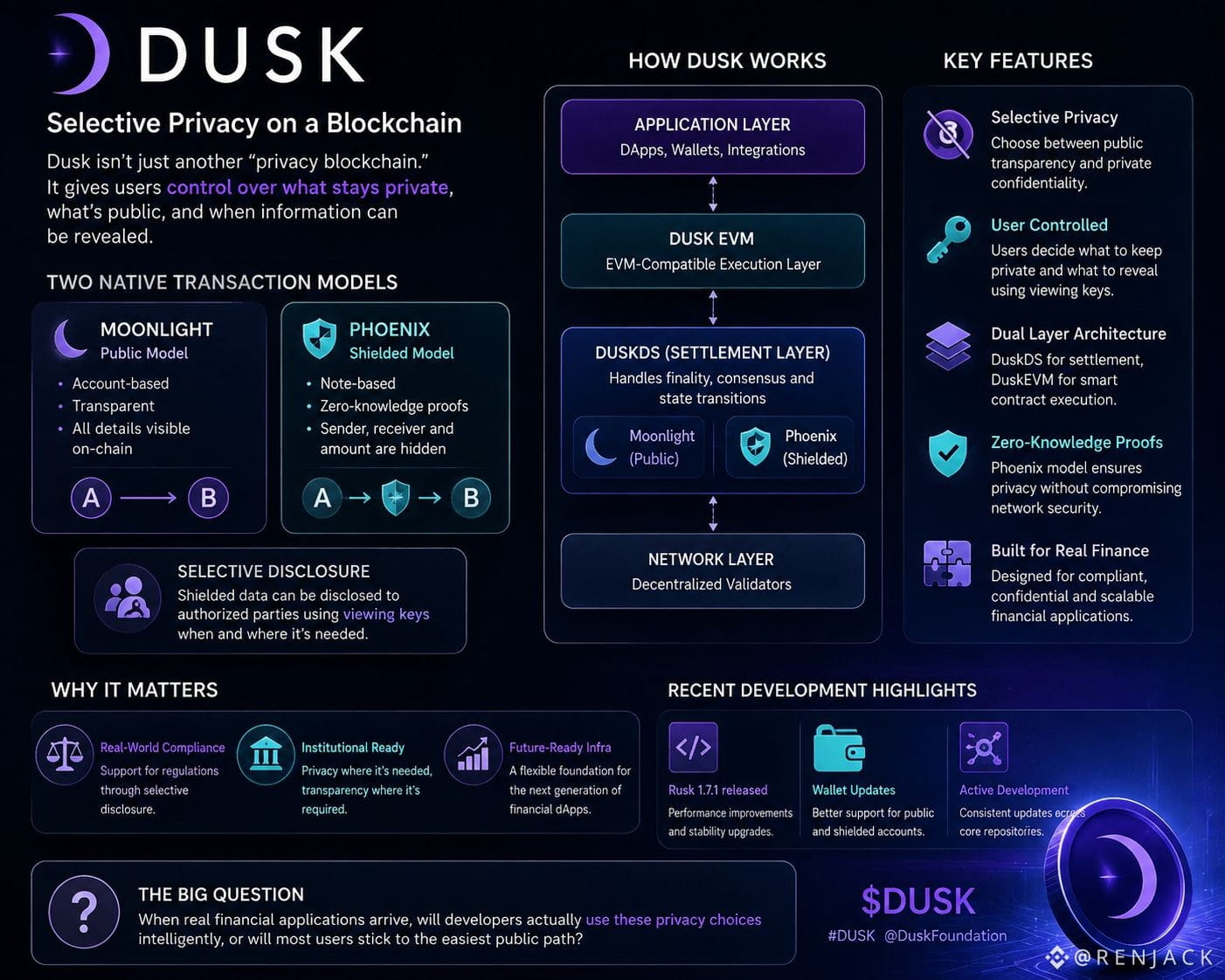
What stood out to me is how Dusk handles different kinds of transactions. Moonlight is built around public, account-based transfers, while Phoenix uses shielded transactions and zero-knowledge proofs to protect details like the sender, receiver, and amount.
That’s the part I found genuinely interesting.
Privacy doesn’t always mean hiding everything. Sometimes it’s about having control over what information is visible and when it can be disclosed.
I also had to rethink how I viewed the network itself. DuskDS handles the settlement side, while DuskEVM brings an EVM-compatible environment for smart contracts. So there’s a clear separation between moving value and building applications on top.
That feels important for a project focused on real financial use cases.
The more I read, the less Dusk looked like just another “privacy blockchain” to me. The interesting question is whether developers will actually use that flexibility when they start building real products.
$DUSK #DUSK @Dusk
Will selective privacy become a practical advantage for financial applications, or will developers still choose the easiest fully public route?
After digging through the architecture, I realized I was looking at it too simply.
What stood out to me is how Dusk handles different kinds of transactions. Moonlight is built around public, account-based transfers, while Phoenix uses shielded transactions and zero-knowledge proofs to protect details like the sender, receiver, and amount.
That’s the part I found genuinely interesting.
Privacy doesn’t always mean hiding everything. Sometimes it’s about having control over what information is visible and when it can be disclosed.
I also had to rethink how I viewed the network itself. DuskDS handles the settlement side, while DuskEVM brings an EVM-compatible environment for smart contracts. So there’s a clear separation between moving value and building applications on top.
That feels important for a project focused on real financial use cases.
The more I read, the less Dusk looked like just another “privacy blockchain” to me. The interesting question is whether developers will actually use that flexibility when they start building real products.
$DUSK #DUSK @Dusk
Will selective privacy become a practical advantage for financial applications, or will developers still choose the easiest fully public route?