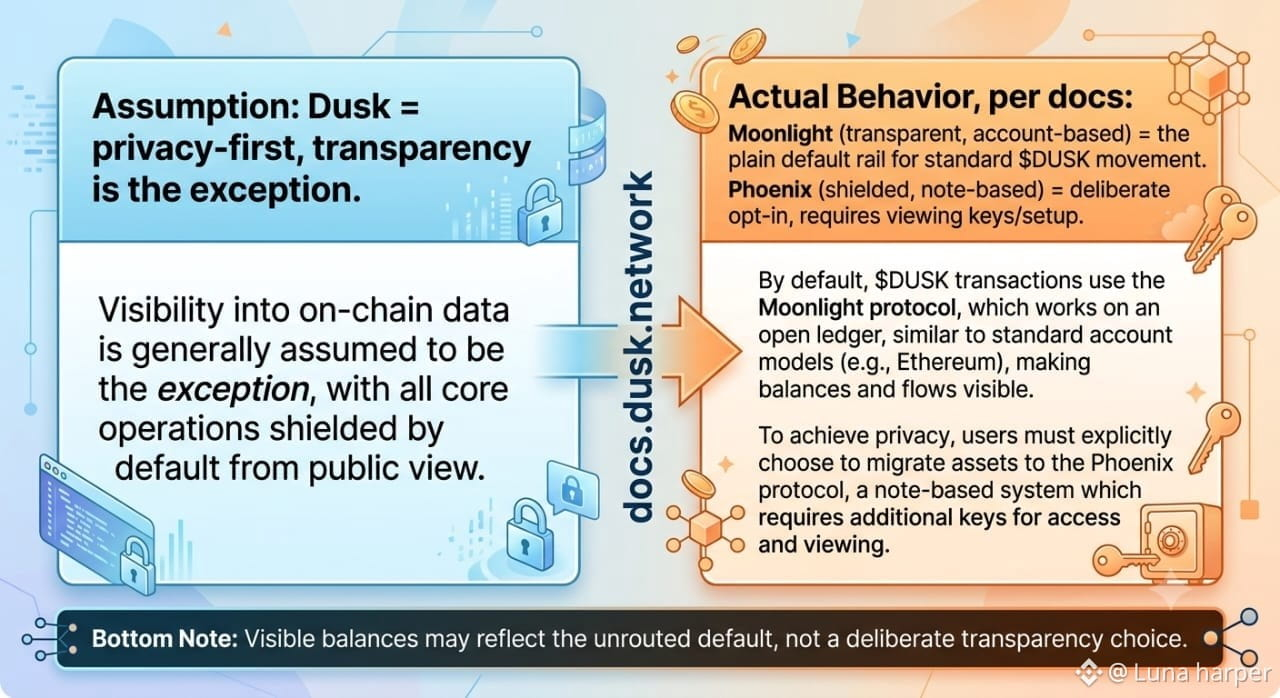
I went into Dusk expecting privacy to be the default and transparency the exception. It's the other way around. The docs describe Moonlight, Dusk's transparent account-based model, plainly as "just the transparent way to move DUSK" at the protocol layer, while Phoenix, the shielded model, reads like the specialized option — funds sit as encrypted notes, revealed only through viewing keys when required. $DUSK 's standard token movement runs through this transparent rail unless someone deliberately routes it through Phoenix instead. Privacy on #Dusk isn't the baseline experience, it's something you opt into per transaction, and @Dusk own documentation frames it that way without hiding it. That reframes the "why would institutions publish everything" question for me. It's less about institutions deliberately choosing exposure and more about which rail requires the least extra setup — confidential flows need viewing keys and selective disclosure logic built in, standard flows don't need any of that. So some share of what reads as "institutional transparency" on-chain might just be the default path nobody bothered to route around, not a compliance decision at all. I keep wondering how much of the visible balance data people cite as adoption evidence is actually that.