Iran's president urged an end to the war that the US and Israel launched six months ago, marking his latest pushback against the hardliners in Tehran who are pressing to keep the fight going. His comments arrive at a pivotal moment, as the Trump administration works to shift its posture away from direct military action and toward a strategy built around economic sanctions.
US Treasury secretary Scott Bessent on CNBC argued that a fresh wave of sanctions is what comes next in the standoff with Iran, insisting the Iranian ports blockade and a coming "toughest sanctions in history" package could finish what six months of intermittent combat hasn't.
On Thursday, President Trump had promised something louder: an "economic D-Day," vowing to hit any country that gives Tehran "any type of lifeline."
"We are going to collapse this regime," Bessent told CNBC, framing the coming sanctions package due to be unveiled at a Monday press conference as the "toughest" Washington has ever assembled. His argument, repeated more than once during the interview, was that markets had misread Trump's rhetoric: ramping up economic pressure, he said, makes a return to large-scale military operations less likely, not more.
Trump's own framing left little room for nuance.
"TRAGICALLY, for them, they have failed to take it," he wrote of Tehran's refusal to negotiate, before promising "the MOST CRUSHING ECONOMIC OPERATION EVER TAKEN AGAINST ANY COUNTRY."
The administration says the target list includes oil smuggling networks, currency swap lines, cash transfers and ship registries anything that lets Iran route money or fuel around the blockade
"It would be better to end the war today, when we have power and dignity, and with the whole world acknowledging our victory," Masoud Pezeshkian said, according to the semi-official Iranian Students' News Agency.
That framing puts him at odds with other Iranian officials, including figures within the country's powerful military leadership, who insist Iran currently holds the advantage and should press on rather than negotiate from what they see as a position of strength.
The disagreement plays out against a grim backdrop: a war that has already killed thousands of people across Iran and Lebanon, with the US and Israel responsible for the bulk of the casualties, and still no clear path toward a resolution.
Tehran's. Mehrdad Sepahvand, who used to advise Iran's central bank and now works at Daric Investment Group, told CNBC the country's economy is bruised but not on the floor Trump describes. The bigger threat, he said, isn't the new U.S. sanctions at all. It's the United Arab Emirates.
The UAE announced Wednesday it was severing trade and financial ties with Iran entirely, after accusing Tehran of firing ballistic missiles at Emirati territory. That matters because the UAE was, until this week, Iran's single largest source of imports bigger than China with two-way trade worth roughly $28 billion in 2024.
"The UAE is one of the main Iranian financial gateways," Sepahvand said, warning that losing it could push Iran's economic contraction toward 5% this year and send inflation climbing toward triple digits.
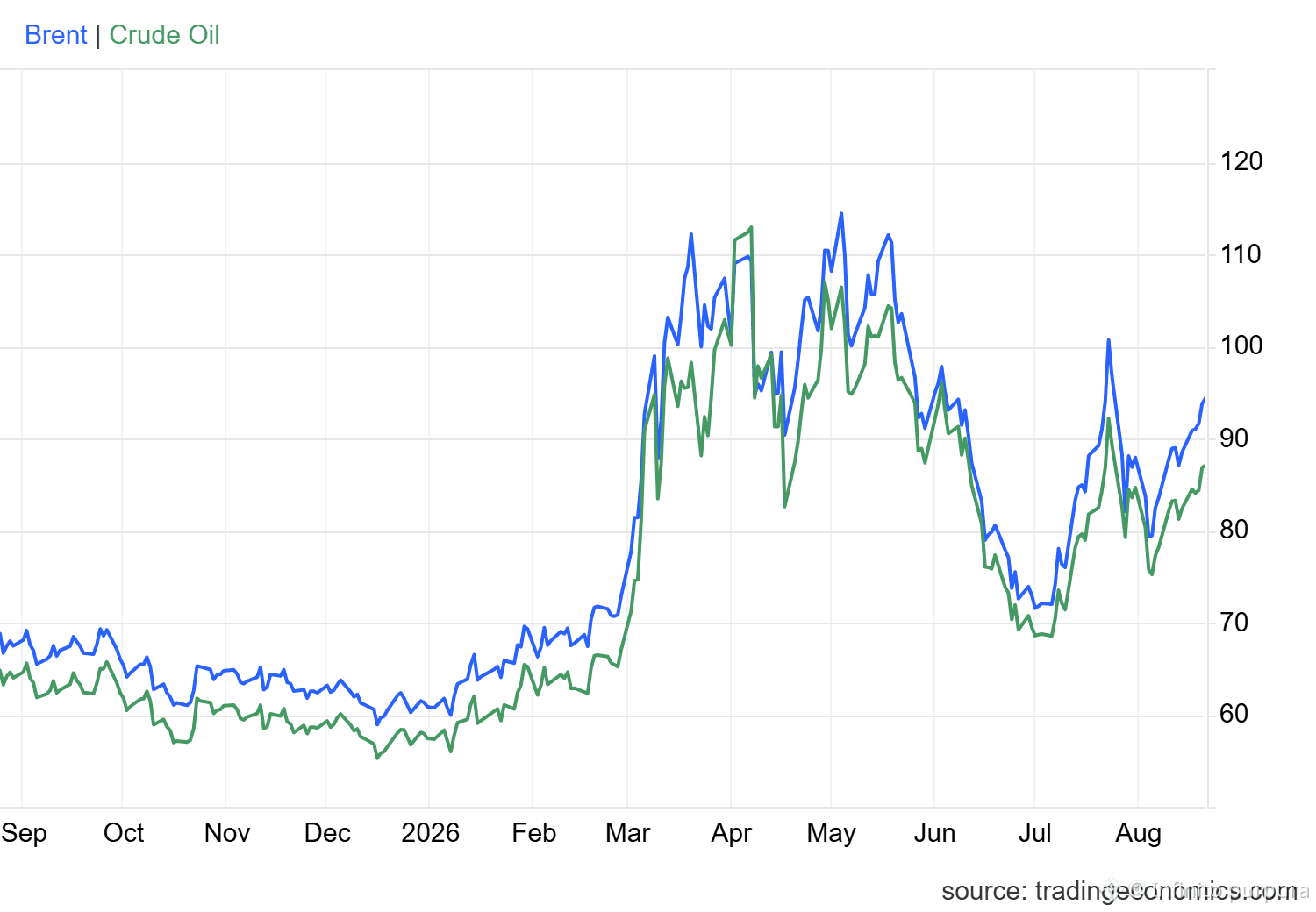
Crude notched a second consecutive weekly advance, with both Brent and West Texas Intermediate, the benchmark for oil extracted across North America climbing somewhere in the range of 5% to 5.6% above the prior week's close. Add in OPEC+'s continued discipline on production, which keeps global spare capacity tight, and the combination was enough to keep bullish pressure building through the week, pushing oil prices to multi-week highs.
Further out on the supply side, US refiners are confronting a looming drop in crude from their single largest foreign supplier, and the timing could hardly be worse. Canada currently ships more than 4 million barrels a day into the US, but scheduled maintenance work in the Alberta oil sands is set to knock about 300,000 barrels a day of production offline starting next month. That reduction lands just as US refineries are running at their busiest clip in eight years, leaving little room to absorb the shortfall.
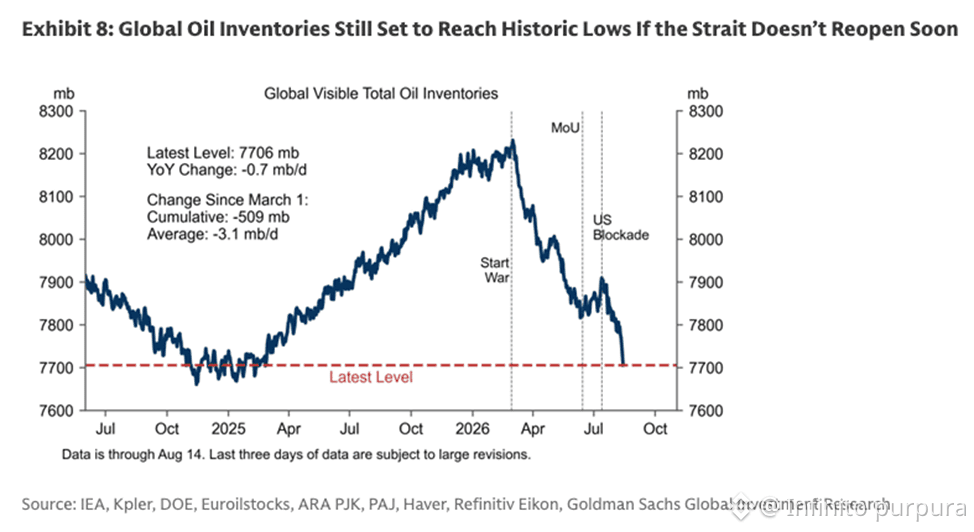
"With global oil demand recovering, inventories are again falling quickly and will reach all-time lows (in a series available back to 2018) if the Strait of Hormuz doesn't reopen soon."