#dusk $DUSK @Dusk かつて私は、Duskの最大の賭けは、規制された金融のために設計されたブロックチェーン上にプライバシーを「載せる」ことだけだと思っていました。
しかし掘り下げてみると、それが正しい見方かどうかは分かりません。
私の関心を引いたのは、アーキテクチャです。
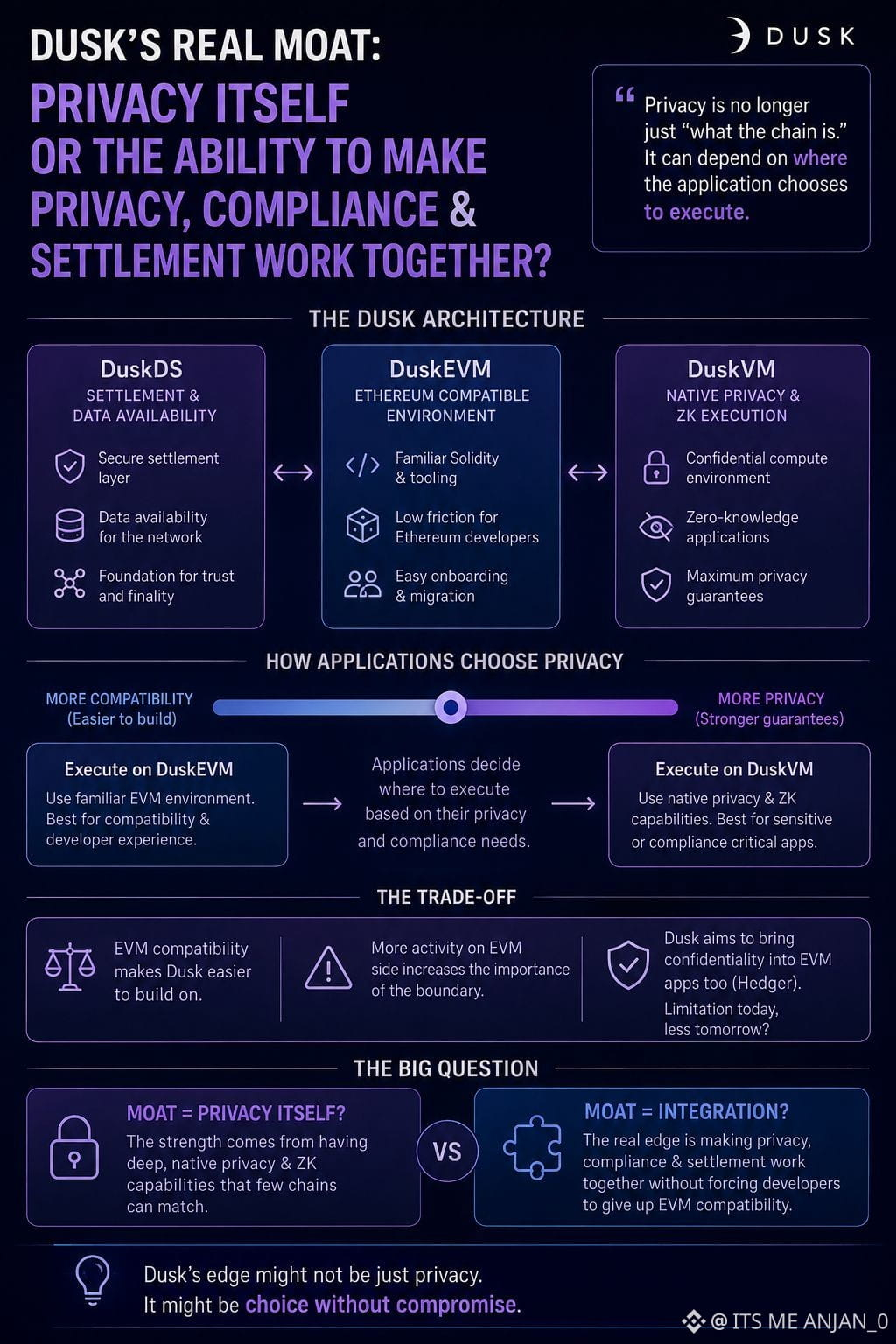
DuskDSは決済とデータ可用性を担います。DuskEVMは開発者におなじみのEthereum環境を提供します。DuskVMは、アプリケーションがDuskのより深いプライバシーとZKの機能を活用できる場所です。つまり、プライバシーはもはや「チェーンそのものが何であるか」だけではなく、アプリケーションがどこで実行することを選ぶかによって変わり得るのです。
それは、興味深いトレードオフを生みます。
EVMの互換性によりDuskは構築しやすくなりますが、活動がより馴染みのEVM環境へ移るほど、互換性とネイティブなプライバシーの境界がより重要になります。
Duskは、Hedgerなどを通じて、EVMアプリケーションにも機密性を取り込めると言っています。そのため、将来的にはこの制約はより小さくなる可能性があります。
ただし、それでも私には十分に議論されていない疑問が残っています。
Duskの競争上の優位性(モート)は、本当のところプライバシーそのものなのでしょうか。それとも、開発者にEVMの互換性を手放させることなく、プライバシー・コンプライアンス・決済を一緒に機能させる能力なのでしょうか。
それは、まったく異なる2つのモートです。
しかし掘り下げてみると、それが正しい見方かどうかは分かりません。
私の関心を引いたのは、アーキテクチャです。
DuskDSは決済とデータ可用性を担います。DuskEVMは開発者におなじみのEthereum環境を提供します。DuskVMは、アプリケーションがDuskのより深いプライバシーとZKの機能を活用できる場所です。つまり、プライバシーはもはや「チェーンそのものが何であるか」だけではなく、アプリケーションがどこで実行することを選ぶかによって変わり得るのです。
それは、興味深いトレードオフを生みます。
EVMの互換性によりDuskは構築しやすくなりますが、活動がより馴染みのEVM環境へ移るほど、互換性とネイティブなプライバシーの境界がより重要になります。
Duskは、Hedgerなどを通じて、EVMアプリケーションにも機密性を取り込めると言っています。そのため、将来的にはこの制約はより小さくなる可能性があります。
ただし、それでも私には十分に議論されていない疑問が残っています。
Duskの競争上の優位性(モート)は、本当のところプライバシーそのものなのでしょうか。それとも、開発者にEVMの互換性を手放させることなく、プライバシー・コンプライアンス・決済を一緒に機能させる能力なのでしょうか。
それは、まったく異なる2つのモートです。