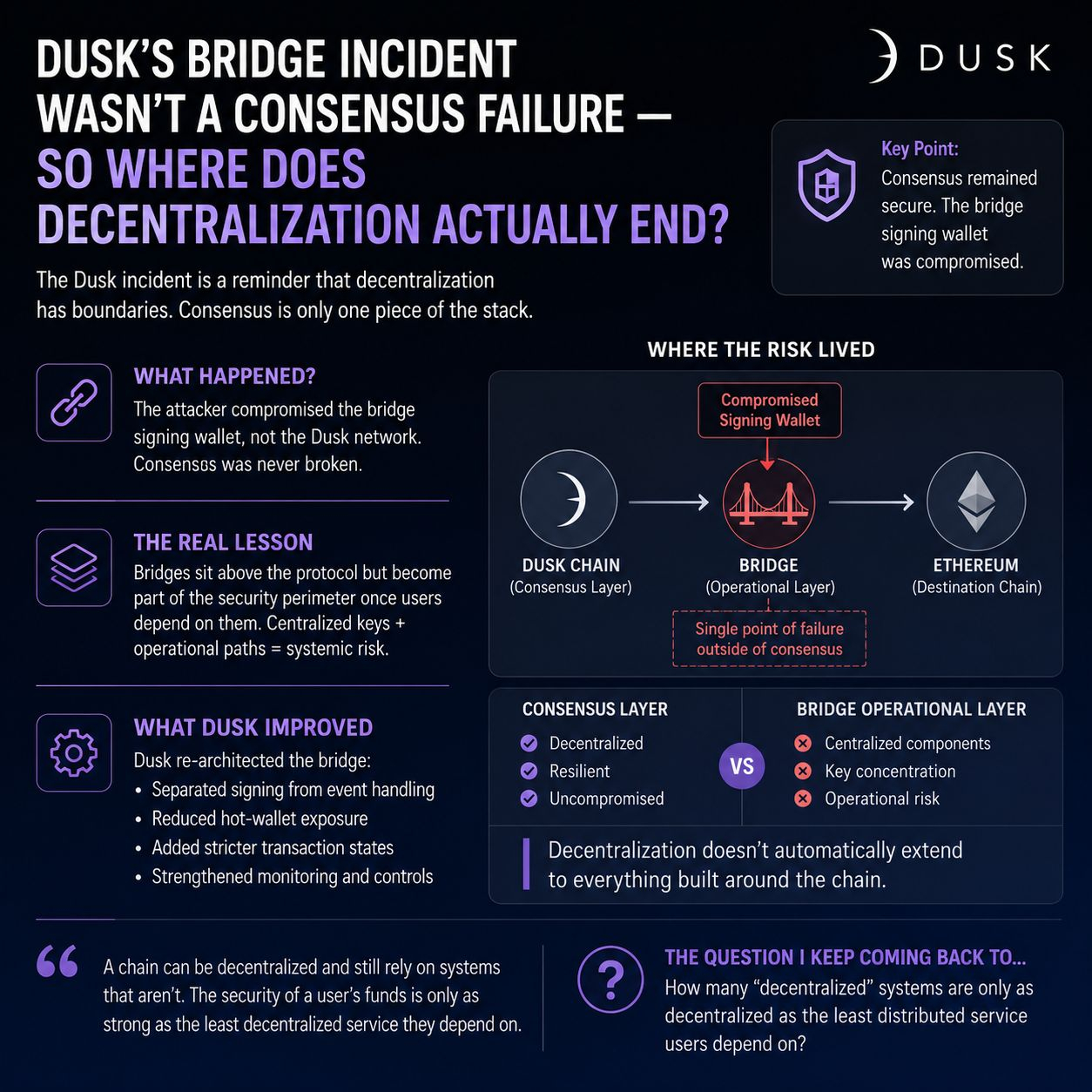

私は当初、それを別のクロスチェーンのセキュリティ問題として片付けてしまったので、ダスクのブリッジ事件についてもう一度振り返りました。見方を変えたのは、ダスク自身がネットワークのコンセンサスは壊れていなかったと言っている点です。破られたのはブリッジの署名ウォレットでした。
一見するときれいな区別のように聞こえますが、経済的にはユーザーがそのように体験しているかは分かりません。
ブリッジはプロトコルの上に存在していましたが、人々が価値の移動のためにそれに依存し始めると、その署名者、イベント処理、運用セットアップがセキュリティ境界の一部になっていきました。旧来の設計では、その信頼が一つの経路に寄りすぎていました。署名者を侵害されると、攻撃者は、そもそも防ぐように設計されていなかった基盤のコンセンサスにまで到達できてしまうのです。
私は「チェーンが分散化されているか」を単に問うより、こちらの考え方のほうが役に立つと思います。
分散化には境界があるのかもしれません。コンセンサスは分散されていても、ブリッジ、フロントエンド、リレイヤー、あるいは運用鍵が、静かに別の場所へ権限を集中させることはあり得ます。
ダスクはその後、署名とイベント処理を分離し、ホットウォレットの露出を減らし、より明確なトランザクション状態を追加しました。それは明らかな教訓への対処です。
それでも、「分散化された」システムのうち、ユーザーが依存する最も分散されていないサービスと同じ程度にしか分散化されていないものがどれだけあるのかが気になります。
その境界は、より注意深く見ていく価値がありそうです。
#dusk $DUSK @Dusk $ENS $BEAT
一見するときれいな区別のように聞こえますが、経済的にはユーザーがそのように体験しているかは分かりません。
ブリッジはプロトコルの上に存在していましたが、人々が価値の移動のためにそれに依存し始めると、その署名者、イベント処理、運用セットアップがセキュリティ境界の一部になっていきました。旧来の設計では、その信頼が一つの経路に寄りすぎていました。署名者を侵害されると、攻撃者は、そもそも防ぐように設計されていなかった基盤のコンセンサスにまで到達できてしまうのです。
私は「チェーンが分散化されているか」を単に問うより、こちらの考え方のほうが役に立つと思います。
分散化には境界があるのかもしれません。コンセンサスは分散されていても、ブリッジ、フロントエンド、リレイヤー、あるいは運用鍵が、静かに別の場所へ権限を集中させることはあり得ます。
ダスクはその後、署名とイベント処理を分離し、ホットウォレットの露出を減らし、より明確なトランザクション状態を追加しました。それは明らかな教訓への対処です。
それでも、「分散化された」システムのうち、ユーザーが依存する最も分散されていないサービスと同じ程度にしか分散化されていないものがどれだけあるのかが気になります。
その境界は、より注意深く見ていく価値がありそうです。
#dusk $DUSK @Dusk $ENS $BEAT