#termmax @TermMax 昨夜、2つ目のバンドが40分間そのまま一致せずに座っているのを見ていました。
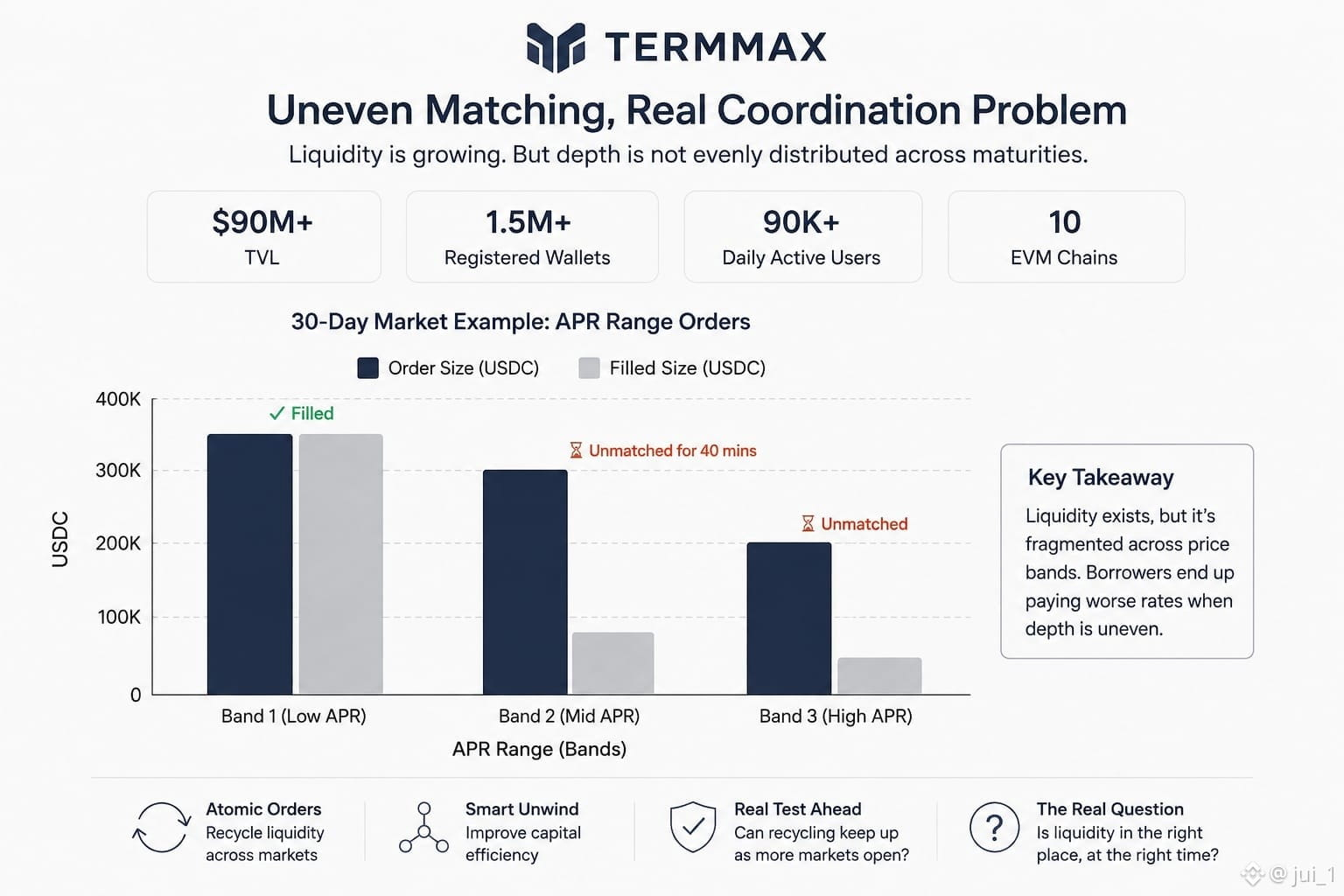
あるキュレーターが、30日市場で3つのAPRスライスに数十万USDCを分散していました。最初のバンドはきれいに埋まりました。残りはただそこに留まり、固定金利のスプレッドが未完のままでも、変動ベースの利回りは受け取り続けていました。
この「間」は、見出しの数字よりもTermMaxのコーディネーション問題をよく物語っています。
プロトコルは現在、TVLが$90M+、登録ウォレットが1.5M+、日次アクティブユーザーが90K+、そして10のEVMチェーンへの展開を報告しています。ですが、より大きな規模が自動的に「すべての満期に同じだけの厚みがある」ことを意味するわけではありません。
それが、レンジ・オーダーモデルが面白い理由です。全員が1つの変動金利の周りで競うのではなく、流動性が特定の価格帯に分配されます。最後に残りを取った借り手は、最初に約定した人よりもわずかに不利なレートを支払いました。これはまさに、カーブが生み出すよう設計された挙動ですが、それでも分断された厚みのコストが露呈します。
私はギアリング・ポジションでも同じことに気づきました。1クリックで実行は簡単になりますが、その瞬間に利用できる流動性がまだ重要なのです。
TermMaxのアトミック・オーダーとSmart Unwindは、市場間で流動性をリサイクルするためのものです。私にとって本当の試験は、より多くの満期やRWA市場が開いても、そのリサイクルが機能し続けるかどうかです。
不均一なマッチングが現れ続けるなら、「TermMaxに十分な流動性があるかどうか」の問題ではなくなります。
その流動性が、本当に「必要な場所に、必要なタイミングで」存在しているかどうかが問われることになるでしょう。
あるキュレーターが、30日市場で3つのAPRスライスに数十万USDCを分散していました。最初のバンドはきれいに埋まりました。残りはただそこに留まり、固定金利のスプレッドが未完のままでも、変動ベースの利回りは受け取り続けていました。
この「間」は、見出しの数字よりもTermMaxのコーディネーション問題をよく物語っています。
プロトコルは現在、TVLが$90M+、登録ウォレットが1.5M+、日次アクティブユーザーが90K+、そして10のEVMチェーンへの展開を報告しています。ですが、より大きな規模が自動的に「すべての満期に同じだけの厚みがある」ことを意味するわけではありません。
それが、レンジ・オーダーモデルが面白い理由です。全員が1つの変動金利の周りで競うのではなく、流動性が特定の価格帯に分配されます。最後に残りを取った借り手は、最初に約定した人よりもわずかに不利なレートを支払いました。これはまさに、カーブが生み出すよう設計された挙動ですが、それでも分断された厚みのコストが露呈します。
私はギアリング・ポジションでも同じことに気づきました。1クリックで実行は簡単になりますが、その瞬間に利用できる流動性がまだ重要なのです。
TermMaxのアトミック・オーダーとSmart Unwindは、市場間で流動性をリサイクルするためのものです。私にとって本当の試験は、より多くの満期やRWA市場が開いても、そのリサイクルが機能し続けるかどうかです。
不均一なマッチングが現れ続けるなら、「TermMaxに十分な流動性があるかどうか」の問題ではなくなります。
その流動性が、本当に「必要な場所に、必要なタイミングで」存在しているかどうかが問われることになるでしょう。