I'm noticing TermMax because it is aimed at one of DeFi's least glamorous problems: nobody knows what borrowing will cost once a crowded pool starts repricing. I've watched floating rates look harmless, then jump when everyone needs the same exit. A fixed rate and a real maturity date sound almost boring, but after enough cycles, predictability starts to feel unusual.
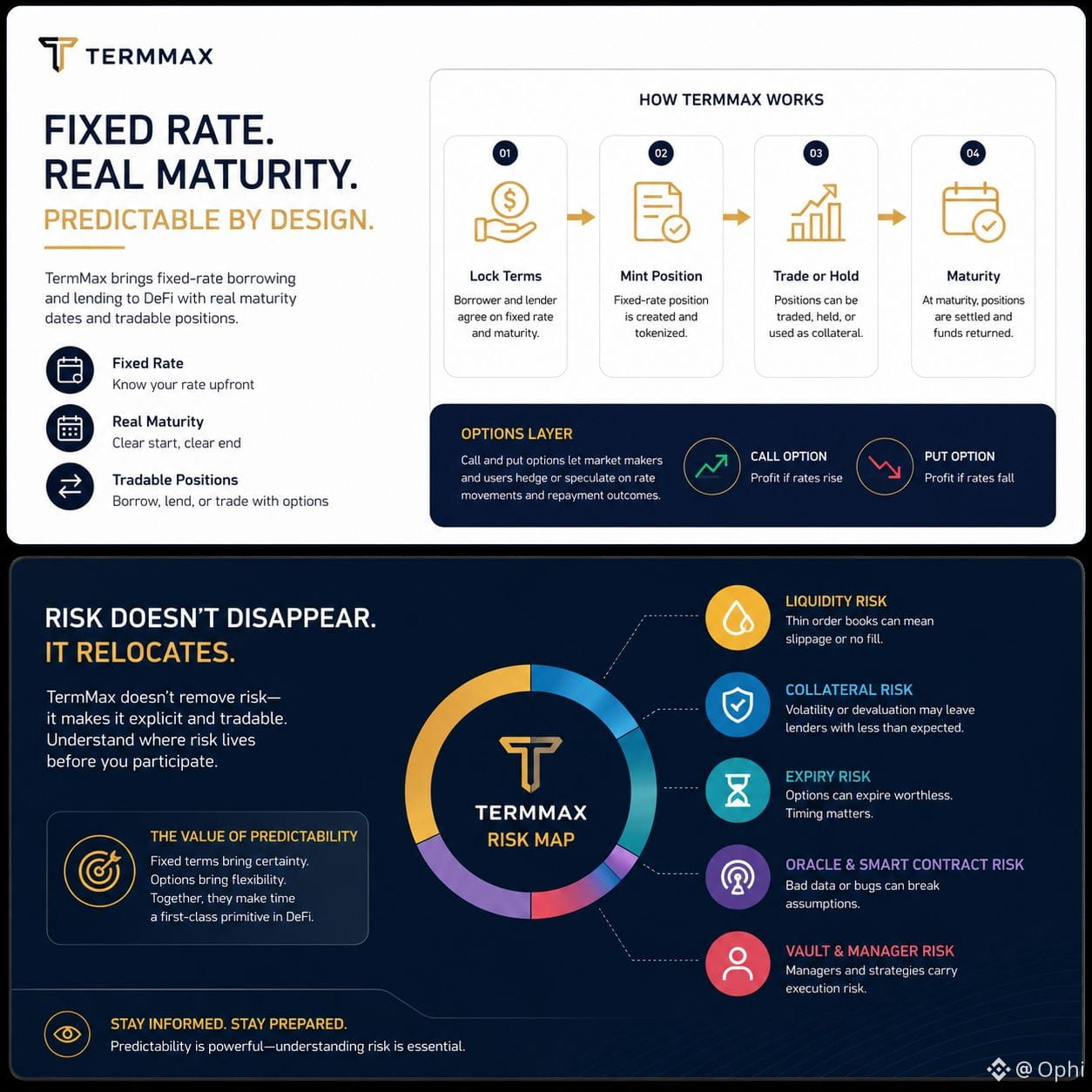
Still, I don't fully trust the neatness. TermMax turns fixed-rate claims into tradable positions, depends on maker liquidity, and adds call-and-put exposure paid for with an upfront premium. The price may be known; the outcome is not. Thin orders can bring slippage or no fill. An option can expire worthless. If a borrower misses maturity, a lender may receive volatile collateral instead of the asset expected back.
That is what I keep noticing: TermMax does not remove risk. It relocates it into liquidity, collateral quality, expiry, oracles, smart contracts, and vault managers. I've seen this before—complex machinery presented as certainty because one number stays fixed.
But something about this feels different. Fixed terms force DeFi to admit that time matters, while options make risk tradable instead of pretending it disappears. I'm not sure yet whether the market will stay deep when conditions turn ugly. For now, that unanswered question is why I'm still watching.#termmax
@TermMax
Still, I don't fully trust the neatness. TermMax turns fixed-rate claims into tradable positions, depends on maker liquidity, and adds call-and-put exposure paid for with an upfront premium. The price may be known; the outcome is not. Thin orders can bring slippage or no fill. An option can expire worthless. If a borrower misses maturity, a lender may receive volatile collateral instead of the asset expected back.
That is what I keep noticing: TermMax does not remove risk. It relocates it into liquidity, collateral quality, expiry, oracles, smart contracts, and vault managers. I've seen this before—complex machinery presented as certainty because one number stays fixed.
But something about this feels different. Fixed terms force DeFi to admit that time matters, while options make risk tradable instead of pretending it disappears. I'm not sure yet whether the market will stay deep when conditions turn ugly. For now, that unanswered question is why I'm still watching.#termmax
@TermMax