

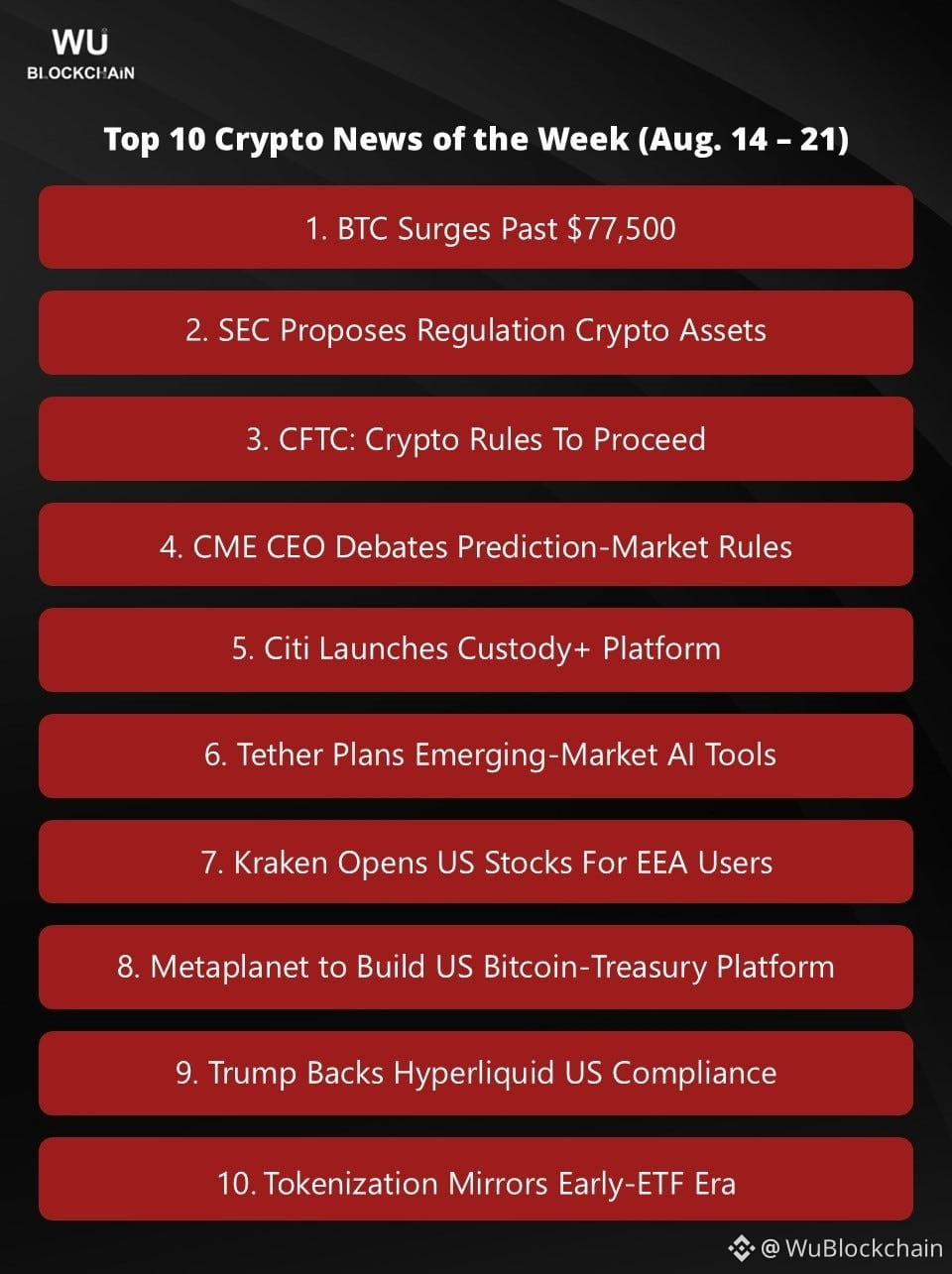
1. BTC breaks above $77,500, nearly 20% gain in three days link
OKX market data shows that BTC broke above $77,500 and traded at $77,100 at press time, marking a 20% gain in the past three days. ETH surged past $2,400 and is now quoted at $2,412, with a gain of over 25% in the past three days. According to CoinGlass data, around $1.254 billion in liquidations occurred across the network over the past 24 hours, including approximately $1.083 billion in short‑position liquidations, with 155,678 traders globally getting liquidated. The largest single liquidation order took place on Hyperliquid for BTC‑USD, worth $23.5968 million.
Strategy holds 840,447 BTC with an average cost basis of $75,385. Based on Bitcoin’s current price, Strategy has broken even and recorded an unrealized paper profit of around $192 million. BitMine holds 5,815,164 ETH with an average cost basis of $3,366. Calculated at Ethereum’s current USD price, BitMine currently carries an unrealized paper loss of roughly $5.792 billion.
On August 20, a total of 174,764 traders faced liquidations, with total liquidation value hitting $2.98 billion. A BTC‑USD position on Hyperliquid constituted the largest single liquidation at $48.8 million. This scale surpasses the $2.23 billion single‑day liquidations during the “tariff shock” in February 2025, ranking as the eighth‑largest liquidation event in cryptocurrency history.
2. SEC Proposes Regulation Crypto Assets: Issuance Exemptions & Conditional Safe‑Harbor for Certain Crypto Investment Contracts link
The U.S. SEC has proposed “Regulation Crypto Assets” to establish a specialized securities‑issuance regime for certain investment contracts involving crypto assets. The proposal sets forth two exemptions from registration under the Securities Act: a one‑time applicable exemption permitting issuers to raise up to $5 million over a four‑year period, and another allowing issuers to raise up to $75 million every 12 months. Both exemptions mandate relevant information disclosure to investors, with the latter additionally requiring financial statements and ongoing reporting obligations. The proposal also introduces a conditional safe harbor, under which crypto assets may no longer be governed by the “investment contract” upon satisfying relevant conditions. Securities issued under exemptions of the new rules and certain secondary‑market transactions shall be exempt from state‑level securities registration and qualification requirements. The proposal will open a 60‑day public comment period upon publication in the Federal Register.
3. CFTC Chair: Crypto Market‑Structure Rules Will Move Forward Even Without Clarity Act Passage link
Michael Selig, Chair of the U.S. Commodity Futures Trading Commission (CFTC), stated that the crypto industry will still receive regulatory rules even if Congress fails to pass the crypto market structure bill, the Clarity Act. Selig noted that the CFTC is evaluating multiple crypto regulatory measures and may formulate relevant rules under existing statutory authority. The Clarity Act is currently stalled due to Senate disputes over ethics provisions, with a procedural vote expected in September. In addition, the CFTC is advancing regulatory rules for prediction‑market event contracts and plans to finalize relevant provisions soon, while soliciting public comments on “computational power futures” trading tied to AI computing power. Selig said the CFTC will collaborate with the Department of Commerce to develop standards for AI computing‑power futures to ensure such products meet regulatory requirements.
4. CME CEO Clashes With CFTC and Kalshi Over Prediction‑Market Regulation link
CME CEO Terrence Duffy stated at a CFTC Innovation Advisory Committee meeting that certain prediction‑market contracts carry manipulation risks and called for tightened regulation. He pointed out that some self‑certified listed contracts, especially markets concerning political events, could harm industry credibility. CFTC Chair Michael Selig responded that the products referenced by Duffy are not available on U.S. markets. The two sides further discussed prediction‑market regulation. Selig stated the CFTC would push forward revisions to event‑contract rules and strengthen consumer‑protection measures. Subsequently, Duffy and Kalshi Chief Operating Officer Luana Lopes Lara debated market manipulation and regulatory capacity. Jurisdiction over prediction‑market regulation remains contested, with federal regulators and state authorities competing over the regulatory scope for event‑based contracts such as sports‑related ones.
5. Citi Launches Custody+ Platform; Digital‑Asset Custody Supporting BTC to Launch Later This Year link
Citi announced the launch of its new‑generation custody service suite Custody+, delivering near‑real‑time and real‑time custody infrastructure for scenarios including continuous trading, shortened settlement cycles and digital assets. Citi stated that its digital‑asset custody service is expected to go live later this year, initially supporting Bitcoin (BTC), and will be integrated within the same service framework as traditional‑asset custody to deliver a unified custody experience for clients. Citi also noted that over 80 percent of its total custody event volume is already processed in real‑time. Custody+ will further incorporate instant settlement, real‑time liquidity management, foreign exchange and Citi Token Services among other capabilities.
6. Tether CEO: AI Products Covering Healthcare and Finance to Roll Out for Emerging Markets link
Tether CEO Paolo Ardoino stated that the company is accelerating its expansion into technology and infrastructure sectors beyond financial services, with the next step being the roll‑out of basic AI applications for developing markets. Ardoino said smartphones have become relatively prevalent even in poorer regions, enabling simple AI models to run on‑device. Accordingly, Tether plans to develop AI tools covering vertical sectors such as healthcare, finance and sports, allowing ordinary users to leverage AI in daily life. Ardoino did not disclose specific business models for the AI business. He also revealed that Tether now has over 650 million global users.
7. Kraken Opens US Stock Trading for EEA Users, Supporting Over 7,000 US Equities link
Kraken has opened U.S. stock trading for eligible users in the European Economic Area (EEA), covering more than 7,000 U.S. stocks. Within a single account, users can trade traditional U.S. equities, over 600 crypto‑assets and more than 700 tokenized xStocks. The service is provided by Payward Europe Digital Solutions, authorized under EU MiFID II, and is accessible via Kraken Pro and the Kraken App. Existing EEA users must accept additional agreements to gain access.
8. Metaplanet to Inject 2,100 BTC Into Super League to Build US Bitcoin‑Treasury Platform link
Japan‑listed Bitcoin‑treasury firm Metaplanet (TSE: 3350) and Nasdaq‑listed Super League Enterprise (Nasdaq: SLE) announced a definitive agreement. Metaplanet intends to inject 2,100 BTC (approximately $132.1 million) and $2.5 million in cash into Super League through its U.S. subsidiary in exchange for common stock, preferred stock and warrants, with an initial total investment of roughly $134.6 million. Upon transaction closing, Super League will be renamed Superplanet, Inc., with a proposed ticker symbol change to SUPA. Metaplanet is expected to hold approximately 95.7% of its outstanding common stock. Superplanet will serve as Metaplanet’s U.S. Bitcoin‑treasury platform.
9. Trump: CFTC Chair Pushing Hyperliquid for Legal US Market Entry link
U.S. President Donald Trump stated at a White‑House event with tech‑industry leaders that CFTC Chair Mike Selig approved the first “genuine” Bitcoin perpetual contract to be listed on a CFTC‑registered exchange back in May of this year. He added that efforts are underway to bring Hyperliquid into the U.S. market in a fully compliant and lawful manner.
10. Ondo Executive: Tokenization Mirrors Early‑Stage ETF Development Cycle link
John Hoffman, Head of Product at Ondo Finance, said that asset tokenization follows a development path similar to early ETFs, gradually moving past market skepticism toward adoption. Ondo launched its tokenized US‑Treasury product OUSG in 2023, and its Treasury‑related products now hold around $2 billion in TVL. Ondo Global Markets, its tokenized stocks and ETF platform, hit $1 billion in TVL within eight months after launch. Hoffman noted that Ondo’s perpetual‑contract platform has recorded approximately $9 billion in notional trading volume in seven weeks since going live. The firm also plans to launch “smart portfolios” that bundle multiple tokenized stocks into a single token. These products are currently available only for non‑U.S. markets, and Ondo aims to offer tokenized products in the United States following legislative progress such as the Clarity Act.
Binance founder CZ stated that “tokenization of everything” should be advanced. Tokenization is one of the best ways for nations to raise capital or attract foreign direct investment (FDI), and both countries and enterprises have incentives to sell tokenized stocks to global investors. CZ voiced support for advancing tokenization across all blockchains. Though this brings liquidity fragmentation, multi‑party parallel advancement represents the fastest way to scale the industry. High interoperability among assets from different issuers can mitigate liquidity fragmentation to some extent.
Fundraising
Intercontinental Exchange (ICE) plans further investment in Polymarket, with cumulative investment exceeding $1.6 billion. link
Etched announced the completion of a $700 million financing round, valuing the company at $21 billion. link
Ethena has entered into a $1 billion secured warehouse financing arrangement with FalconX. link
NeoSoul closed an $11 million Pre‑A financing round, with participation from MH Ventures, Amber Group and others. link
Beldex completed an $8 million financing round led by Sigma Capital. link
Learn more, check out crypto-fundraising.info.
Follow us
Twitter: https://twitter.com/WuBlockchain
Telegram: https://t.me/wublockchainenglish