#dusk $DUSK @Dusk
Duskのアーキテクチャのうち、注目する価値があると感じるのは、そのEthereum互換の実行レイヤーです。
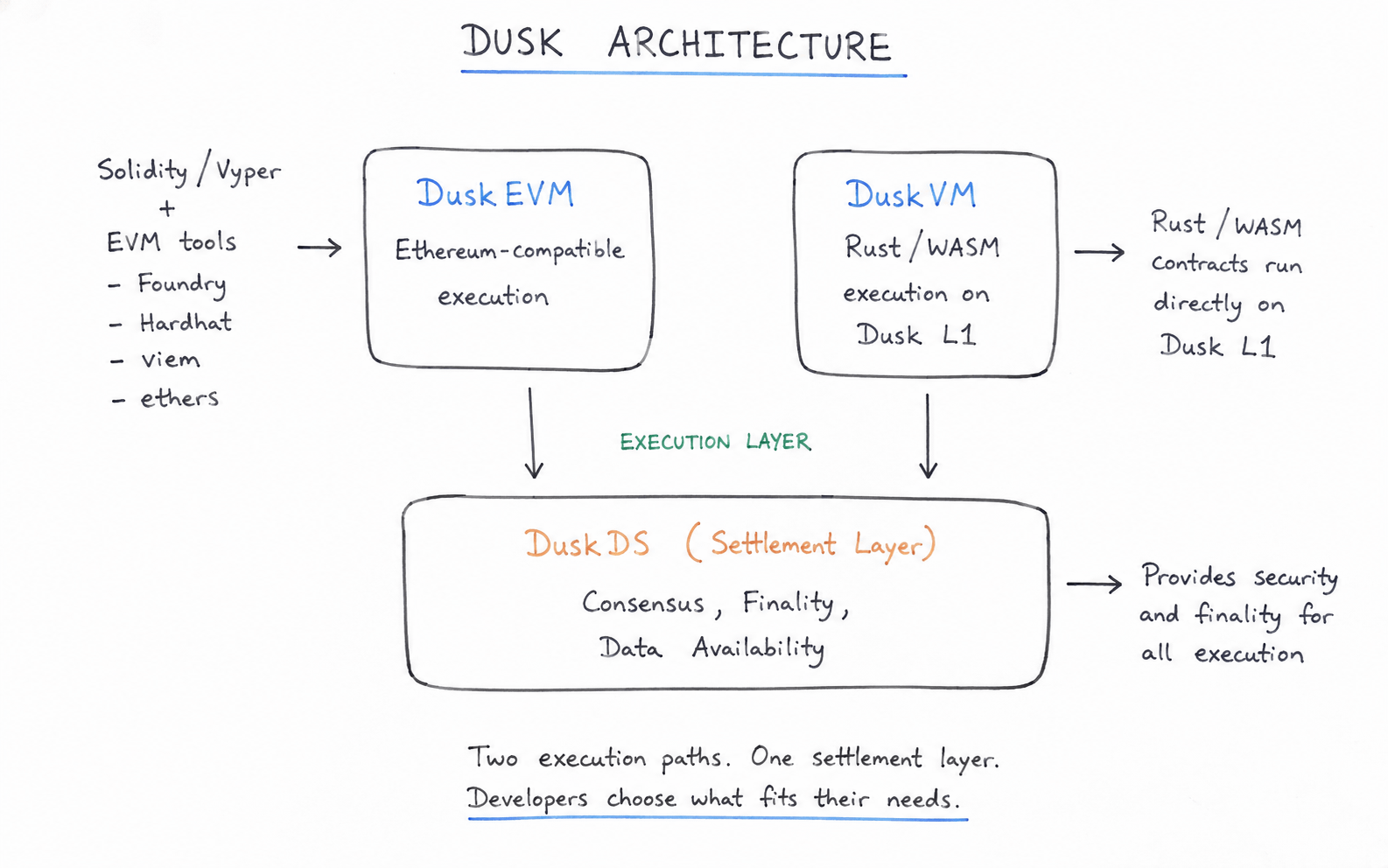
DuskEVMは、Foundry、Hardhat、viem、ethersといったおなじみのEVMツールを使って、SolidityおよびVyperアプリケーションをデプロイできるように設計されています。
面白いのは、それがDuskのより広いアーキテクチャの中でどう位置付けられているかです。
Duskは実行と決済を分離します。DuskEVMがEVM互換のアプリケーション実行を担当し、一方でDuskDSが基盤となるコンセンサス、ファイナリティ、データ利用可能性レイヤーを提供します。
つまり、Dusk上で構築するために、まったく別のスマートコントラクト環境を学ぶ必要が必ずしもあるわけではありません。Duskの決済基盤にアプリケーションを接続しながら、馴染みのあるEVM開発モデルを利用できます。
また、DuskにはDuskVMもあり、Rust/WASMのコントラクトという別アプローチで、Dusk L1上で直接実行します。
ですから、大きな考え方は単に「DuskがEVMをサポートしている」ということに留まりません。
互換性を重視するのか、それとも直接のL1機能を重視するのかに応じて、Duskが開発者に2つの実行パスを提供しているのです。
$RE
$LAB
Duskのアーキテクチャのうち、注目する価値があると感じるのは、そのEthereum互換の実行レイヤーです。
DuskEVMは、Foundry、Hardhat、viem、ethersといったおなじみのEVMツールを使って、SolidityおよびVyperアプリケーションをデプロイできるように設計されています。
面白いのは、それがDuskのより広いアーキテクチャの中でどう位置付けられているかです。
Duskは実行と決済を分離します。DuskEVMがEVM互換のアプリケーション実行を担当し、一方でDuskDSが基盤となるコンセンサス、ファイナリティ、データ利用可能性レイヤーを提供します。
つまり、Dusk上で構築するために、まったく別のスマートコントラクト環境を学ぶ必要が必ずしもあるわけではありません。Duskの決済基盤にアプリケーションを接続しながら、馴染みのあるEVM開発モデルを利用できます。
また、DuskにはDuskVMもあり、Rust/WASMのコントラクトという別アプローチで、Dusk L1上で直接実行します。
ですから、大きな考え方は単に「DuskがEVMをサポートしている」ということに留まりません。
互換性を重視するのか、それとも直接のL1機能を重視するのかに応じて、Duskが開発者に2つの実行パスを提供しているのです。
$RE
$LAB