最近、新しいテクノロジーは注目を集めやすい一方で、タイミングは見過ごされがちだなと考えるようになりました。
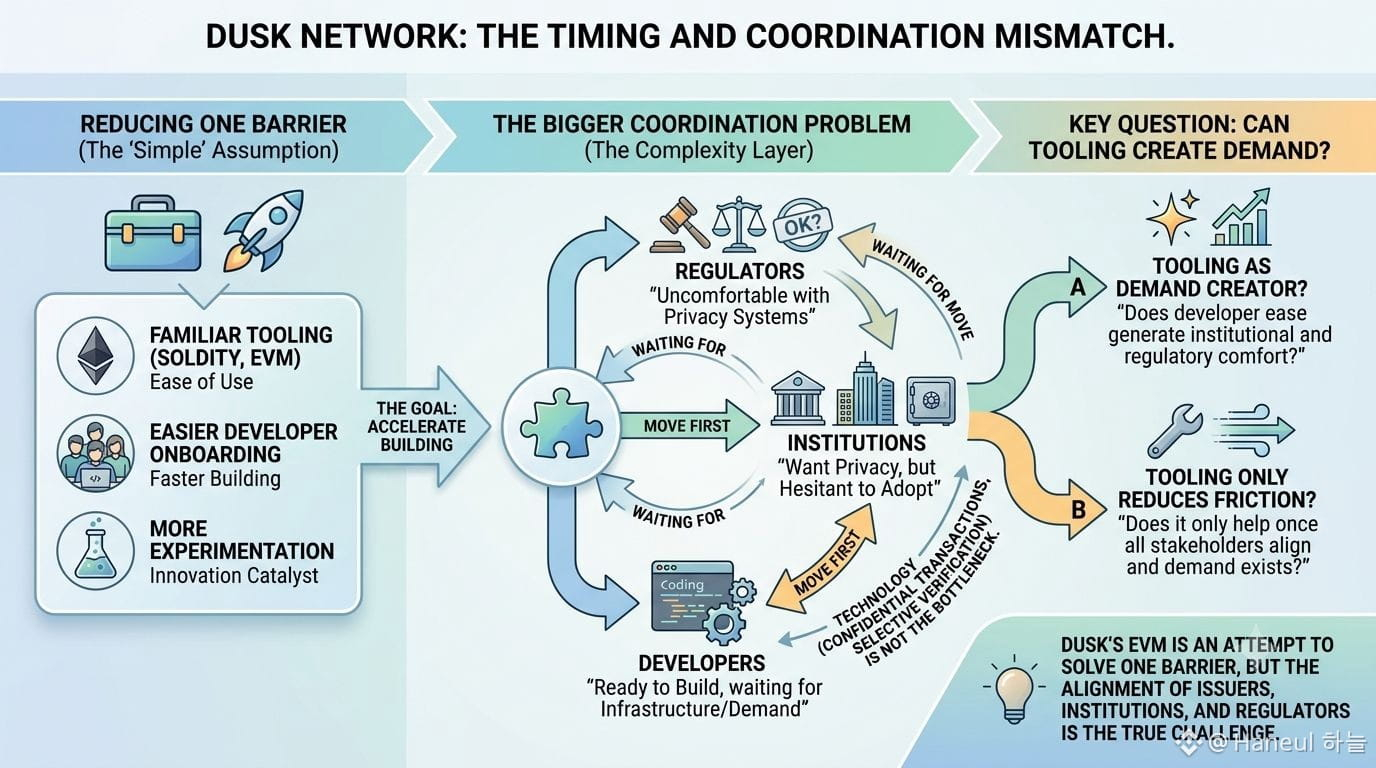
最初は、$DUSK が8月10日にEVMテストネットをローンチするのは、主に #Ethereum の開発者たちを楽にすることが目的なのだと思っていました。馴染みのあるツール、オンボーディングのしやすさ、より多くの開発者が試すこと。シンプルです。
読むほどに、面白いのは、Duskが実際に開発者に何を作らせようとしているのか、その点なのではないかと思えてきました。
$DUSK は、規制のある金融アプリケーション向けにプライバシーを強く重視しています。そこに、より馴染みのあるイーサリアムの開発ツールを持ち込もうとしているわけです。
すると、興味深いズレが生まれます。
開発者は、機関がアプリケーションの利用に備える前に、作る準備ができているかもしれません。
機関側は、規制当局がシステムに納得していないうちは、プライバシーを求めるかもしれません。
そして誰もが、誰かが先に動くのを待ってしまう可能性もあります。
私はいつもそのことに立ち返ってしまいます。
たとえば、トークン化された有価証券のためのインフラを作る開発者を想像してください。技術的には、すでに機密トランザクションや選択的な検証を支えるものがあるのかもしれません。でも技術がボトルネックとは限りません。難しいのは、おそらく発行体、機関、開発者、そして規制当局を、だいたい同じタイミングで足並みを揃えることです。
それは本当かもしれません。
あるいは、私は見当違いのことにばかり意識を向けているのかもしれません。
それでも、DuskのEVMへの移行は「もうひとつのEVMチェーン」というよりも、ある障壁を下げようとする試みであるように感じます。ただし、より大きな協調の問題が残ったままだという点は変わりません。
馴染みのあるツールが需要を生み出せるのかどうかは分かりません。
それとも、需要がすでに存在している場合にのみ役立つのでしょうか。
#dusk
@Dusk
$DUSK
最初は、$DUSK が8月10日にEVMテストネットをローンチするのは、主に #Ethereum の開発者たちを楽にすることが目的なのだと思っていました。馴染みのあるツール、オンボーディングのしやすさ、より多くの開発者が試すこと。シンプルです。
読むほどに、面白いのは、Duskが実際に開発者に何を作らせようとしているのか、その点なのではないかと思えてきました。
$DUSK は、規制のある金融アプリケーション向けにプライバシーを強く重視しています。そこに、より馴染みのあるイーサリアムの開発ツールを持ち込もうとしているわけです。
すると、興味深いズレが生まれます。
開発者は、機関がアプリケーションの利用に備える前に、作る準備ができているかもしれません。
機関側は、規制当局がシステムに納得していないうちは、プライバシーを求めるかもしれません。
そして誰もが、誰かが先に動くのを待ってしまう可能性もあります。
私はいつもそのことに立ち返ってしまいます。
たとえば、トークン化された有価証券のためのインフラを作る開発者を想像してください。技術的には、すでに機密トランザクションや選択的な検証を支えるものがあるのかもしれません。でも技術がボトルネックとは限りません。難しいのは、おそらく発行体、機関、開発者、そして規制当局を、だいたい同じタイミングで足並みを揃えることです。
それは本当かもしれません。
あるいは、私は見当違いのことにばかり意識を向けているのかもしれません。
それでも、DuskのEVMへの移行は「もうひとつのEVMチェーン」というよりも、ある障壁を下げようとする試みであるように感じます。ただし、より大きな協調の問題が残ったままだという点は変わりません。
馴染みのあるツールが需要を生み出せるのかどうかは分かりません。
それとも、需要がすでに存在している場合にのみ役立つのでしょうか。
#dusk
@Dusk
$DUSK