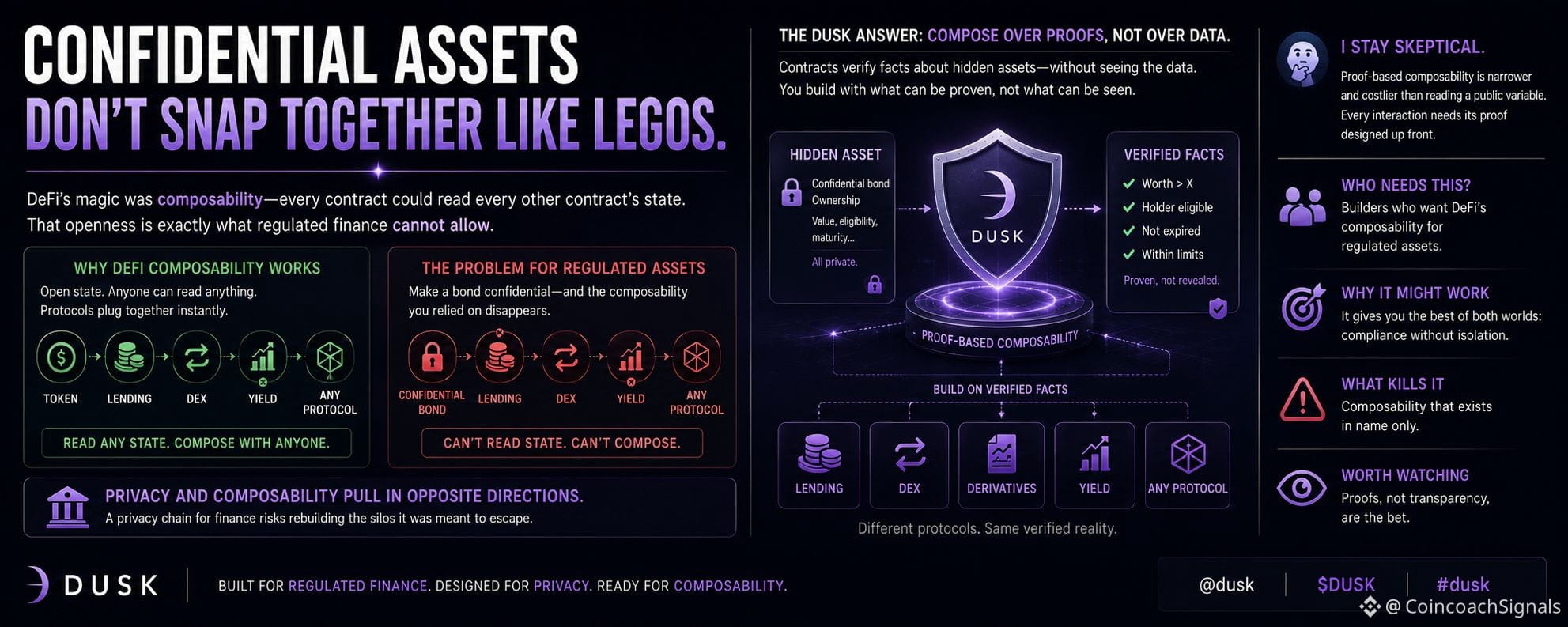
私は DeFi の本当のブレイクスルーは利回りだと思っていた。違った。ブレイクスルーは「合成可能性」だった——あらゆるプロトコルが、パーミッションレスに、どんな他のプロトコルにも組み込めること。なぜなら、すべてのコントラクトが他のコントラクトの状態を読み取れるからだ。貸出市場が、ほぼどんなトークンでも担保として受け入れられるのは、それがそのトークンの価値とステータスを見られるからにほかならない。この開放性こそが、魔法のすべてだ。
それは、規制された資産にとってまさに問題になる。規制が要求する通りに債券を機密化すると、貸出プロトコルはその価値も、保有者も、そもそも保有者が適格かどうかすら読み取れなくなる。機密性と合成可能性は互いに逆向きに引っ張り合う。DeFi を強力にした透明性は、規制された金融が許せないものだ。
だからこそ、金融向けに作られたプライバシーチェーンは、逃れたはずの「サイロ(縦割り)」を作り直すリスクがある。つまり、機密化された資産がすべて島になり、他のものがそこに組み込めない状態だ。
@Dusk の回答は証明に依拠している。コントラクトは、隠された資産について「X より価値がある、保有者は適格」といった事実を、その中身のデータを見ずに検証できる。見えるものではなく、証明できることの上に合成する。
私は懐疑的だ。証明ベースの合成可能性は、公開変数を読むことよりも狭く、コストも高い。あらゆるやり取りに、事前に設計された証明が必要になる。それは、任意のプロトコル同士を自由に“つなぐ”ことからはかなり遠い。
誰がそれを必要とするのか?規制された資産に対しても DeFi の合成可能性を欲しがるビルダーだ。最大の問題は、「名前だけの合成可能性」だ。
注目に値する。賭けるのは透明性ではなく、証明だ。
$AVAAI や $ACE のようなオープンなエコシステム型トークンは、純粋な透明性の上で引き続き繁栄するだろうが、規制された金融では現実が異なる。注目に値する。賭けるのは透明性ではなく、証明だ。
$DUSK #dusk
それは、規制された資産にとってまさに問題になる。規制が要求する通りに債券を機密化すると、貸出プロトコルはその価値も、保有者も、そもそも保有者が適格かどうかすら読み取れなくなる。機密性と合成可能性は互いに逆向きに引っ張り合う。DeFi を強力にした透明性は、規制された金融が許せないものだ。
だからこそ、金融向けに作られたプライバシーチェーンは、逃れたはずの「サイロ(縦割り)」を作り直すリスクがある。つまり、機密化された資産がすべて島になり、他のものがそこに組み込めない状態だ。
@Dusk の回答は証明に依拠している。コントラクトは、隠された資産について「X より価値がある、保有者は適格」といった事実を、その中身のデータを見ずに検証できる。見えるものではなく、証明できることの上に合成する。
私は懐疑的だ。証明ベースの合成可能性は、公開変数を読むことよりも狭く、コストも高い。あらゆるやり取りに、事前に設計された証明が必要になる。それは、任意のプロトコル同士を自由に“つなぐ”ことからはかなり遠い。
誰がそれを必要とするのか?規制された資産に対しても DeFi の合成可能性を欲しがるビルダーだ。最大の問題は、「名前だけの合成可能性」だ。
注目に値する。賭けるのは透明性ではなく、証明だ。
$AVAAI や $ACE のようなオープンなエコシステム型トークンは、純粋な透明性の上で引き続き繁栄するだろうが、規制された金融では現実が異なる。注目に値する。賭けるのは透明性ではなく、証明だ。
$DUSK #dusk