The more I look into @TermMax, the more it makes me reconsider how I think about fixed-rate lending.
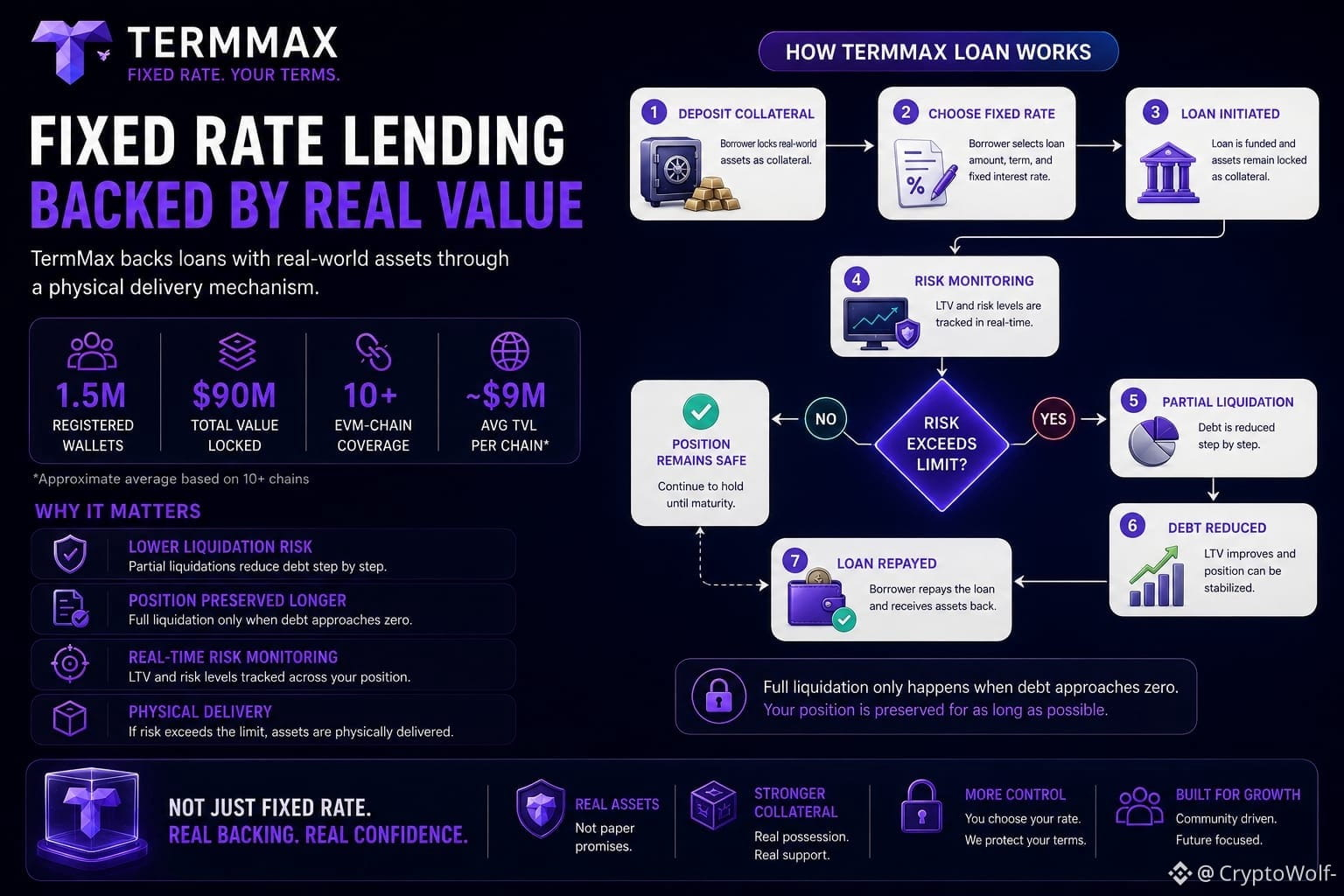
One thing that caught my attention was the liquidation mechanism. Instead of simply selling assets on the market to handle the loan, the way the mechanism works gives me a different perspective on how collateral can back the loan when things don't go as expected.
I also noticed the reported 1.5M registered wallets and $90M TVL. Dividing the TVL across that number gives a very different picture than simply looking at the clean $1B fixed-supply story.
The EVM-chain coverage sounds broad, but a simple average would put roughly $9M TVL per chain. Still, fixed-rate markets need real liquidity and depth, not just deployment across many chains.
Another point I noticed is the liquidation design. In other systems I've used, crossing the danger line can mean losing the whole position in one shot. With @TermMax the way LTV changes after liquidation caught my attention. If full liquidation only happens as the debt is reduced toward zero, that could make a difference in how liquidity and risk are managed.
I like thinking about the downside before focusing on the upside. We can't control where the market moves, but we can decide how much risk we're willing to take before opening a position.
Do you think TermMax’s physical delivery mechanism can really handle truly illiquid real-world assets, or is that where the real challenge begins?
@TermMax #TermMax
One thing that caught my attention was the liquidation mechanism. Instead of simply selling assets on the market to handle the loan, the way the mechanism works gives me a different perspective on how collateral can back the loan when things don't go as expected.
I also noticed the reported 1.5M registered wallets and $90M TVL. Dividing the TVL across that number gives a very different picture than simply looking at the clean $1B fixed-supply story.
The EVM-chain coverage sounds broad, but a simple average would put roughly $9M TVL per chain. Still, fixed-rate markets need real liquidity and depth, not just deployment across many chains.
Another point I noticed is the liquidation design. In other systems I've used, crossing the danger line can mean losing the whole position in one shot. With @TermMax the way LTV changes after liquidation caught my attention. If full liquidation only happens as the debt is reduced toward zero, that could make a difference in how liquidity and risk are managed.
I like thinking about the downside before focusing on the upside. We can't control where the market moves, but we can decide how much risk we're willing to take before opening a position.
Do you think TermMax’s physical delivery mechanism can really handle truly illiquid real-world assets, or is that where the real challenge begins?
@TermMax #TermMax