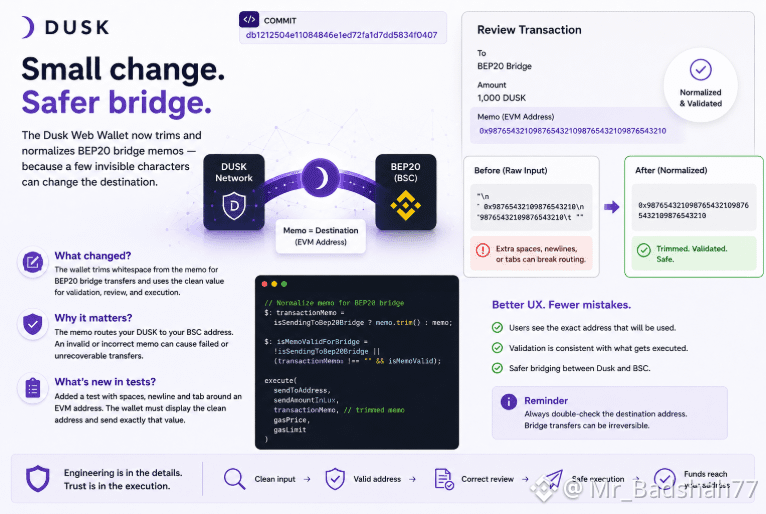

#dusk $DUSK @Dusk ....... 私は普段、小さなウォレットのコミットに気づきにくいんです。これには立ち止まりました:@Dusk このコミットは、ブリッジの挙動の3行を変更しました。目に見えない文字が、メモが宛先である場合に意味を持ち得るからです。
BEP20ブリッジは、メモを使ってDuskに「どのBSCアドレスにDUSKを送るべきか」を伝えます。つまりこの場合、メモは単なる注記ではありません。ルーティングの指示の一部です。
荷物の送り状のようなものだと思ってください。
アドレスがこう書かれていると:
0xABC...
人間は同じ宛先として見ます。
しかしソフトウェアは、余分なスペースや改行を同じ扱いをしないことがあります。
それを修正するのがこのコミットです。BEP20ブリッジの送金では、Web Walletが空白を取り除いた正規化メモを作成し、その同じクリーニング済みの値を検証、レビュー画面、そして実際のトランザクションに使うようになりました。
注目すべきポイントはテストです。
Duskは、EVMアドレスがスペース、改行、タブに囲まれているケースを追加しました。ウォレットはレビュー時に引き続ききれいなアドレスを表示し、その「正規化された正確なアドレス」を実行に送らなければなりません。
些細な変更ですが、結果は重要です。Duskのドキュメントでは、ブリッジメモの欠落や無効が自動ルーティングを妨げ、送金が回復不能になる可能性があると警告されています。ユーザーは依然として、宛先アドレスを自分で確認する必要があります。
私はこういうエンジニアリングが好きです。派手じゃないからです。
「コードが動く」と「ユーザーがフローを安全に信頼できる」の間にある、退屈なイレギュラーです。
見た目が小さく見える細部に、重大なウォレットリスクはどれだけ隠れているのでしょうか?
$ACE $BOME
BEP20ブリッジは、メモを使ってDuskに「どのBSCアドレスにDUSKを送るべきか」を伝えます。つまりこの場合、メモは単なる注記ではありません。ルーティングの指示の一部です。
荷物の送り状のようなものだと思ってください。
アドレスがこう書かれていると:
0xABC...
人間は同じ宛先として見ます。
しかしソフトウェアは、余分なスペースや改行を同じ扱いをしないことがあります。
それを修正するのがこのコミットです。BEP20ブリッジの送金では、Web Walletが空白を取り除いた正規化メモを作成し、その同じクリーニング済みの値を検証、レビュー画面、そして実際のトランザクションに使うようになりました。
注目すべきポイントはテストです。
Duskは、EVMアドレスがスペース、改行、タブに囲まれているケースを追加しました。ウォレットはレビュー時に引き続ききれいなアドレスを表示し、その「正規化された正確なアドレス」を実行に送らなければなりません。
些細な変更ですが、結果は重要です。Duskのドキュメントでは、ブリッジメモの欠落や無効が自動ルーティングを妨げ、送金が回復不能になる可能性があると警告されています。ユーザーは依然として、宛先アドレスを自分で確認する必要があります。
私はこういうエンジニアリングが好きです。派手じゃないからです。
「コードが動く」と「ユーザーがフローを安全に信頼できる」の間にある、退屈なイレギュラーです。
見た目が小さく見える細部に、重大なウォレットリスクはどれだけ隠れているのでしょうか?
$ACE $BOME