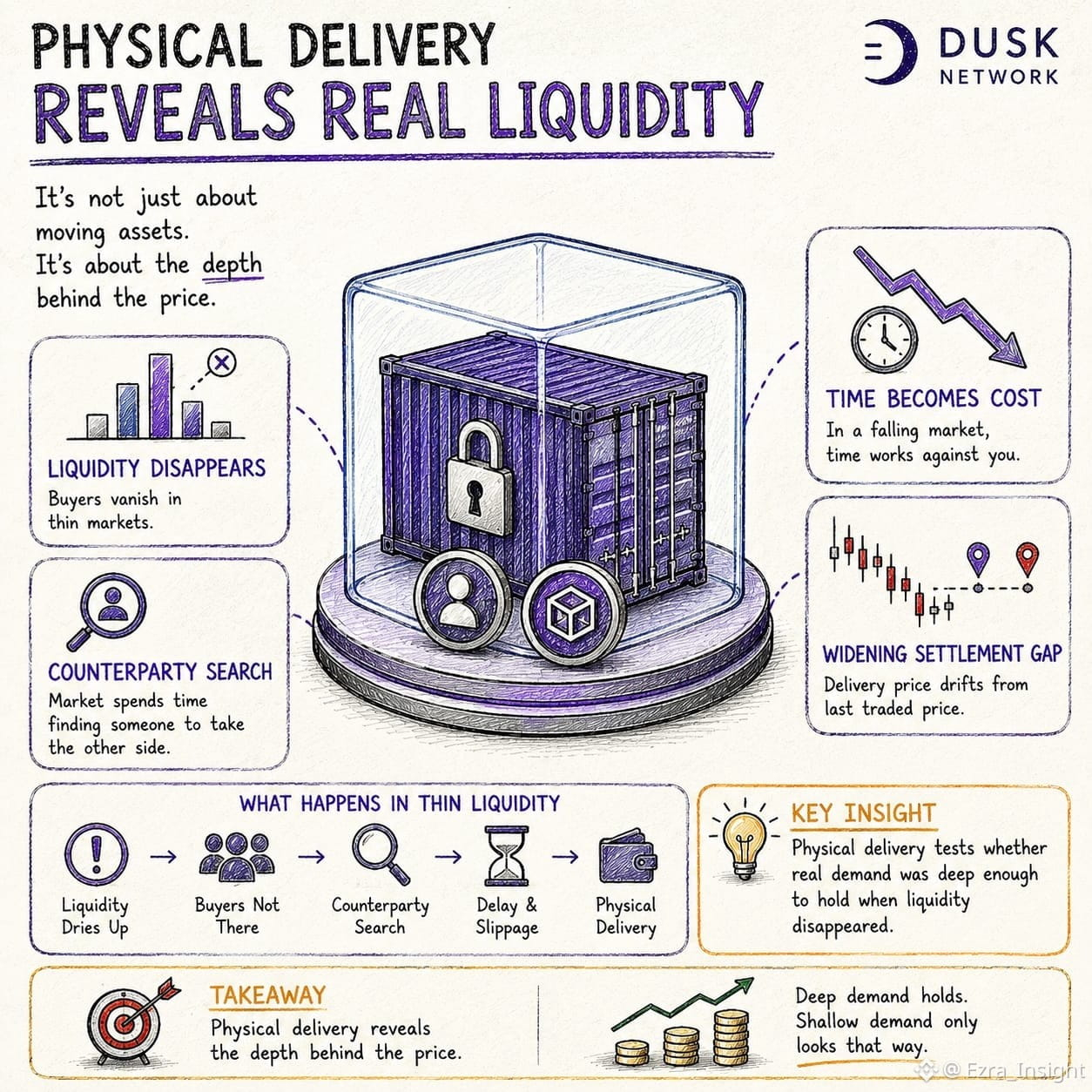
I kept thinking about how easily physical delivery can be dismissed as a technical detail. I used to assume it mainly mattered when someone forgot to close before expiry, then I watched one unwind during a thin session and that assumption started to feel wrong. When liquidity disappears, settlement becomes more revealing because the buyers who normally absorb the flow aren't necessarily there. Instead of simply finding a price, the market has to find someone willing to take the other side, and when prices are falling, that search for a counterparty can become expensive. What caught my attention was how little drama there was. No obvious warning, just the gap between the last traded price and the eventual delivery settlement getting wider. Maybe physical delivery isn't really testing whether an asset can change hands. Maybe it's testing whether the demand behind the price was actually deep enough to survive when the easy liquidity disappeared...
@Dusk $DUSK #dusk
@Dusk $DUSK #dusk