DUSKが他のRWAチェーンと何が違うのかをさらに深掘りしていると、ある点が腑に落ちました。つまり、資産をトークン化することは問題の一部にすぎない、ということです。
規制のある金融の世界での本当の難しさは、その資産の「周り」のすべてにあります――誰がそれを保有する資格を持つのか、どの譲渡が許可されるのか、どの情報は機密として保持されるべきなのか、何を開示しなければならないのか、そして最終的に資産と支払いがどのように決済されるのか。
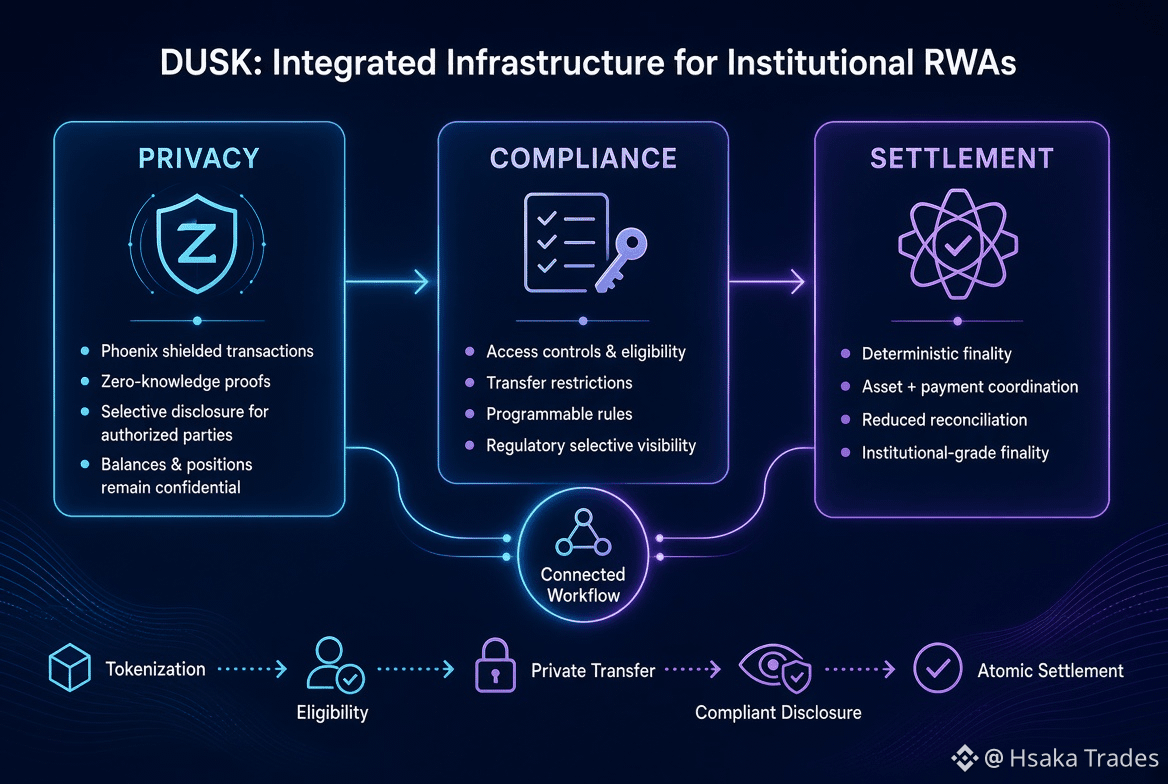
私の関心を引いたのは、DUSKがこれらを同じワークフローのつながった部品として扱っている点です。基盤となるインフラは、アクセス制御、選択的開示によるプライバシー、そして別個のアドオンとして扱うのではなく分離せずに統合し、決定論的な決済を組み合わせています。
私は、機関が、すべての残高・ポジション・取引を市場全体にさらすことなくブロックチェーンをどのように使えるのかをずっと考えていました。
DUSKの答えは興味深いです。Phoenixはゼロ知識証明によって取引の詳細を秘匿できる一方で、開示が必要な場合には、認可された当事者が特定の情報を受け取れるようになっています。
もう一つのポイントは決済です。DUSKは、資産と支払いの両方のレグ(決済単位)を決定論的な最終性で調整するよう設計されています。さらに、市場インフラは、照合作業が発生する原因となる分断された引き継ぎを減らすことを目指しています。
その結果、DUSKは単なる別のトークン化チェーンというより、規制市場の現実に基づいて作られたインフラだと見えてきました。
プライバシー、コンプライアンス、決済統合――これらが機関向けRWAにおける本当の競争優位になり得るのでしょうか?
#dusk $DUSK @Dusk
規制のある金融の世界での本当の難しさは、その資産の「周り」のすべてにあります――誰がそれを保有する資格を持つのか、どの譲渡が許可されるのか、どの情報は機密として保持されるべきなのか、何を開示しなければならないのか、そして最終的に資産と支払いがどのように決済されるのか。
私の関心を引いたのは、DUSKがこれらを同じワークフローのつながった部品として扱っている点です。基盤となるインフラは、アクセス制御、選択的開示によるプライバシー、そして別個のアドオンとして扱うのではなく分離せずに統合し、決定論的な決済を組み合わせています。
私は、機関が、すべての残高・ポジション・取引を市場全体にさらすことなくブロックチェーンをどのように使えるのかをずっと考えていました。
DUSKの答えは興味深いです。Phoenixはゼロ知識証明によって取引の詳細を秘匿できる一方で、開示が必要な場合には、認可された当事者が特定の情報を受け取れるようになっています。
もう一つのポイントは決済です。DUSKは、資産と支払いの両方のレグ(決済単位)を決定論的な最終性で調整するよう設計されています。さらに、市場インフラは、照合作業が発生する原因となる分断された引き継ぎを減らすことを目指しています。
その結果、DUSKは単なる別のトークン化チェーンというより、規制市場の現実に基づいて作られたインフラだと見えてきました。
プライバシー、コンプライアンス、決済統合――これらが機関向けRWAにおける本当の競争優位になり得るのでしょうか?
#dusk $DUSK @Dusk