@Dusk $DUSK #dusk
I keep coming back to one uncomfortable question in DeFi: what happens when transparency becomes a liability?
Dusk Network is interesting because it starts there—not with another race for yield, but with the limits of making every financial action visible.
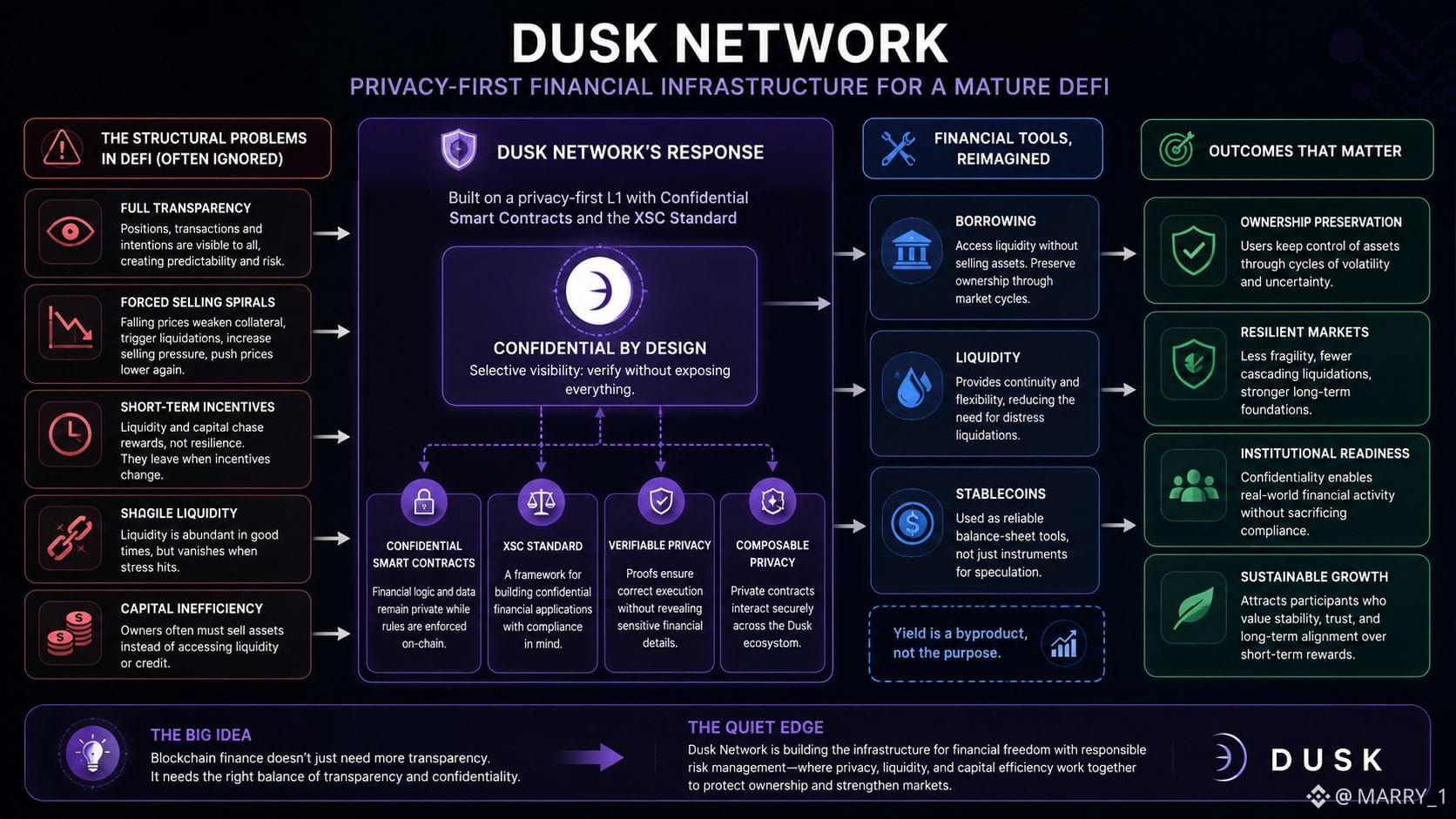
In DeFi, transparency creates trust, but it can also create predictable behavior. Positions become targets. Large transactions reveal intentions. Liquidity disappears when conditions turn ugly. And when collateral falls, forced selling can turn a temporary shock into a deeper spiral.
I think this is where Dusk’s privacy-focused architecture deserves attention.
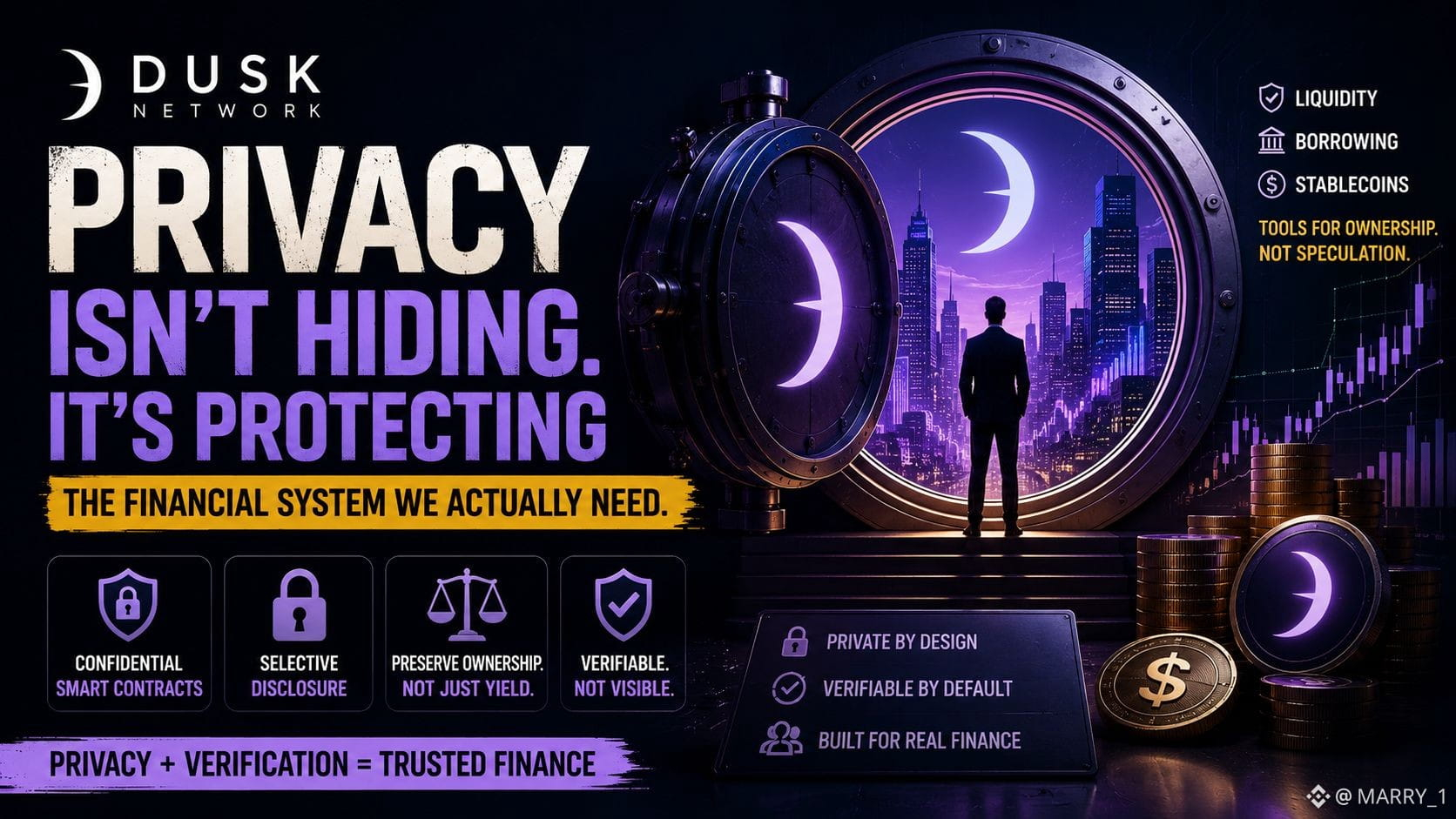
Its layer-1 network and Confidential Security Contract (XSC) standard are designed around confidential financial applications and smart contracts. The bigger idea is selective visibility: financial activity can remain verifiable without exposing everything to everyone.
That matters beyond privacy itself.
I see borrowing as potentially useful for preserving ownership rather than maximizing leverage. I see liquidity as protection against being forced to sell at the worst possible moment. I see stablecoins as balance-sheet tools before speculative instruments.
The trade-off is real: privacy must not become opacity, and confidential systems still need accountability.
But perhaps that tension is exactly the point.
If blockchain finance is going to mature, it may need less obsession with what can be made public—and more thought about what genuinely needs to remain private.
Dusk is betting on that distinction. The real test comes when markets get uncomfortable.
I keep coming back to one uncomfortable question in DeFi: what happens when transparency becomes a liability?
Dusk Network is interesting because it starts there—not with another race for yield, but with the limits of making every financial action visible.
In DeFi, transparency creates trust, but it can also create predictable behavior. Positions become targets. Large transactions reveal intentions. Liquidity disappears when conditions turn ugly. And when collateral falls, forced selling can turn a temporary shock into a deeper spiral.
I think this is where Dusk’s privacy-focused architecture deserves attention.
Its layer-1 network and Confidential Security Contract (XSC) standard are designed around confidential financial applications and smart contracts. The bigger idea is selective visibility: financial activity can remain verifiable without exposing everything to everyone.
That matters beyond privacy itself.
I see borrowing as potentially useful for preserving ownership rather than maximizing leverage. I see liquidity as protection against being forced to sell at the worst possible moment. I see stablecoins as balance-sheet tools before speculative instruments.
The trade-off is real: privacy must not become opacity, and confidential systems still need accountability.
But perhaps that tension is exactly the point.
If blockchain finance is going to mature, it may need less obsession with what can be made public—and more thought about what genuinely needs to remain private.
Dusk is betting on that distinction. The real test comes when markets get uncomfortable.