金利は固定ですが、借り手が返済できなかった場合、貸し手は何を受け取るのでしょうか?
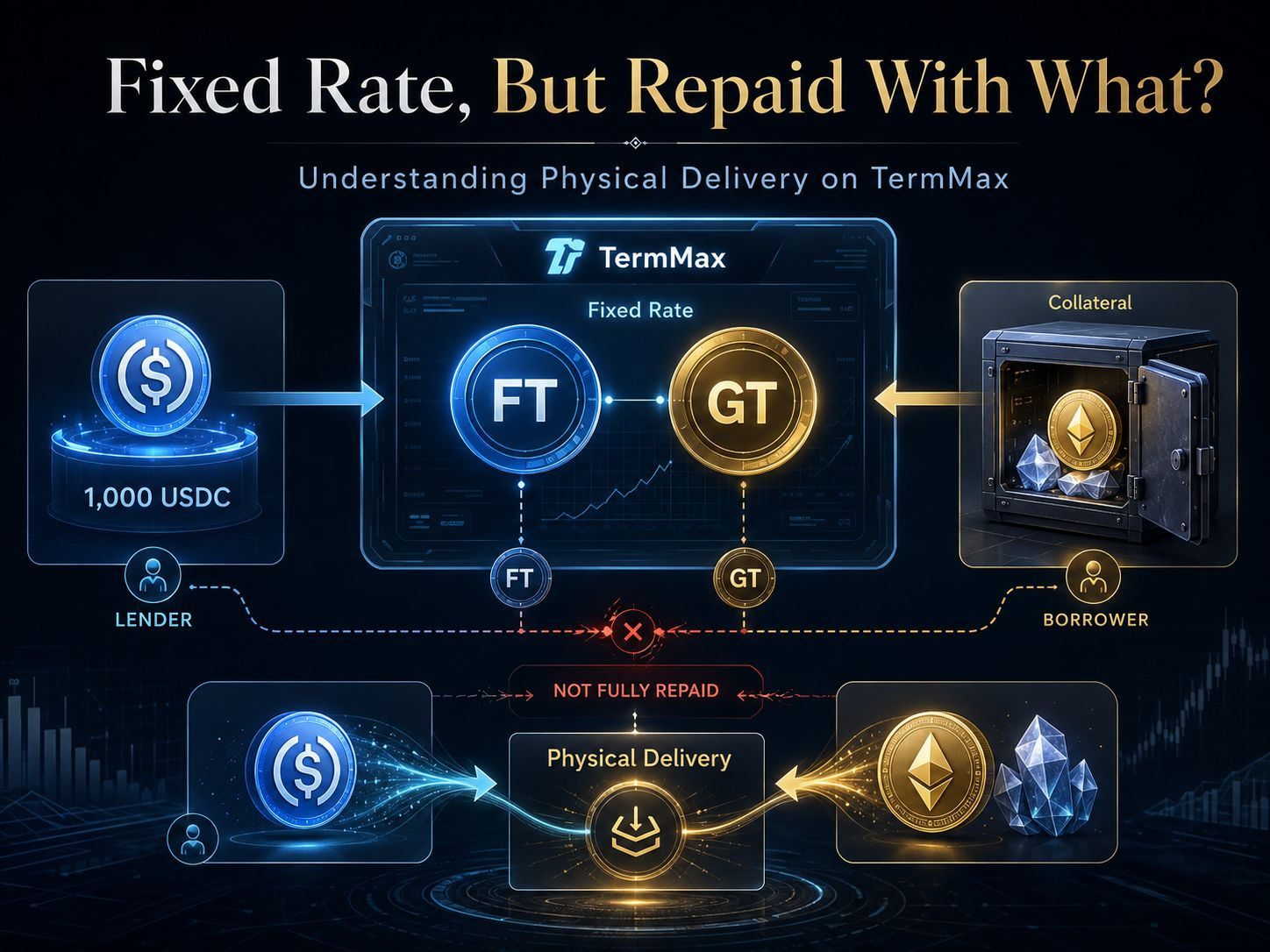
たとえば、1,000 USDCを固定金利のポジションに預け、満期時の返済見込み額もすでに把握しているとします。聞こえは簡単です。しかし見落とされがちな重要な疑問がひとつあります。借り手が債務を完済できない場合、その「固定」された利回りを支える実際の資産は何なのか?
TermMaxでは、ローンは単なるAPYの数字ではありません。固定金利の各市場には、負債トークン、担保、満期日、そしてLTVのしきい値があります。借り手のポジションは、負債と担保を記録するERC-721のGTによって表されます。LTVがLLTVのしきい値に達すると、そのポジションは清算(リキディテーション)され得ます。
その後に、より興味深い点があります。債務が完全に解決できない場合、TermMaxは物理的なデリバリー(現物引渡し)メカニズムを使用します。FTホルダーがプールを通じて償還(リデーム)する際には、元の資産をすべて自動的に受け取るのではなく、基礎となるトークンと担保の両方が、割合に応じて配分される可能性があります。
私にとって、この細部は固定金利の数字そのものよりも重要です。現物引渡しはローンを「無リスク」にしません。債務回収が理想的なシナリオどおりに進まないとき、残存価値の配分の仕方が変わるのです。
メリットは、担保が想定された返済用資産にきれいに変換できないような状況を処理するための別のルートが用意されていることです。代償として、貸し手は想定していたものとは異なる構成の資産を保有することになる可能性があります。そのうえで、担保価格、流動性、オラクル、スマートコントラクトのリスクにも引き続き直面します。
だから、FTを見て「利回りはいくら?」と考える前に、もう1つ質問します。
「悪いケースでは、私は実際に何で返済を受け取るのか?」
@TermMax #TermMax $ALPINE $CLO $ACE
たとえば、1,000 USDCを固定金利のポジションに預け、満期時の返済見込み額もすでに把握しているとします。聞こえは簡単です。しかし見落とされがちな重要な疑問がひとつあります。借り手が債務を完済できない場合、その「固定」された利回りを支える実際の資産は何なのか?
TermMaxでは、ローンは単なるAPYの数字ではありません。固定金利の各市場には、負債トークン、担保、満期日、そしてLTVのしきい値があります。借り手のポジションは、負債と担保を記録するERC-721のGTによって表されます。LTVがLLTVのしきい値に達すると、そのポジションは清算(リキディテーション)され得ます。
その後に、より興味深い点があります。債務が完全に解決できない場合、TermMaxは物理的なデリバリー(現物引渡し)メカニズムを使用します。FTホルダーがプールを通じて償還(リデーム)する際には、元の資産をすべて自動的に受け取るのではなく、基礎となるトークンと担保の両方が、割合に応じて配分される可能性があります。
私にとって、この細部は固定金利の数字そのものよりも重要です。現物引渡しはローンを「無リスク」にしません。債務回収が理想的なシナリオどおりに進まないとき、残存価値の配分の仕方が変わるのです。
メリットは、担保が想定された返済用資産にきれいに変換できないような状況を処理するための別のルートが用意されていることです。代償として、貸し手は想定していたものとは異なる構成の資産を保有することになる可能性があります。そのうえで、担保価格、流動性、オラクル、スマートコントラクトのリスクにも引き続き直面します。
だから、FTを見て「利回りはいくら?」と考える前に、もう1つ質問します。
「悪いケースでは、私は実際に何で返済を受け取るのか?」
@TermMax #TermMax $ALPINE $CLO $ACE