
薄明の取引は、オンチェーンの有効期限に到達することなく、私のノードのメンプールから消えることがあります。
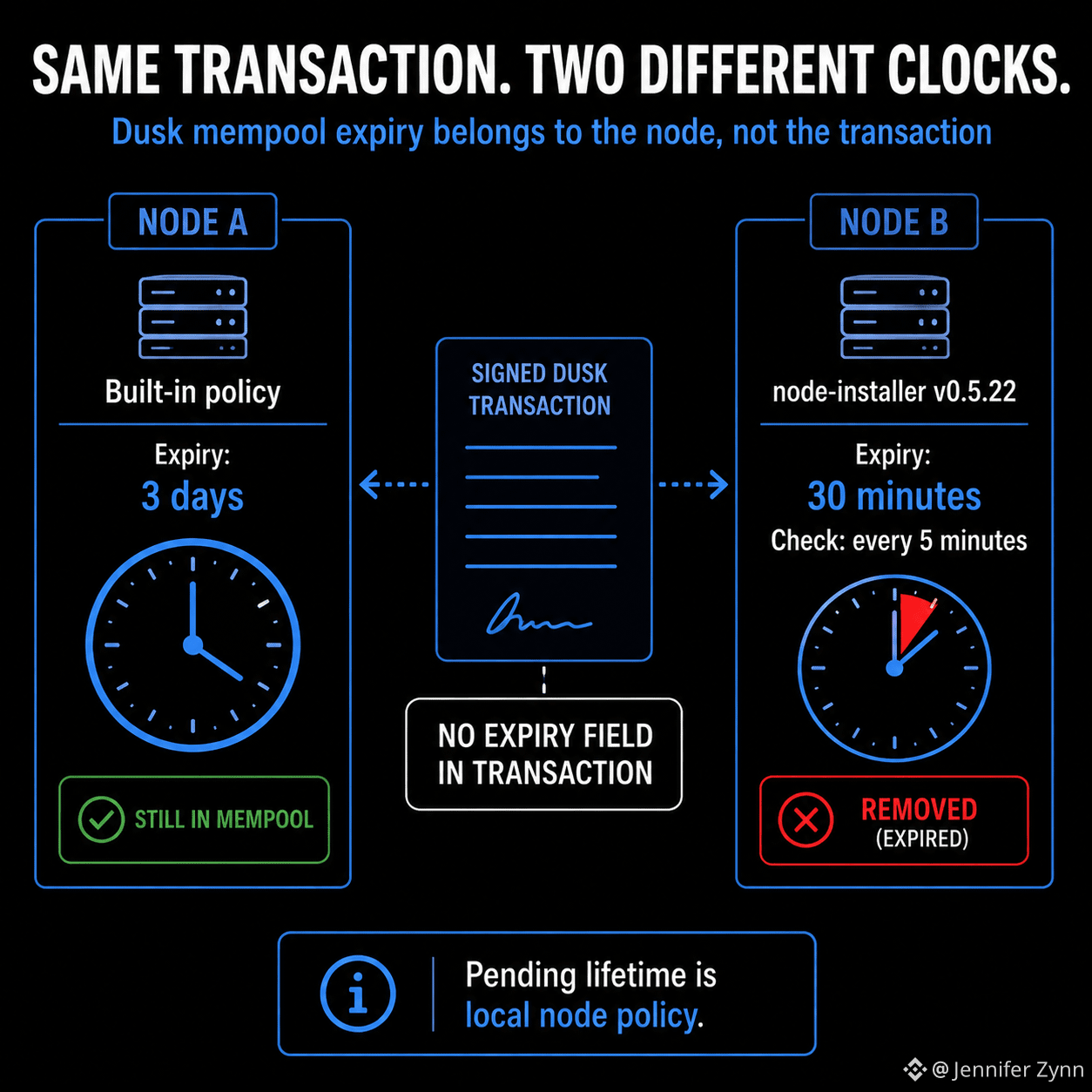
それが、ウォレットにハードコードしたくないタイムアウトです。@Dusk 件の取引には有効期限フィールドがありません。有効期限はローカルの Rusk ポリシーです。内蔵のデフォルトは 3 日ですが、node-installer v0.5.22 で導入されたノードは、5 分ごとにチェックを行い、メンプールの寿命は 30 分です。
つまり、2 つの健全な Dusk ノードが、同じ保留中の取引が「どれくらいの間」待つことが許されるかについて、まったく異なる答えを返し得ます。
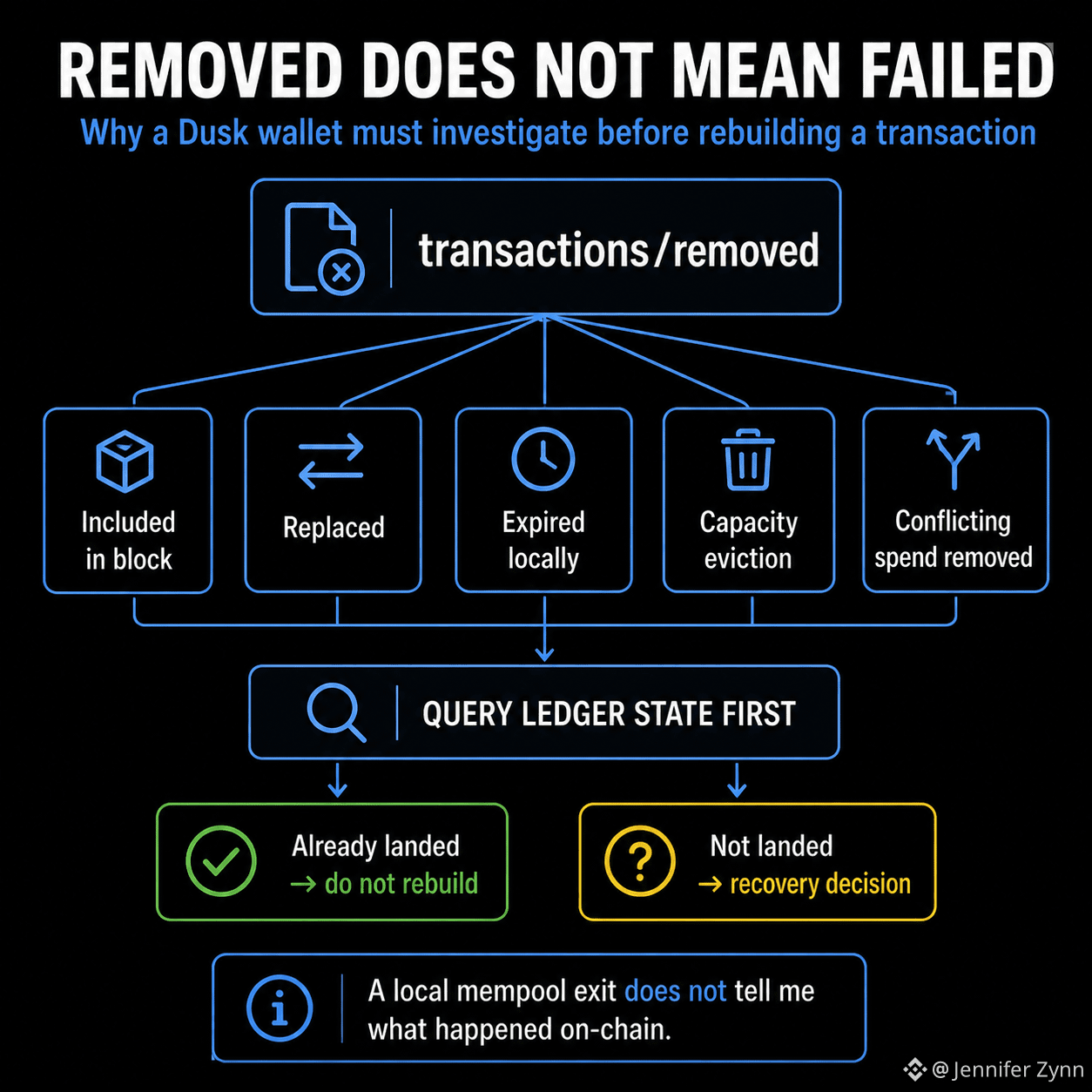
いちばん厄介なのは「removed」イベントです。これは、そのノードのローカルメンプールから取引が出ていったことしか教えてくれません。inclusion(取り込み)、replacement(置換)、expiry(期限切れ)、capacity による eviction(追い出し)、または競合する spend(消費競合)など、どれでもその退出の原因になります。「removed」をそのまま「failed(失敗)」に翻訳すると、復旧ロジックが推測になってしまいます。
払い出しサービスでは、その推測がユーザーに影響します。別のノードがすでにそれをさらに伝播していたのに、私のノードがローカルでそれを期限切れにしただけで、私は支払いを死亡(dead)とマークしてしまう可能性があります。
私は、メンプールのタイムアウトをノード設定として扱い、そのうえで DUSK 取引を再構築してよいと判断する前に台帳(ledger)の状態を照会します。
Dusk では、「自分のメンプールから消えた」は「消えた」と同じではありません。
$SOXSB $ACE #dusk $DUSK @Dusk
それが、ウォレットにハードコードしたくないタイムアウトです。@Dusk 件の取引には有効期限フィールドがありません。有効期限はローカルの Rusk ポリシーです。内蔵のデフォルトは 3 日ですが、node-installer v0.5.22 で導入されたノードは、5 分ごとにチェックを行い、メンプールの寿命は 30 分です。
つまり、2 つの健全な Dusk ノードが、同じ保留中の取引が「どれくらいの間」待つことが許されるかについて、まったく異なる答えを返し得ます。
いちばん厄介なのは「removed」イベントです。これは、そのノードのローカルメンプールから取引が出ていったことしか教えてくれません。inclusion(取り込み)、replacement(置換)、expiry(期限切れ)、capacity による eviction(追い出し)、または競合する spend(消費競合)など、どれでもその退出の原因になります。「removed」をそのまま「failed(失敗)」に翻訳すると、復旧ロジックが推測になってしまいます。
払い出しサービスでは、その推測がユーザーに影響します。別のノードがすでにそれをさらに伝播していたのに、私のノードがローカルでそれを期限切れにしただけで、私は支払いを死亡(dead)とマークしてしまう可能性があります。
私は、メンプールのタイムアウトをノード設定として扱い、そのうえで DUSK 取引を再構築してよいと判断する前に台帳(ledger)の状態を照会します。
Dusk では、「自分のメンプールから消えた」は「消えた」と同じではありません。
$SOXSB $ACE #dusk $DUSK @Dusk