#termmax @TermMax 「ワンクリック・レバレッジ」は、TermMaxが自社資料の中で最も頻繁に使う言い回しです。そしてそれを文字どおりに受け取ると、そのクリックの裏で実際に何が起きているのかを、あまりにも過小評価してしまいます。私は、その言葉が見落としがちな点を確かめたくなりました。
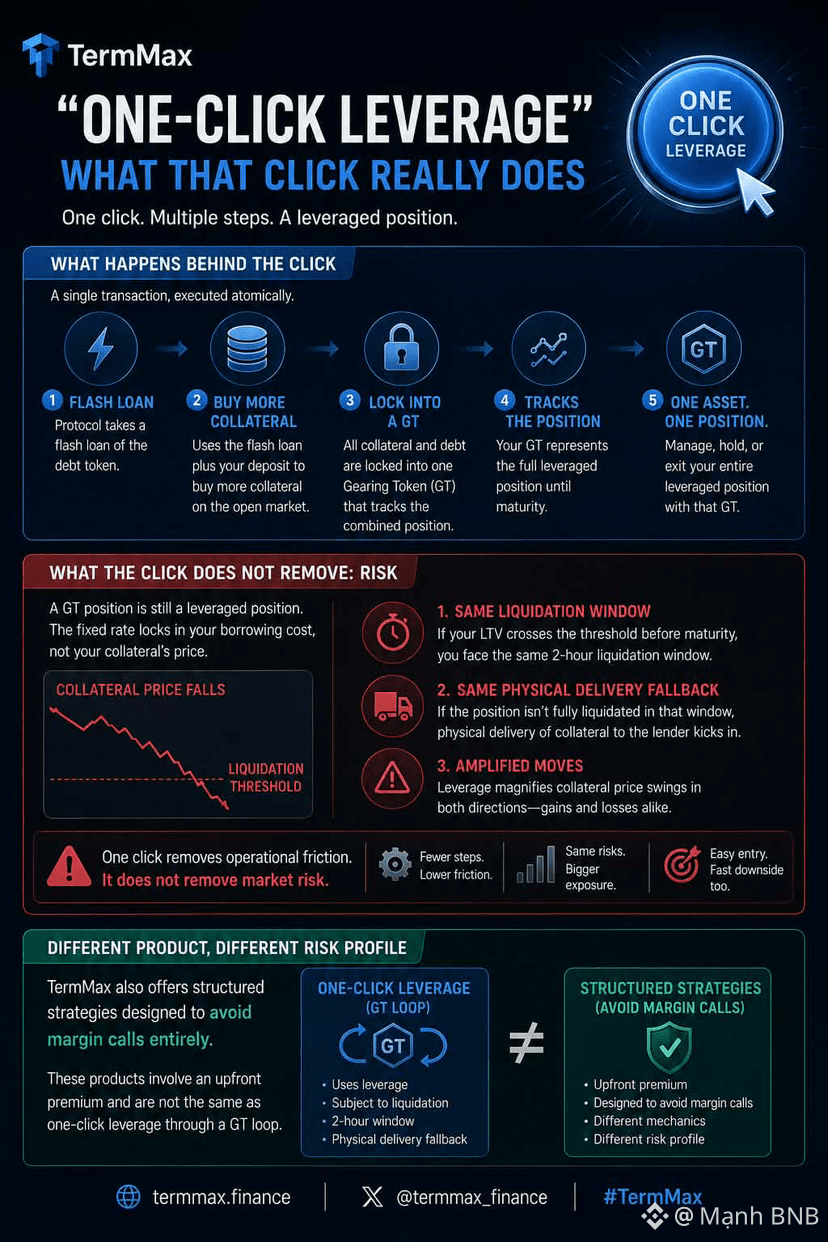
実際には、1回の取引が負債トークンのフラッシュローンを発動し、それをあなたの初期デポジットと併用してオープンマーケットでより多くの担保を購入し、その後、すべてを1つのGearing Tokenにロックして、結合されたポジションを追跡します。これは本当に洗練されたエンジニアリングです。複数のプロトコルにまたがって何度も手動でループを回し、それぞれにガスコストがかかり、さらにシーケンス中に何かが起きてしまう可能性がある“窓”もそれぞれ存在していた作業が、今ではアトミックに実行されます。私は、この部分を過小評価したくありません。
フレーミングが少し弱くなるのはリスクのところです。GTを通じたループ型ポジションは、やはりレバレッジをかけたポジションです。担保資産の価値が十分に下落して、満期前にローン対価値(LTV)比率が市場の清算(リキディエーション)閾値を超えると、そのポジションは、同じ2時間の清算ウィンドウと、TermMax上の他のローンと同様の物理的なデリバリーのフォールバックにさらされます。固定金利は、あなたの担保の価格ではなく、借入コストを固定します。ワンクリックは運用上の摩擦を取り除きますが、市場リスクを取り除くわけではありません。そして私は、ユーザーがこの2つをごちゃ混ぜにしているのを見てきました。使いやすさに関する言葉が前面に出ることで、「それでも何がうまくいかない可能性があるのか」という話題が押しやられてしまうからです。ループ型ポジションは、担保の価格変動を両方向に増幅するため、入口を“簡単にした”その同じワンクリックで、下落側の到来も早めてしまいます—遅くするのではなく、です。
また、TermMaxが“マージンコールを完全に回避する”ことを売りにした別個のストラクチャード・ストラテジーを提供している点も指摘しておきたいです。それは、標準的なGTループとは別のプロダクトで、事前のプレミアムに基づいて構成されています。ワンクリック・レバレッジと混同するのは簡単なミスです。両者は、同じリスク特性を持つものとして評価すべきではありません。$ACE
実際には、1回の取引が負債トークンのフラッシュローンを発動し、それをあなたの初期デポジットと併用してオープンマーケットでより多くの担保を購入し、その後、すべてを1つのGearing Tokenにロックして、結合されたポジションを追跡します。これは本当に洗練されたエンジニアリングです。複数のプロトコルにまたがって何度も手動でループを回し、それぞれにガスコストがかかり、さらにシーケンス中に何かが起きてしまう可能性がある“窓”もそれぞれ存在していた作業が、今ではアトミックに実行されます。私は、この部分を過小評価したくありません。
フレーミングが少し弱くなるのはリスクのところです。GTを通じたループ型ポジションは、やはりレバレッジをかけたポジションです。担保資産の価値が十分に下落して、満期前にローン対価値(LTV)比率が市場の清算(リキディエーション)閾値を超えると、そのポジションは、同じ2時間の清算ウィンドウと、TermMax上の他のローンと同様の物理的なデリバリーのフォールバックにさらされます。固定金利は、あなたの担保の価格ではなく、借入コストを固定します。ワンクリックは運用上の摩擦を取り除きますが、市場リスクを取り除くわけではありません。そして私は、ユーザーがこの2つをごちゃ混ぜにしているのを見てきました。使いやすさに関する言葉が前面に出ることで、「それでも何がうまくいかない可能性があるのか」という話題が押しやられてしまうからです。ループ型ポジションは、担保の価格変動を両方向に増幅するため、入口を“簡単にした”その同じワンクリックで、下落側の到来も早めてしまいます—遅くするのではなく、です。
また、TermMaxが“マージンコールを完全に回避する”ことを売りにした別個のストラクチャード・ストラテジーを提供している点も指摘しておきたいです。それは、標準的なGTループとは別のプロダクトで、事前のプレミアムに基づいて構成されています。ワンクリック・レバレッジと混同するのは簡単なミスです。両者は、同じリスク特性を持つものとして評価すべきではありません。$ACE