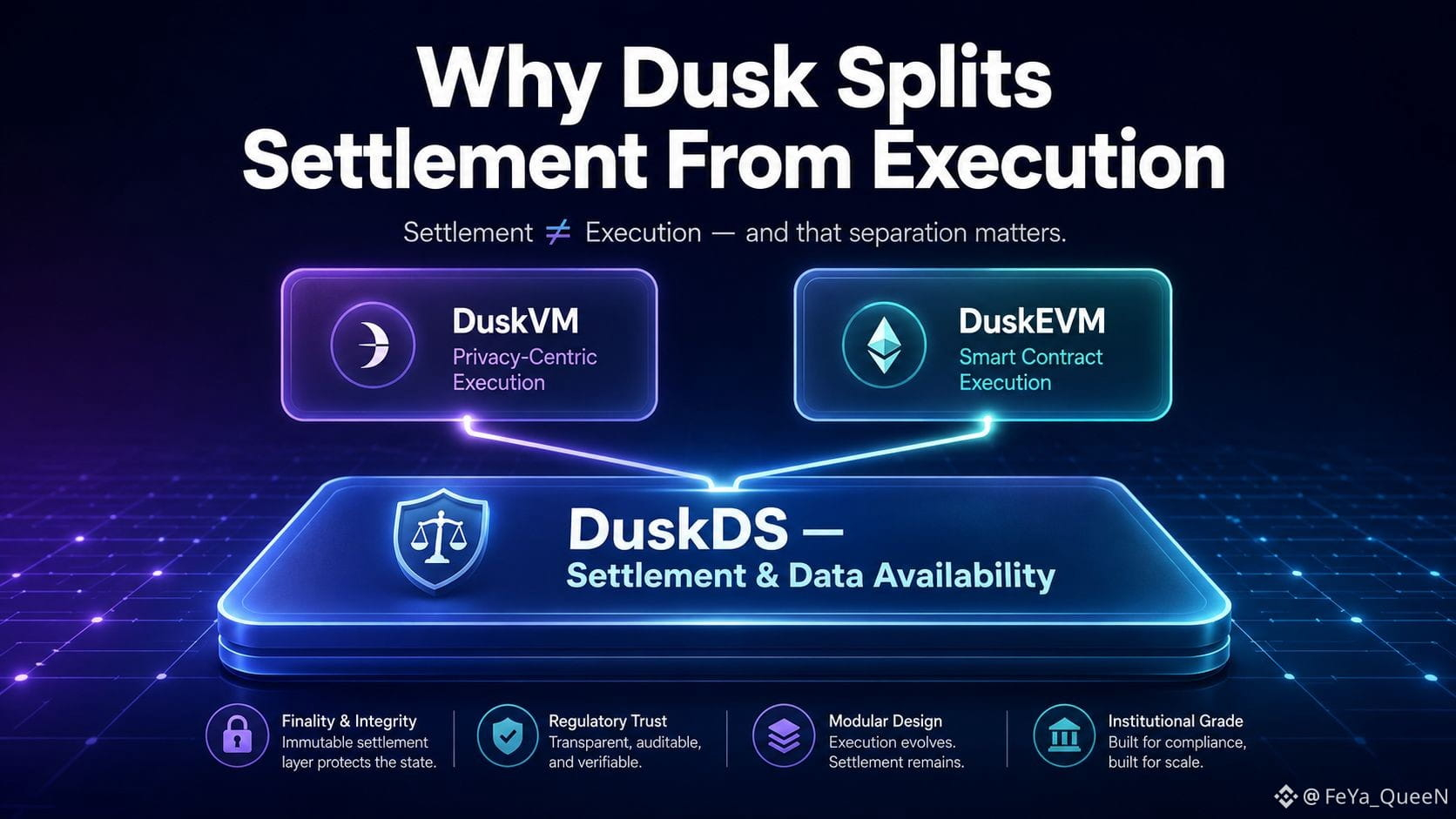
今週Duskのドキュメントを読んでいて、ひとつ目を引いた点があります。取引を最終化する部分は、スマートコントラクトを実行する部分ではないということです。多くのチェーンではこの2つの仕事がひとまとめになっていますが、Duskは意図的にそれらを分けています。DuskDSは決済(settlement)を担い、取引データを照合できる形で保持します。一方でDuskVMとDuskEVMは、ネイティブなプライバシーに最適化されたものと、なじみのあるSolidityツールを想定したものという違いはあるものの、その上で単に契約ロジックを実行するだけです。
この分離があるからこそ、プロジェクトが私にはより現実的に感じられます。決済は、法的に裏付けが必要な部分です。取引が実際に確定したのはいつなのか、そしてそれが起きたことを示す証拠は何なのか。オランダの認可を受けた取引所であるNPEXとのDuskの提携は、決済レイヤーが、資産がどの実行環境を通ったとしても安定しているからこそ意味を持ちます――それは純粋なプライバシーとは別の主張です。
それでも、慎重さは保ちたいです。認可されたパートナーがいるからといって、システムのすべての部分が完全に万全になるわけではありません。今年の初めにDuskはブリッジ関連のセキュリティインシデントがありました。DuskDSそのものの欠陥ではありませんが、システム同士をつなぐ「接続部分」こそが、物事が壊れやすい場所であることを思い出させてくれました。規制はまた、アーキテクチャよりも進むのが遅くなりがちで、思慮深い設計だけではそのギャップを埋めきれません。
だからといって、システムを盲目的に信じることでも、逆に切り捨てることでもありません。発表内容を読み過ごさずに、その各ピースがどのようにつながっているのかを問い続けることです。私はまだ、自分自身でその作業を進めているところです。
これらの仕組みが実際にどう機能するのかを、時間をかけて、懐疑的に理解していくこと――それが、この分野で成長していくための、より率直な方法だと感じています。
@Dusk #dusk $DUSK
この分離があるからこそ、プロジェクトが私にはより現実的に感じられます。決済は、法的に裏付けが必要な部分です。取引が実際に確定したのはいつなのか、そしてそれが起きたことを示す証拠は何なのか。オランダの認可を受けた取引所であるNPEXとのDuskの提携は、決済レイヤーが、資産がどの実行環境を通ったとしても安定しているからこそ意味を持ちます――それは純粋なプライバシーとは別の主張です。
それでも、慎重さは保ちたいです。認可されたパートナーがいるからといって、システムのすべての部分が完全に万全になるわけではありません。今年の初めにDuskはブリッジ関連のセキュリティインシデントがありました。DuskDSそのものの欠陥ではありませんが、システム同士をつなぐ「接続部分」こそが、物事が壊れやすい場所であることを思い出させてくれました。規制はまた、アーキテクチャよりも進むのが遅くなりがちで、思慮深い設計だけではそのギャップを埋めきれません。
だからといって、システムを盲目的に信じることでも、逆に切り捨てることでもありません。発表内容を読み過ごさずに、その各ピースがどのようにつながっているのかを問い続けることです。私はまだ、自分自身でその作業を進めているところです。
これらの仕組みが実際にどう機能するのかを、時間をかけて、懐疑的に理解していくこと――それが、この分野で成長していくための、より率直な方法だと感じています。
@Dusk #dusk $DUSK