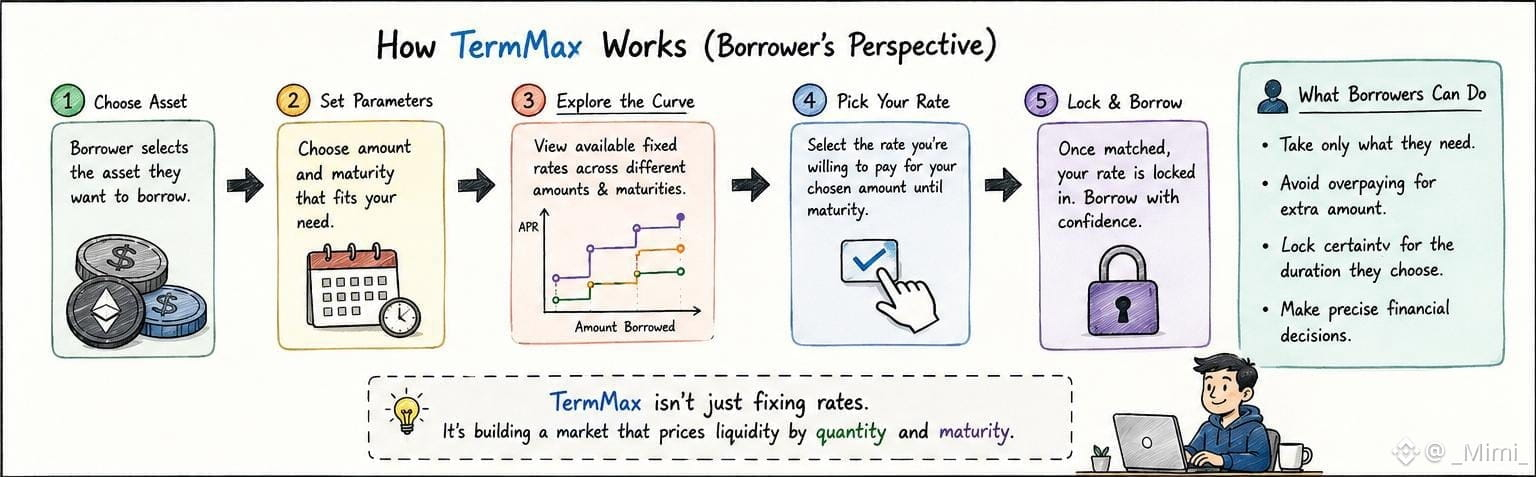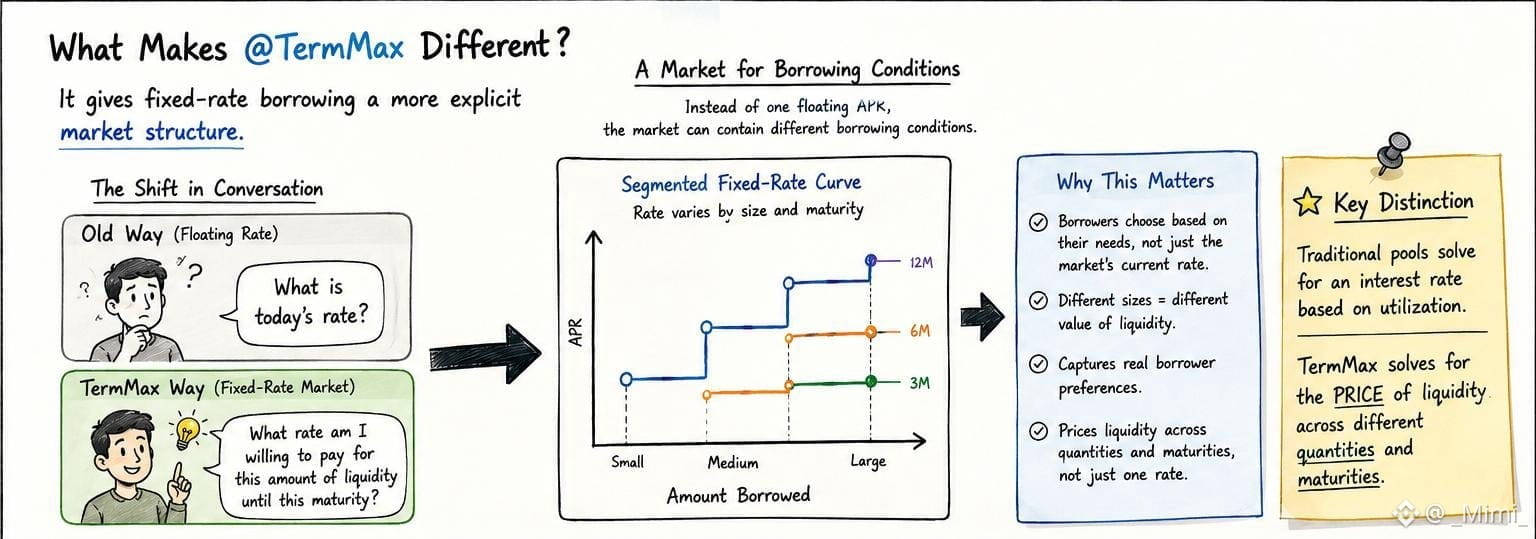
The thing I find most useful about @TermMax is that it gives fixed-rate borrowing a more explicit market structure.
Instead of a borrower simply accepting a floating APR, the market can contain different borrowing conditions.
That changes the conversation from:
“What is today's rate?”
to:
“What rate am I willing to pay for this amount of liquidity until this maturity?”
That is a much more precise financial decision.
It also means borrowers can express different preferences depending on size.
Maybe the first portion of liquidity is extremely valuable.
Maybe additional borrowing isn't worth the higher cost.
A segmented curve can capture that.
The protocol therefore isn't only solving for an interest rate.
It is solving for the PRICE of liquidity across different quantities.
I think that's a useful distinction when comparing fixed-rate protocols with traditional utilization-based lending pools.
The mechanics are more nuanced than the interface initially suggests.
#TermMax
Instead of a borrower simply accepting a floating APR, the market can contain different borrowing conditions.
That changes the conversation from:
“What is today's rate?”
to:
“What rate am I willing to pay for this amount of liquidity until this maturity?”
That is a much more precise financial decision.
It also means borrowers can express different preferences depending on size.
Maybe the first portion of liquidity is extremely valuable.
Maybe additional borrowing isn't worth the higher cost.
A segmented curve can capture that.
The protocol therefore isn't only solving for an interest rate.
It is solving for the PRICE of liquidity across different quantities.
I think that's a useful distinction when comparing fixed-rate protocols with traditional utilization-based lending pools.
The mechanics are more nuanced than the interface initially suggests.
#TermMax