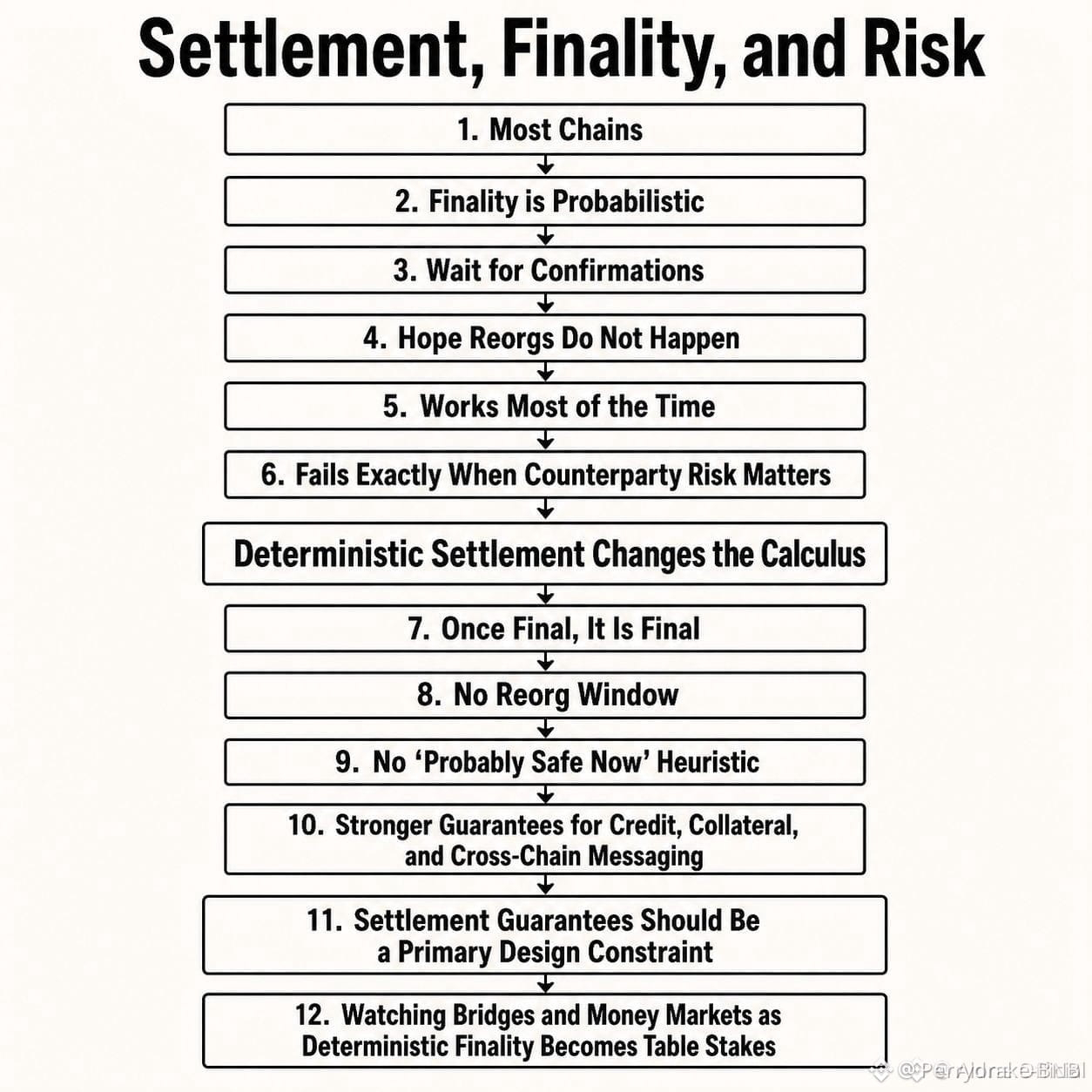
I keep thinking about what "settlement" actually means once you strip away the marketing. On most chains, finality is probabilistic. You wait for confirmations, hope reorgs don't happen, and trust that six blocks is enough. That works, until it doesn't, and the moments it doesn't are exactly when counterparty risk shows up uninvited. Deterministic settlement changes the calculus. Once a transaction is final, it's final. No reorg window, no "probably safe now" heuristic. For anything involving credit, collateral, or cross-chain messaging, that distinction matters more than throughput or fees ever will. What I don't know yet is how much of the industry's current risk tolerance is just habit. We've built entire lending markets on top of probabilistic finality because it was the only option. Now that alternatives exist, adoption looks slower than the technical case would suggest. I'd rather see settlement guarantees treated as a primary design constraint .....