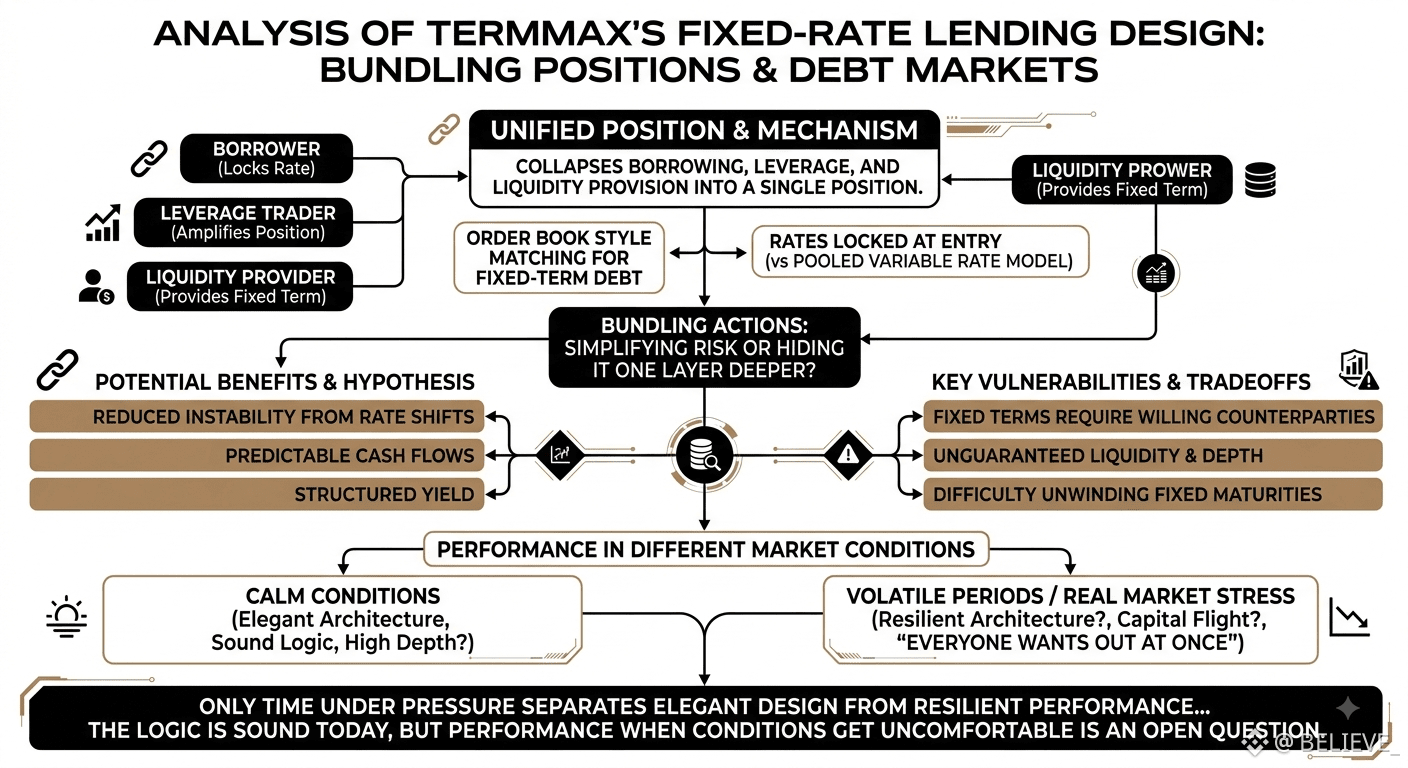

昨夜、TermMaxの固定金利貸付の設計を調べていました。主に好奇心からで、「借入」「レバレッジ」「流動性の提供」を1つのポジションにまとめてどう組み込んでいるのか」という点が気になっていたんです。そしてずっと同じことに引っかかっていました。これらのアクションを束ねることでリスクが本当に単純化されるのか、それとも単にもう1層深いところに“隠しているだけ”なのか?
興味深いのは、TermMaxが、通常の変動金利のプール型モデルではなく、固定期日の債務に対してオーダーブック風のマッチングを使っているところです。エントリー時に金利が固定されるのは、一見すると安心材料に思えて、DeFiの不安定さの多くが「資産そのもの」ではなく「ポジション途中で人々の金利が動いてしまうこと」から生じているのではないかと考えさせられます。その仮説が仮に一部でも当たっているなら、こうした構造は、思われている以上に重要になり得ると思うんです。
ただ、次に別の面を考え始めます。固定期間には、反対の見方を取ってくれる対向当事者が必要で、仕組みが存在すること自体だけで、そのための流動性が保証されるわけではありません。浮かぶ疑問は、ボラティリティが高い局面で、厚み(depth)が保たれるのかどうかです。みんなが一斉に離れたくなるような状況でも、固定の満期は通常のプール型ポジションのように簡単には巻き戻せません。これは本当の脆弱性なのか、それともモデルの自然なトレードオフにすぎないのか、確信は持てません。
外から見ると、この設計が注目を集めるのも納得できます。レバレッジ、貸付、構造化された利回りを1つのプロダクトに組み合わせるのは、いま多くのプロトコルが取っているアプローチとは、かなり違うからです。それでも私は、ときどき「実際の市場ストレスがそれを試したとき、どう振る舞うのだろう?」と考えてしまいます。優れた建築(エレガントなアーキテクチャ)と、レジリエントな建築は、いつも同じものではありません。圧力の下で時間が経って初めて、それが分かれるものです。
今日のところはロジックがしっかりしているように見えますが、状況が不快になるようなときにどう機能するのかは、まだオープンな問いです…とにかく、時間が答えを出してくれるでしょう👍
@TermMax #TermMax #termmax
$GPS $STAR
興味深いのは、TermMaxが、通常の変動金利のプール型モデルではなく、固定期日の債務に対してオーダーブック風のマッチングを使っているところです。エントリー時に金利が固定されるのは、一見すると安心材料に思えて、DeFiの不安定さの多くが「資産そのもの」ではなく「ポジション途中で人々の金利が動いてしまうこと」から生じているのではないかと考えさせられます。その仮説が仮に一部でも当たっているなら、こうした構造は、思われている以上に重要になり得ると思うんです。
ただ、次に別の面を考え始めます。固定期間には、反対の見方を取ってくれる対向当事者が必要で、仕組みが存在すること自体だけで、そのための流動性が保証されるわけではありません。浮かぶ疑問は、ボラティリティが高い局面で、厚み(depth)が保たれるのかどうかです。みんなが一斉に離れたくなるような状況でも、固定の満期は通常のプール型ポジションのように簡単には巻き戻せません。これは本当の脆弱性なのか、それともモデルの自然なトレードオフにすぎないのか、確信は持てません。
外から見ると、この設計が注目を集めるのも納得できます。レバレッジ、貸付、構造化された利回りを1つのプロダクトに組み合わせるのは、いま多くのプロトコルが取っているアプローチとは、かなり違うからです。それでも私は、ときどき「実際の市場ストレスがそれを試したとき、どう振る舞うのだろう?」と考えてしまいます。優れた建築(エレガントなアーキテクチャ)と、レジリエントな建築は、いつも同じものではありません。圧力の下で時間が経って初めて、それが分かれるものです。
今日のところはロジックがしっかりしているように見えますが、状況が不快になるようなときにどう機能するのかは、まだオープンな問いです…とにかく、時間が答えを出してくれるでしょう👍
@TermMax #TermMax #termmax
$GPS $STAR