清算だけでは足りないとき:TermMaxの現物(フィジカル)デリバリーの仕組み
担保付ローンはシンプルに聞こえます。ポジションが危険な状態になったら、プロトコルが担保を清算して債務を返済するだけです。しかし、市場のボラティリティや流動性の弱さによって、完全な清算が不可能な場合はどうなるのでしょうか?
TermMaxでは、各固定金利の市場にLLTV(ローン・トゥ・バリュー)閾値があります。ポジションのLTVがその水準に達すると、清算される可能性があります。ですが、借り手がそれでも債務を完全に返済できない場合、固定金利にすることは残っている信用リスクや担保リスクを取り除きません。
そこで現物デリバリーが重要になります。
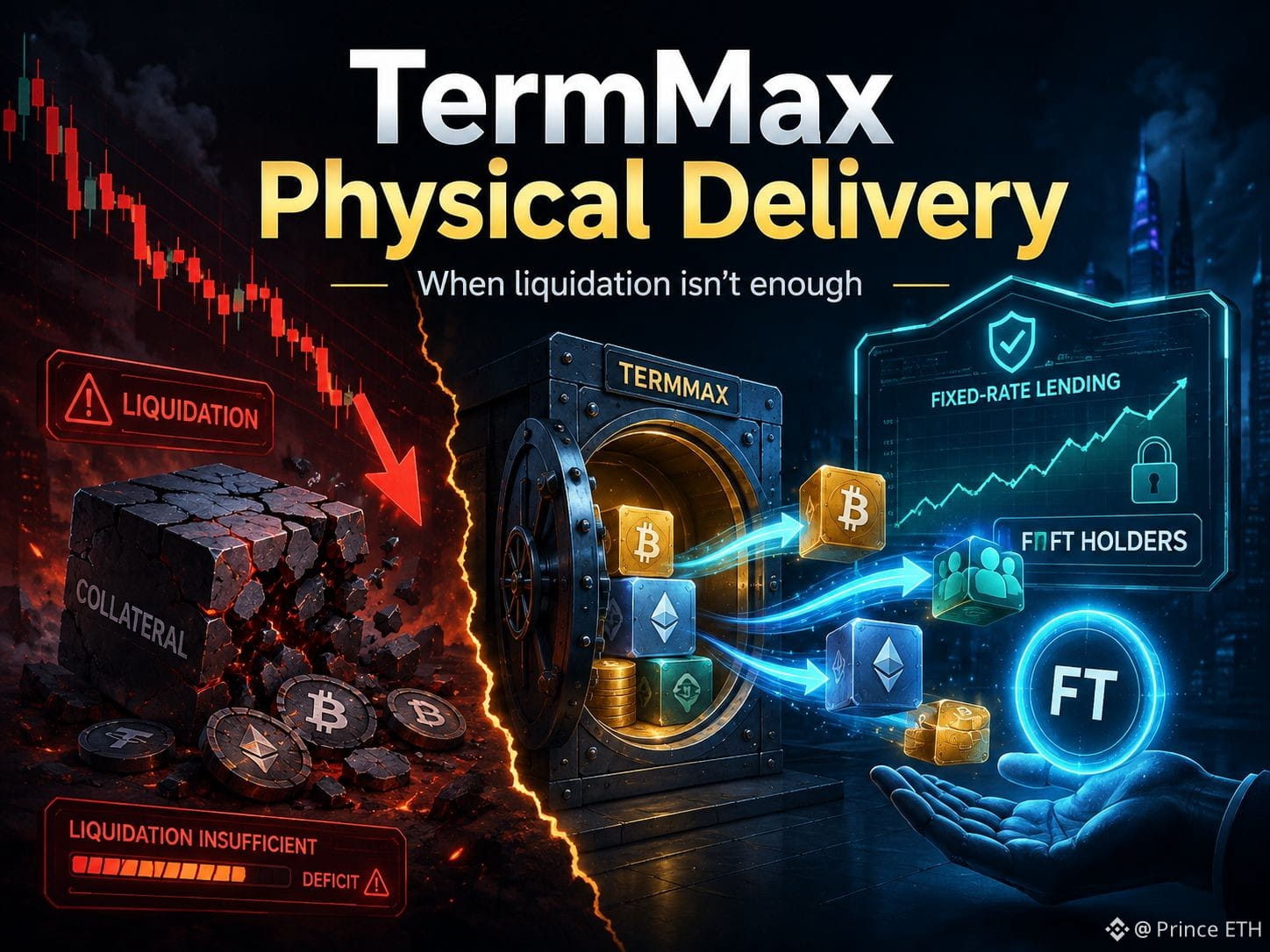
担保が常に公正な価格で迅速に売却できると仮定する代わりに、TermMaxは、債務が完全に解消されない場合に、残存する基礎資産と担保をFTホルダーへ分配できます。
仮に価値が1,000ユニットの負債があるとします。通常の条件では、担保を売却して回収し、貸し手に価値が戻されます。しかし、担保の一部しか効率よく清算できないのであれば、残りを薄い市場に無理に押し込むことで、むしろ執行がさらに悪化する可能性があります。現物デリバリーでは、その代わりに残りの資産をFTホルダーへ引き渡せます。
その利点は明確です。システムは、完璧な清算条件に全面的に依存しません。
ただし、トレードオフもあります。予測可能な固定金利の払い戻しを見込んでいたFTホルダーは、当初期待していた資産だけでなく、代わりに担保を受け取ることがあります。すると、価格リスク、流動性リスク、そして場合によってはより長い退出プロセスを引き受けることになります。
つまり、固定金利と現物デリバリーは、それぞれ別の課題を解決します。固定金利は、借入コストやリターンをより予測しやすくします。現物デリバリーは、清算ではポジションを完全にクローズできないときに何が起きるかに対応します。
この違いは重要です。DeFiでは、市場が通常の動きをやめたときに、リスクが最もはっきり見えることが多いからです。
@TermMax #TermMax $CYS $ONG $BMT
担保付ローンはシンプルに聞こえます。ポジションが危険な状態になったら、プロトコルが担保を清算して債務を返済するだけです。しかし、市場のボラティリティや流動性の弱さによって、完全な清算が不可能な場合はどうなるのでしょうか?
TermMaxでは、各固定金利の市場にLLTV(ローン・トゥ・バリュー)閾値があります。ポジションのLTVがその水準に達すると、清算される可能性があります。ですが、借り手がそれでも債務を完全に返済できない場合、固定金利にすることは残っている信用リスクや担保リスクを取り除きません。
そこで現物デリバリーが重要になります。
担保が常に公正な価格で迅速に売却できると仮定する代わりに、TermMaxは、債務が完全に解消されない場合に、残存する基礎資産と担保をFTホルダーへ分配できます。
仮に価値が1,000ユニットの負債があるとします。通常の条件では、担保を売却して回収し、貸し手に価値が戻されます。しかし、担保の一部しか効率よく清算できないのであれば、残りを薄い市場に無理に押し込むことで、むしろ執行がさらに悪化する可能性があります。現物デリバリーでは、その代わりに残りの資産をFTホルダーへ引き渡せます。
その利点は明確です。システムは、完璧な清算条件に全面的に依存しません。
ただし、トレードオフもあります。予測可能な固定金利の払い戻しを見込んでいたFTホルダーは、当初期待していた資産だけでなく、代わりに担保を受け取ることがあります。すると、価格リスク、流動性リスク、そして場合によってはより長い退出プロセスを引き受けることになります。
つまり、固定金利と現物デリバリーは、それぞれ別の課題を解決します。固定金利は、借入コストやリターンをより予測しやすくします。現物デリバリーは、清算ではポジションを完全にクローズできないときに何が起きるかに対応します。
この違いは重要です。DeFiでは、市場が通常の動きをやめたときに、リスクが最もはっきり見えることが多いからです。
@TermMax #TermMax $CYS $ONG $BMT