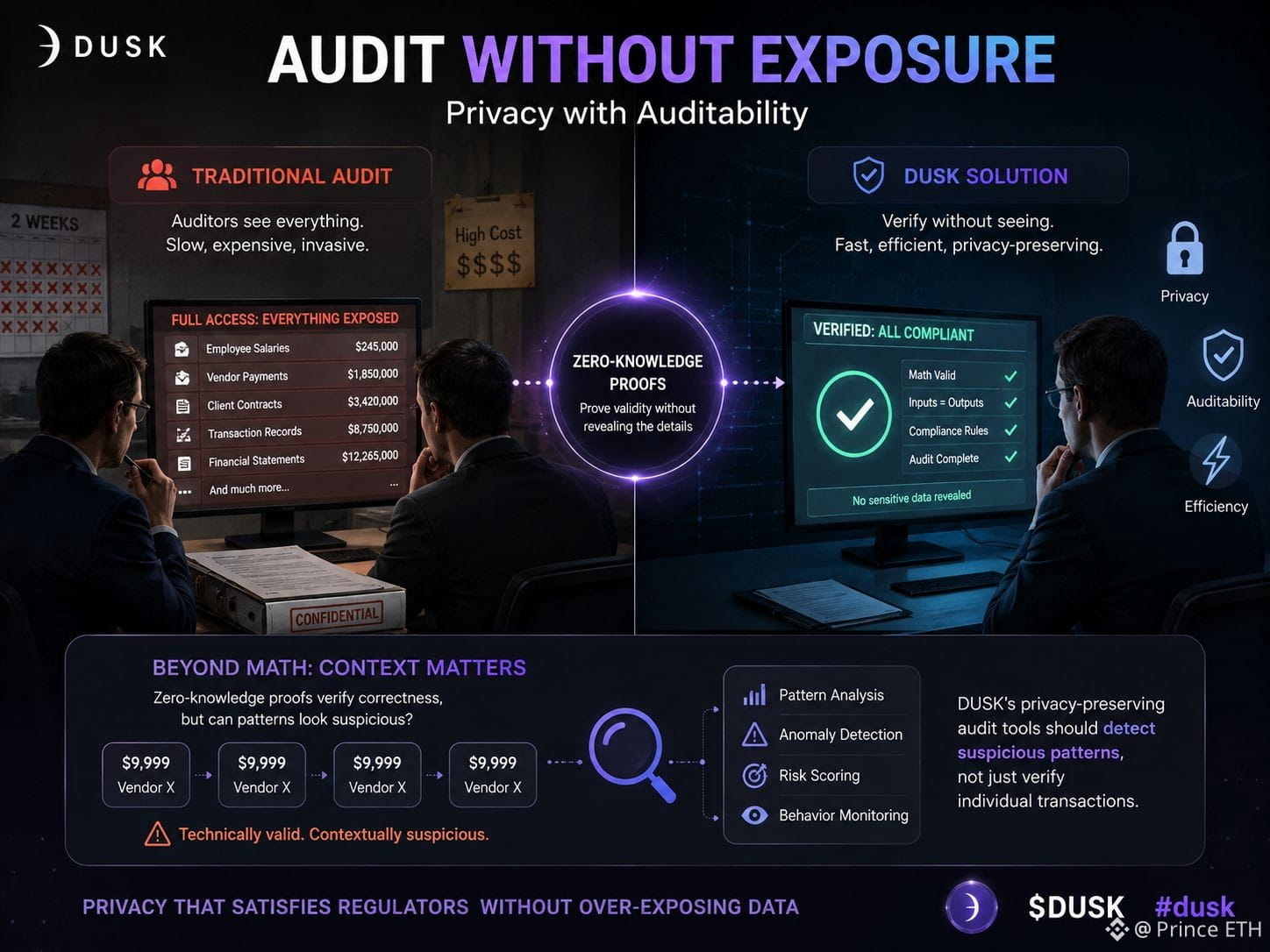
私の会社では四半期ごとに監査を行っています。3か月ごとに外部のチームが入ってきて、帳簿を確認し、すべての取引をチェックし、レポートを作成します。2週間かかり、費用も莫大です。
でも、いつも私を悩ませていたのはここです。その2週間の間、監査人はすべてにアクセスできること。給与も、ベンダーへの支払も、顧客との契約の金額も。数字が合っていることを確認するには、それらを全部見なければならない。
では、「実際の数字を見なくても」どうやって「数字が合っていること」を検証できるのでしょうか?
これはもう単なる仮説ではありません。<@Dusk >はゼロ知識証明を使って、まさにこのパターンを可能にします。取引は、それが正当であること、入力が出力に等しいこと、コンプライアンス規則が守られたことを、実際の金額や取引相手を検証者に明かすことなく証明できます。監査人は、個々の従業員の給与を知らなくても、「この会社の帳簿はつり合っている」ことを確認できるのです。
これがDuskの言う「監査可能性を備えたプライバシー」です。規制当局から隠すためのプライバシーではありません。必要以上にデータを公開せずに、規制当局の要求を満たすプライバシーです。
自己批評:私の会社の監査人は、単に計算をチェックするだけではありません。パターン、異常、技術的には正しいが文脈的に怪しいものを探します。たとえば、取引先に同じように9,999 USDが繰り返し支払われていて、10,000の報告閾値ぎりぎりで収まっている、といったケースです。
ゼロ知識による検証は正しさを確認できますが、文脈を見落とす可能性があります。ZKPは「この取引が有効である」ことは証明できますが、「この一連の有効な取引パターンが怪しく見える」ことまでは証明できません。コンプライアンスは単なる計算以上のものです。
<$DUSK >は、そのプライバシー保護型の監査ツールが、不審なパターンを検出できるかどうか、個々の取引の正確さを検証できるだけでなく、という観点で評価されるべきです。
あなたの会社では、すべてを見せずに検証してほしいと思ったような監査はありましたか?
#dusk $GPS $TUT
でも、いつも私を悩ませていたのはここです。その2週間の間、監査人はすべてにアクセスできること。給与も、ベンダーへの支払も、顧客との契約の金額も。数字が合っていることを確認するには、それらを全部見なければならない。
では、「実際の数字を見なくても」どうやって「数字が合っていること」を検証できるのでしょうか?
これはもう単なる仮説ではありません。<@Dusk >はゼロ知識証明を使って、まさにこのパターンを可能にします。取引は、それが正当であること、入力が出力に等しいこと、コンプライアンス規則が守られたことを、実際の金額や取引相手を検証者に明かすことなく証明できます。監査人は、個々の従業員の給与を知らなくても、「この会社の帳簿はつり合っている」ことを確認できるのです。
これがDuskの言う「監査可能性を備えたプライバシー」です。規制当局から隠すためのプライバシーではありません。必要以上にデータを公開せずに、規制当局の要求を満たすプライバシーです。
自己批評:私の会社の監査人は、単に計算をチェックするだけではありません。パターン、異常、技術的には正しいが文脈的に怪しいものを探します。たとえば、取引先に同じように9,999 USDが繰り返し支払われていて、10,000の報告閾値ぎりぎりで収まっている、といったケースです。
ゼロ知識による検証は正しさを確認できますが、文脈を見落とす可能性があります。ZKPは「この取引が有効である」ことは証明できますが、「この一連の有効な取引パターンが怪しく見える」ことまでは証明できません。コンプライアンスは単なる計算以上のものです。
<$DUSK >は、そのプライバシー保護型の監査ツールが、不審なパターンを検出できるかどうか、個々の取引の正確さを検証できるだけでなく、という観点で評価されるべきです。
あなたの会社では、すべてを見せずに検証してほしいと思ったような監査はありましたか?
#dusk $GPS $TUT