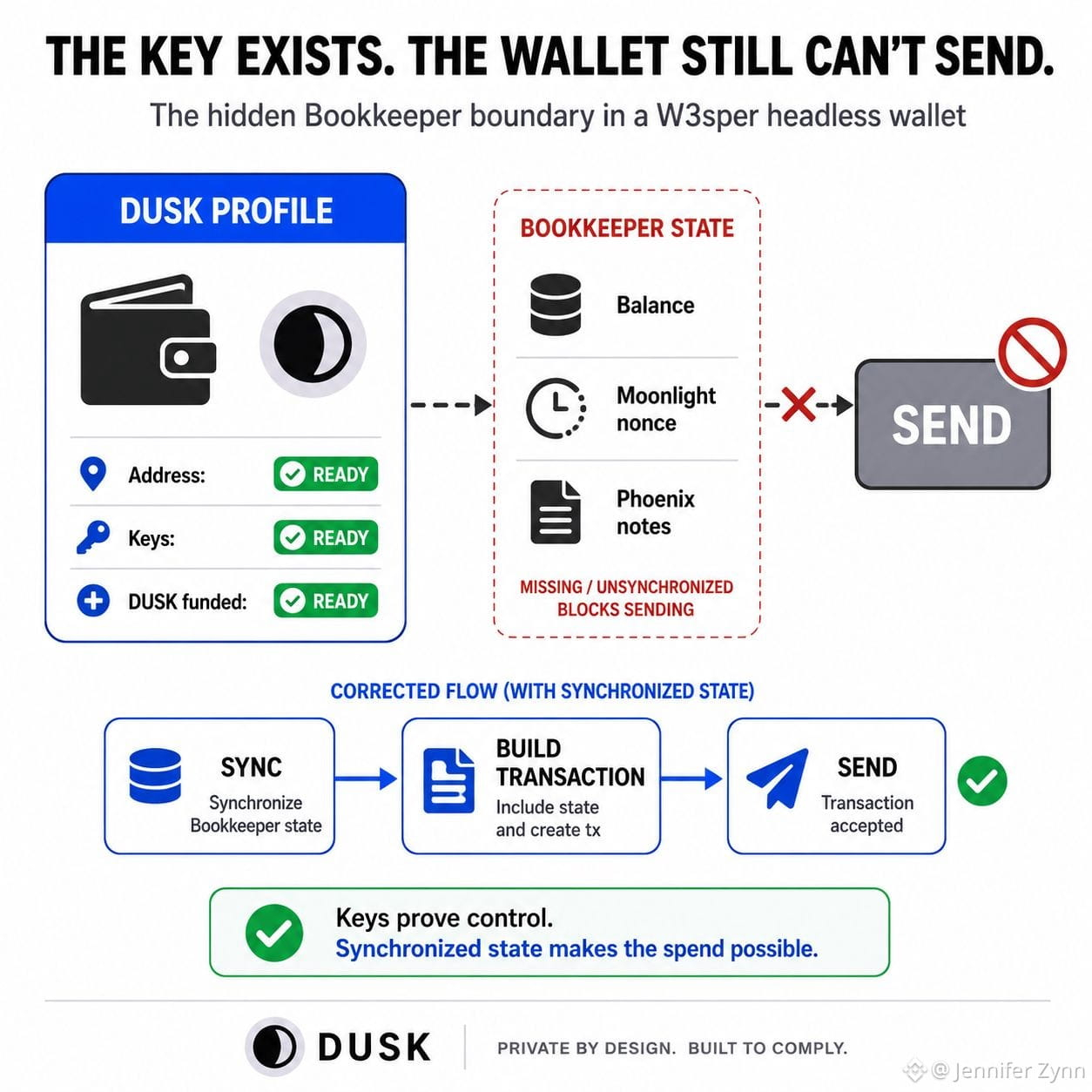

W3sperウォレットは実在するDuskのプロファイルを導出できます。住所を表示することもできますが、最初の送金を構築できないままです。
隠れた作業はBookkeeperの状態です。W3sperはトランザクションビルダーを提供しますが、作りたてのProfileを完全なヘッドレスウォレットに変えるわけではありません。鍵を生成してすぐ送信に進めると、そのProfileには同期されたBookkeeperのエントリがありません。そのため、ビルダーが必要とする残高やnonceの状態を引き出せません。
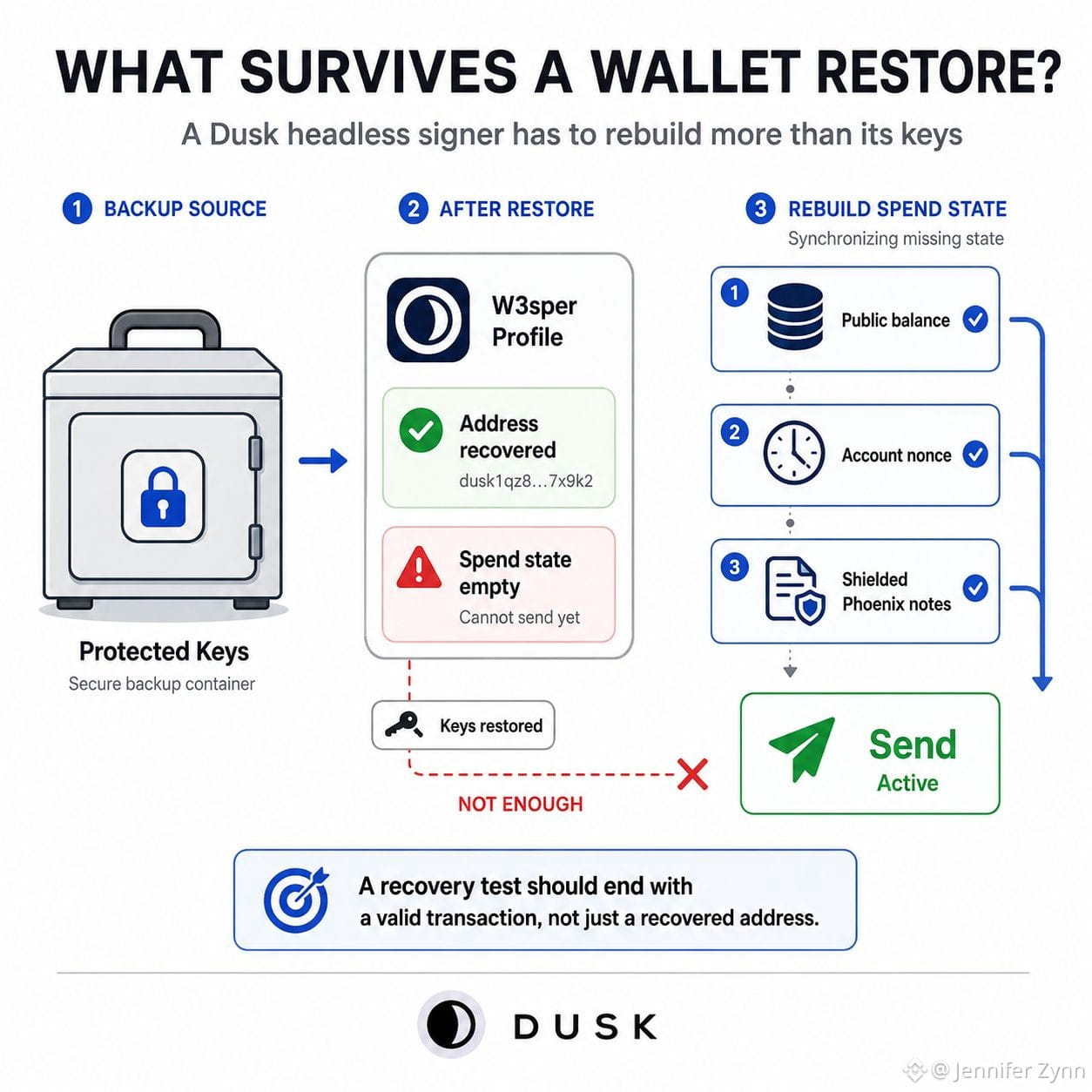
Phoenixはこれを偽装しにくくしています。署名サービスでも、秘密鍵だけでなく、同期されたシールド付きノートを保持する必要があります。つまり、鍵の保管(custody)は正しくても、支払い可能な状態が古いままになり得ます。
問題は、ウォレットが完成したように見えてしまう点です。アカウントを作成し、資金を入れ、鍵を保護してからSendを押すと、DUSKを支払えるようにする状態を、バックエンドが再構築していなかったことが判明します。
もしヘッドレスのDuskトレジャリーを運用しているなら、回復(recovery)をテストするために、鍵を空のデータベースに復元し、署名する前にウォレットを再同期させます。
Duskでは、鍵のバックアップはウォレットのワークフローのバックアップと同じではありません。
#dusk $DUSK @Dusk
隠れた作業はBookkeeperの状態です。W3sperはトランザクションビルダーを提供しますが、作りたてのProfileを完全なヘッドレスウォレットに変えるわけではありません。鍵を生成してすぐ送信に進めると、そのProfileには同期されたBookkeeperのエントリがありません。そのため、ビルダーが必要とする残高やnonceの状態を引き出せません。
Phoenixはこれを偽装しにくくしています。署名サービスでも、秘密鍵だけでなく、同期されたシールド付きノートを保持する必要があります。つまり、鍵の保管(custody)は正しくても、支払い可能な状態が古いままになり得ます。
問題は、ウォレットが完成したように見えてしまう点です。アカウントを作成し、資金を入れ、鍵を保護してからSendを押すと、DUSKを支払えるようにする状態を、バックエンドが再構築していなかったことが判明します。
もしヘッドレスのDuskトレジャリーを運用しているなら、回復(recovery)をテストするために、鍵を空のデータベースに復元し、署名する前にウォレットを再同期させます。
Duskでは、鍵のバックアップはウォレットのワークフローのバックアップと同じではありません。
#dusk $DUSK @Dusk