#dusk $DUSK @Dusk 取引の“トークン化されたファイナンス”を見れば見るほど、真の課題はオンチェーン上で証券を動かすことではなく、到達後に誰が何を見られるかを制御することだと感じます。
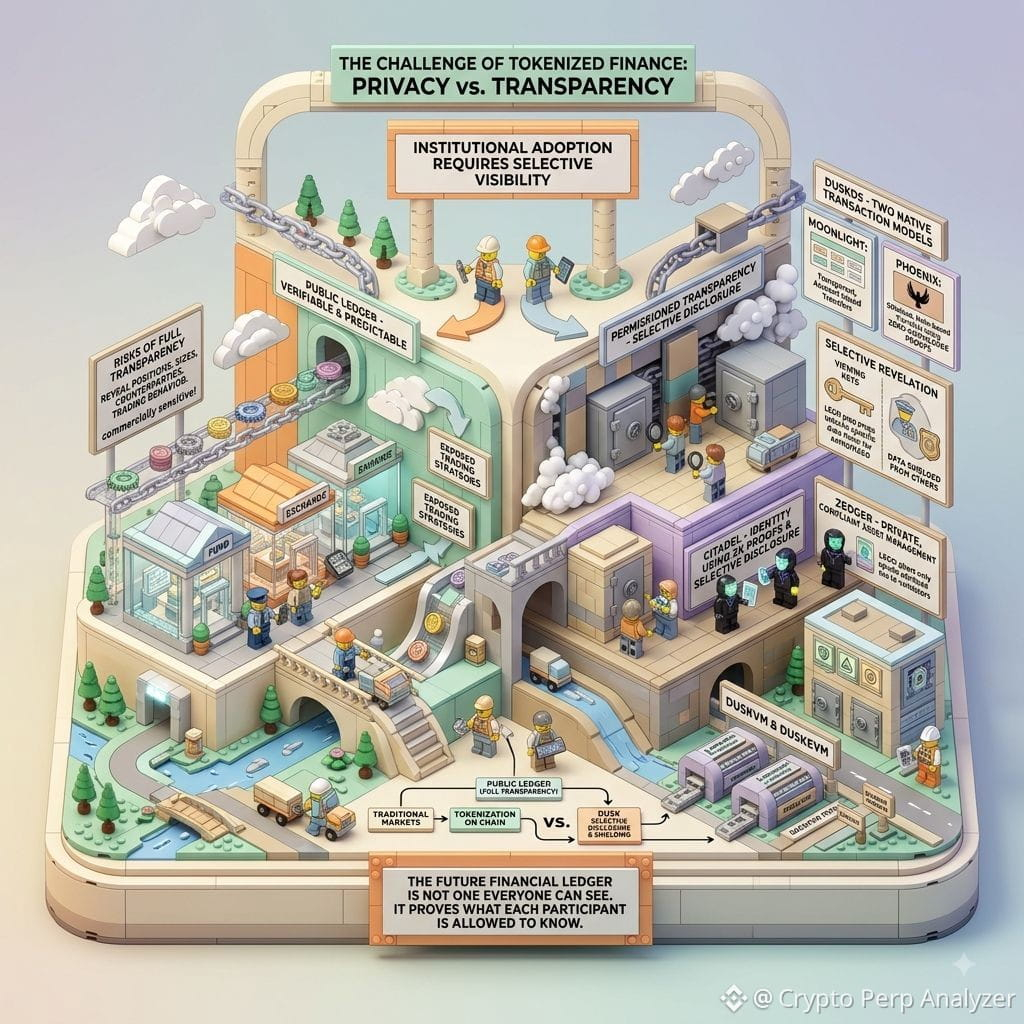
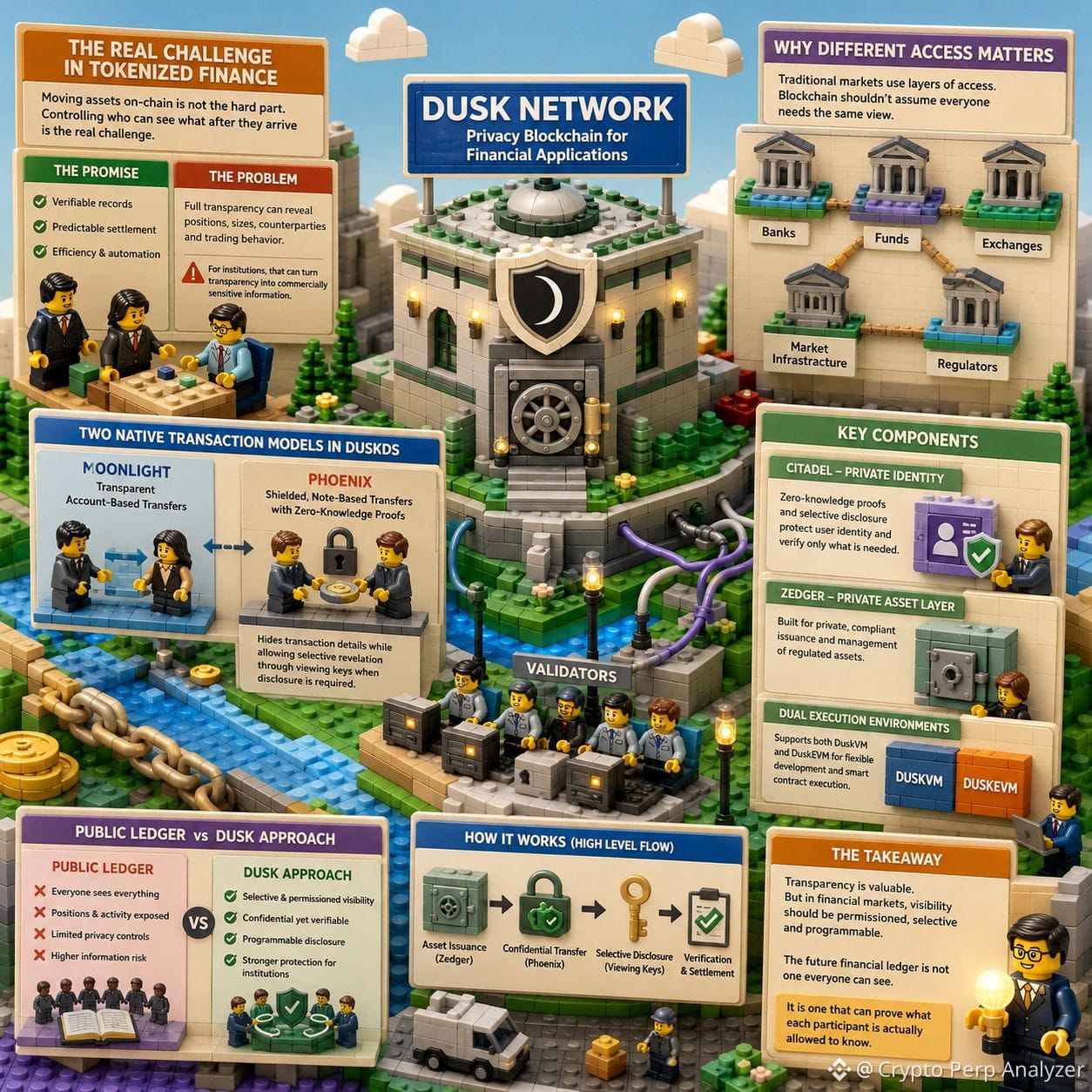
公開台帳は、銀行、ファンド、取引所、規制当局にとって価値のあるものを提供します。つまり、検証可能な記録と予測可能な決済です。しかし同時に、その可視性は、保有状況、取引規模、相手先、そして取引行動まで明らかにしてしまう可能性があります。機関投資家にとって、それは透明性を商業的に機微な情報へと変えてしまいかねません。
従来の市場は、すでにさまざまなアクセス層によってそれを解決しています。では、なぜブロックチェーンは、すべての参加者が同じ視点を必要とすると仮定するのでしょうか?
ここでDuskが興味深くなります。
DuskDSは、ネイティブな2つのトランザクションモデルをサポートします。透明な口座ベースの送金を行うMoonlight、そしてゼロ知識証明を用いた、秘匿化された“注記(ノート)ベース”の送金を行うPhoenixです。Phoenixは、開示が必要な場合にビューイングキーによる選択的開示を可能にしつつ、取引の詳細を隠すことができます。
Citadelも同様のアプローチで、不要な資格情報を露出するのではなく、ゼロ知識証明と選択的開示を用いてアイデンティティを扱います。Zedgerは、規制資産のプライベートで準拠した発行および管理のために設計されており、DuskはDuskVMとDuskEVMの両方の実行パスを提供します。
しかし、それは機関がDuskを採用することを証明するものではありません。
とはいえ、トークン化された市場に求められるより広い要件を浮き彫りにします。つまり、透明性は、許可制(permissioned)で、選択的で、そしてプログラム可能である必要があるかもしれないということです。
もしかすると、将来の金融台帳は“誰もが見られる”ものではないのかもしれません。
それは、各参加者が実際に知ることを許されている内容を証明できるものです。@Dusk #dusk $DUSK
公開台帳は、銀行、ファンド、取引所、規制当局にとって価値のあるものを提供します。つまり、検証可能な記録と予測可能な決済です。しかし同時に、その可視性は、保有状況、取引規模、相手先、そして取引行動まで明らかにしてしまう可能性があります。機関投資家にとって、それは透明性を商業的に機微な情報へと変えてしまいかねません。
従来の市場は、すでにさまざまなアクセス層によってそれを解決しています。では、なぜブロックチェーンは、すべての参加者が同じ視点を必要とすると仮定するのでしょうか?
ここでDuskが興味深くなります。
DuskDSは、ネイティブな2つのトランザクションモデルをサポートします。透明な口座ベースの送金を行うMoonlight、そしてゼロ知識証明を用いた、秘匿化された“注記(ノート)ベース”の送金を行うPhoenixです。Phoenixは、開示が必要な場合にビューイングキーによる選択的開示を可能にしつつ、取引の詳細を隠すことができます。
Citadelも同様のアプローチで、不要な資格情報を露出するのではなく、ゼロ知識証明と選択的開示を用いてアイデンティティを扱います。Zedgerは、規制資産のプライベートで準拠した発行および管理のために設計されており、DuskはDuskVMとDuskEVMの両方の実行パスを提供します。
しかし、それは機関がDuskを採用することを証明するものではありません。
とはいえ、トークン化された市場に求められるより広い要件を浮き彫りにします。つまり、透明性は、許可制(permissioned)で、選択的で、そしてプログラム可能である必要があるかもしれないということです。
もしかすると、将来の金融台帳は“誰もが見られる”ものではないのかもしれません。
それは、各参加者が実際に知ることを許されている内容を証明できるものです。@Dusk #dusk $DUSK