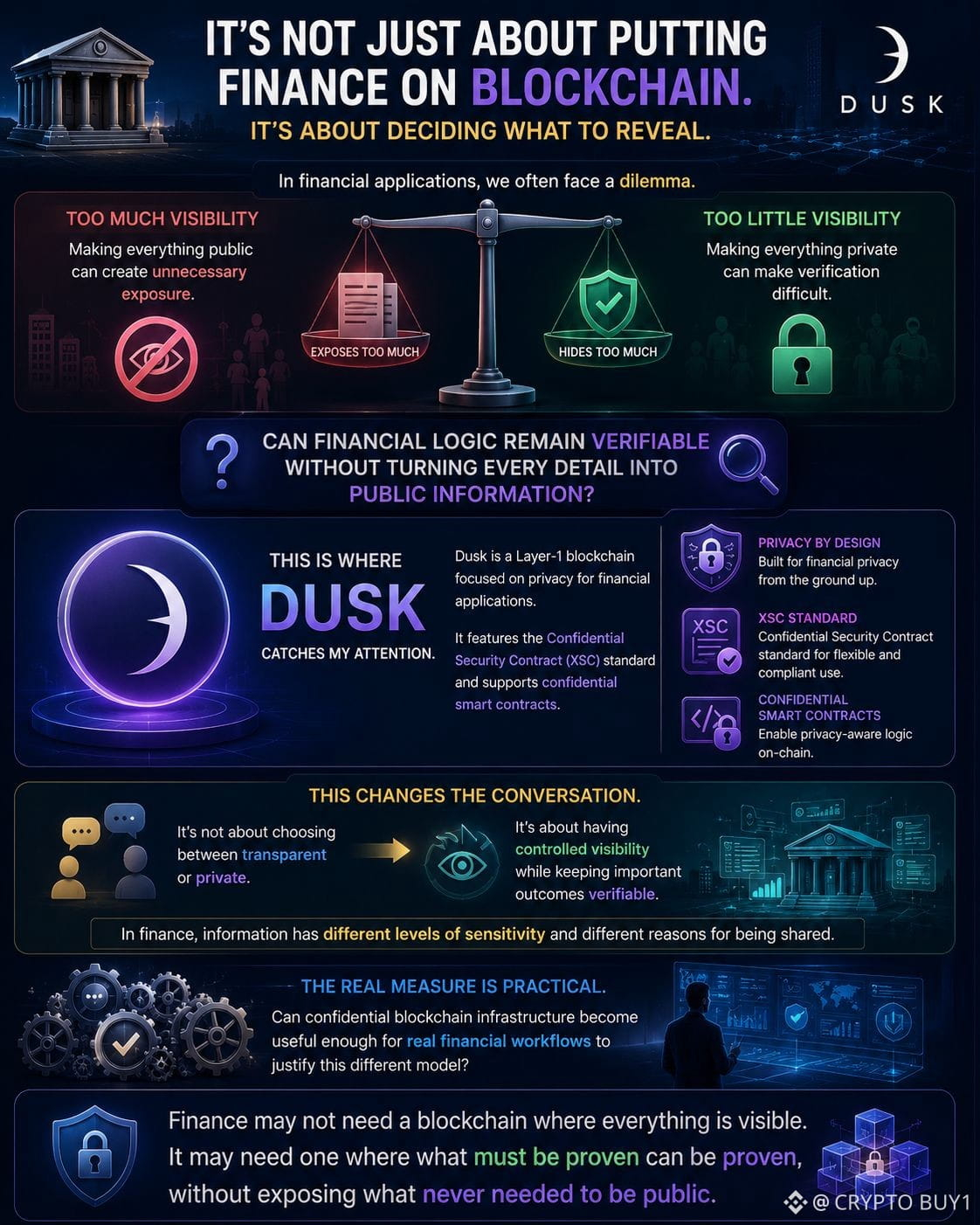
ブロックチェーンに金融を載せるとき、一番難しいのはデータを移すことではないかもしれません。
それは、ブロックチェーンに実際に何を開示させるべきかを決めることです。
たとえば、特定の事実は検証される必要がある一方で、基となる詳細は機密のままであるべき金融アプリケーションを想像してみてください。すべてを公開にすると不要な露出が生まれかねません。すべてを非公開にすると、検証が難しくなります。
それは、より興味深い設計上の課題を生みます。
金融ロジックを、すべての詳細を公開情報に変えることなく検証可能に保てるのでしょうか?
そこで私の目を引くのがDuskです。
Duskは、金融アプリケーションのためのプライバシーに焦点を当てたレイヤー1ブロックチェーンで、Confidential Security Contract(XSC)標準と、機密スマートコントラクトのサポートを備えています。
私が重要だと感じるのは、単に「プライバシー」という言葉そのものではありません。
それは、機密性を金融アプリケーションの動作の仕方そのものに組み込んでいくという考え方です。
これにより議論の方向性が変わります。
ブロックチェーンは透明か非公開か、という問いではなく、より良い問いは「重要な成果を検証可能に保ちながら、金融アプリケーションは制御された可視性を持てるのか?」かもしれません。
この区別は、金融の世界では非常に大きな意味を持ち得ます。そこでは情報に、さまざまな機密度と、共有される理由があるからです。
Duskは、その課題に対して技術起点のアプローチを取っています。
しかし、本当の測り方は実用性です。機密化されたブロックチェーン基盤が、実際の金融ワークフローに十分役立つものになり、この別のモデルを正当化できるのでしょうか?
なぜなら、金融は「すべてが見える」ブロックチェーンを必要としていないかもしれないからです。
必要なのは、「証明すべきことは証明できる」一方で、「公開する必要のなかったことは決して公開しない」仕組みかもしれません。
@Dusk #dusk $DUSK
$DUSK
それは、ブロックチェーンに実際に何を開示させるべきかを決めることです。
たとえば、特定の事実は検証される必要がある一方で、基となる詳細は機密のままであるべき金融アプリケーションを想像してみてください。すべてを公開にすると不要な露出が生まれかねません。すべてを非公開にすると、検証が難しくなります。
それは、より興味深い設計上の課題を生みます。
金融ロジックを、すべての詳細を公開情報に変えることなく検証可能に保てるのでしょうか?
そこで私の目を引くのがDuskです。
Duskは、金融アプリケーションのためのプライバシーに焦点を当てたレイヤー1ブロックチェーンで、Confidential Security Contract(XSC)標準と、機密スマートコントラクトのサポートを備えています。
私が重要だと感じるのは、単に「プライバシー」という言葉そのものではありません。
それは、機密性を金融アプリケーションの動作の仕方そのものに組み込んでいくという考え方です。
これにより議論の方向性が変わります。
ブロックチェーンは透明か非公開か、という問いではなく、より良い問いは「重要な成果を検証可能に保ちながら、金融アプリケーションは制御された可視性を持てるのか?」かもしれません。
この区別は、金融の世界では非常に大きな意味を持ち得ます。そこでは情報に、さまざまな機密度と、共有される理由があるからです。
Duskは、その課題に対して技術起点のアプローチを取っています。
しかし、本当の測り方は実用性です。機密化されたブロックチェーン基盤が、実際の金融ワークフローに十分役立つものになり、この別のモデルを正当化できるのでしょうか?
なぜなら、金融は「すべてが見える」ブロックチェーンを必要としていないかもしれないからです。
必要なのは、「証明すべきことは証明できる」一方で、「公開する必要のなかったことは決して公開しない」仕組みかもしれません。
@Dusk #dusk $DUSK
$DUSK