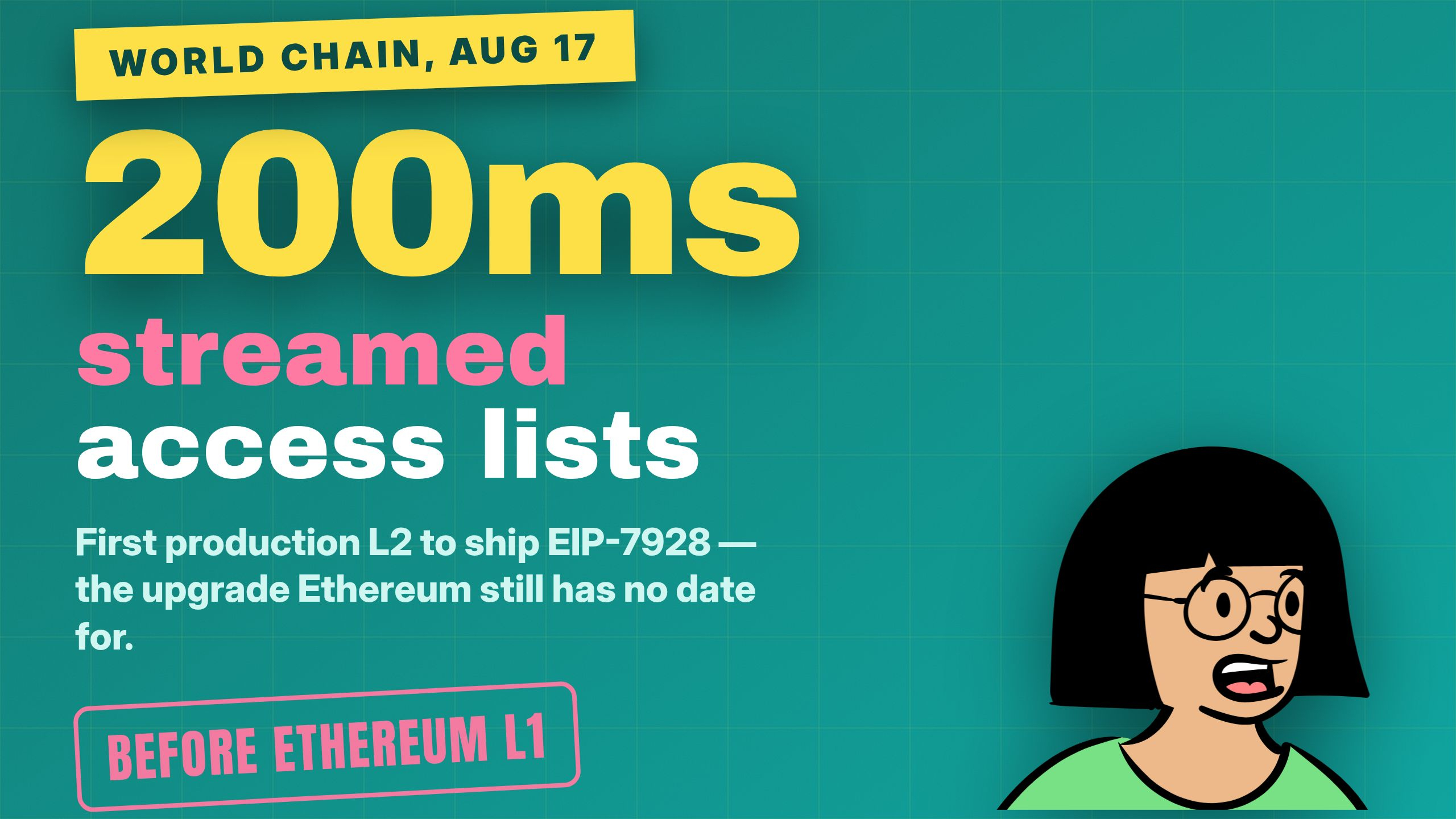
World Chainは明日、EthereumのEIP-7928を出荷し、200msごとにアクセスリストをストリーミング配信します——Ethereum自身がそれに日付を出していない前に。
強気シナリオ:8月17日に、$WLD のチェーンがストリーム配信されたブロックレベル・アクセスリストを実運用する初のL2になります。BALは、ブロックが触れるすべてのアカウントとストレージスロットを記録し、検証を逐次ではなく並列で行えるようにします。World Chainは、そのドラフト標準を拡張して、各フラッシュブロックの内部でそのリストを約200msごとにストリーミングすることで、ブロックがまだ組み立てられている最中から検証を開始します。バリデータ用のハードウェアを増やさずに、最大1ギガガス/秒を狙います。注目すべき展開の詳細は、ハードフォークではなくランタイムフラグである点です。そのため、ネットワーク全体での調整されたアップグレードは不要です。$ETH は、ロックされた日付がまだないGlamsterdam経由でも同じEIPを取得します。
弱気シナリオ:最初に出すことは、実証済みであることを意味しません。1ギガガス/秒は目標であって計測ではなく、ランタイムフラグは、調整されたフォークが強いるよりも敵対的なテストが少なくて済みます。さらに重要なのは、World Chainはまだ提案段階のEIPを拡張しているという点です。最終的なEthereumの仕様が分岐すれば、先行者が移行コストを負担することになります。そして、スループットがここでの制約だったわけではありません。このチェーンの上限は、ブロックをどれだけ速く検証できるかではなく、それが提供するアイデンティティ製品の採用状況や規制上の立ち位置によって決まります。
私たちの見立て:トークン価値以上に、L2ガバナンスのスピードについて語る“実際のエンジニアリング成果”です。反証可能です——8月17日後の計測スループットと、他のL2がストリーミング方式をコピーするかどうかを見てください。コピーするなら、これは標準設定でした。Glamsterdamが登場するまで単独のままだったなら、見出し(ニュース)止まりです。
これは投資助言ではありません。DYOR.
#WorldChain #Ethereum #L2 #Scaling
強気シナリオ:8月17日に、$WLD のチェーンがストリーム配信されたブロックレベル・アクセスリストを実運用する初のL2になります。BALは、ブロックが触れるすべてのアカウントとストレージスロットを記録し、検証を逐次ではなく並列で行えるようにします。World Chainは、そのドラフト標準を拡張して、各フラッシュブロックの内部でそのリストを約200msごとにストリーミングすることで、ブロックがまだ組み立てられている最中から検証を開始します。バリデータ用のハードウェアを増やさずに、最大1ギガガス/秒を狙います。注目すべき展開の詳細は、ハードフォークではなくランタイムフラグである点です。そのため、ネットワーク全体での調整されたアップグレードは不要です。$ETH は、ロックされた日付がまだないGlamsterdam経由でも同じEIPを取得します。
弱気シナリオ:最初に出すことは、実証済みであることを意味しません。1ギガガス/秒は目標であって計測ではなく、ランタイムフラグは、調整されたフォークが強いるよりも敵対的なテストが少なくて済みます。さらに重要なのは、World Chainはまだ提案段階のEIPを拡張しているという点です。最終的なEthereumの仕様が分岐すれば、先行者が移行コストを負担することになります。そして、スループットがここでの制約だったわけではありません。このチェーンの上限は、ブロックをどれだけ速く検証できるかではなく、それが提供するアイデンティティ製品の採用状況や規制上の立ち位置によって決まります。
私たちの見立て:トークン価値以上に、L2ガバナンスのスピードについて語る“実際のエンジニアリング成果”です。反証可能です——8月17日後の計測スループットと、他のL2がストリーミング方式をコピーするかどうかを見てください。コピーするなら、これは標準設定でした。Glamsterdamが登場するまで単独のままだったなら、見出し(ニュース)止まりです。
これは投資助言ではありません。DYOR.
#WorldChain #Ethereum #L2 #Scaling