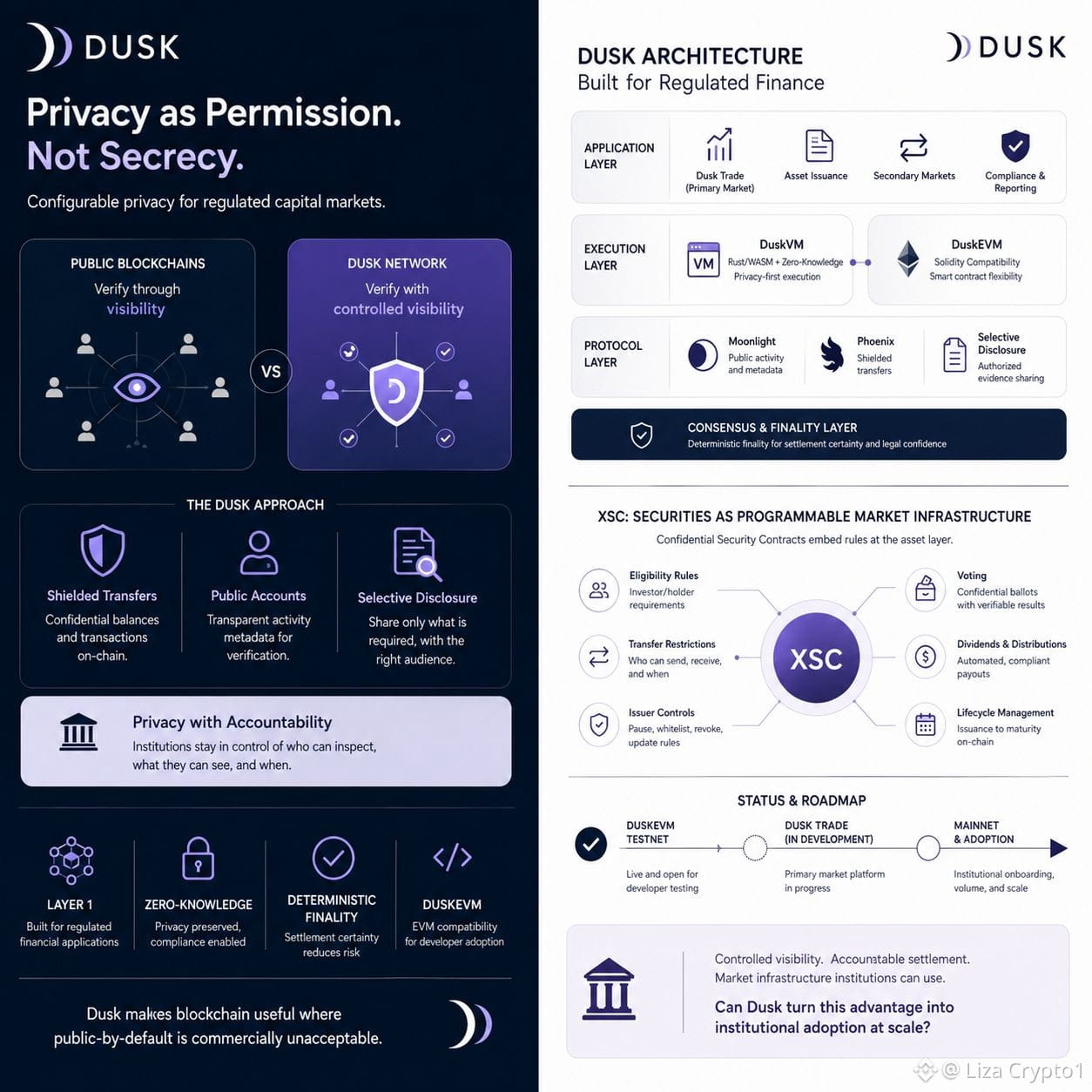
ダスクがプライバシーを単なるカーテンとして扱っていないことに気づきました。資本市場向けの「許可システム」として設計しているのです。
パブリック・ブロックチェーンは検証を単純化しますが、すべての残高、取引相手、ポジションを公開することは、機関にとって受け入れがたいことです。ダスクはこの緊張を、2つのモデルで解決します。Moonlightは透明なアクティビティを支え、Phoenixはゼロ知識証明でシールド送金を行います。セレクティブ・ディスクロージャー(選択的開示)なら、機密データを公開せずに監査人に必要な根拠を提示できます。
チャンスはプライベートな支払いにとどまりません。規制対象の資産には、投資家の適格性、移転、決済、報告に関するルールがあります。ダスクのXSCビジョンはこれらの統制を資産のライフサイクルへ持ち込みます。また、決定論的なファイナリティ(確定性)により、取引がまだ取り消し可能だという不確実性を減らせます。
そのアーキテクチャは、採用を意識したものです。DuskVMはネイティブのRust/WASMとZK実行を提供し、DuskEVMはSolidityの開発者に馴染みのあるツールを用意します。規制された取引所、カストディ、決済、そして相互運用性にまたがる関係性は、重要な現実を反映しています。必要なのは暗号技術だけではなく、機関が機能する市場ネットワークを得ることです。
課題は連携です。発行体、流動性、アイデンティティ、カストディ、規制、そしてユーザー体験は、同時に成熟していく必要があります。より強いコンプライアンスは、暗号ユーザーが期待するオープンさを減らすことにもつながるかもしれません。
ダスクの本当の試練は、アクティビティを隠せるかどうかではありません。説明責任を弱めずに、規制された金融をプライベートにできるかどうかです。設定可能な可視性が、トークン化された市場の標準になるのでしょうか?
@Dusk #dusk $DUSK
パブリック・ブロックチェーンは検証を単純化しますが、すべての残高、取引相手、ポジションを公開することは、機関にとって受け入れがたいことです。ダスクはこの緊張を、2つのモデルで解決します。Moonlightは透明なアクティビティを支え、Phoenixはゼロ知識証明でシールド送金を行います。セレクティブ・ディスクロージャー(選択的開示)なら、機密データを公開せずに監査人に必要な根拠を提示できます。
チャンスはプライベートな支払いにとどまりません。規制対象の資産には、投資家の適格性、移転、決済、報告に関するルールがあります。ダスクのXSCビジョンはこれらの統制を資産のライフサイクルへ持ち込みます。また、決定論的なファイナリティ(確定性)により、取引がまだ取り消し可能だという不確実性を減らせます。
そのアーキテクチャは、採用を意識したものです。DuskVMはネイティブのRust/WASMとZK実行を提供し、DuskEVMはSolidityの開発者に馴染みのあるツールを用意します。規制された取引所、カストディ、決済、そして相互運用性にまたがる関係性は、重要な現実を反映しています。必要なのは暗号技術だけではなく、機関が機能する市場ネットワークを得ることです。
課題は連携です。発行体、流動性、アイデンティティ、カストディ、規制、そしてユーザー体験は、同時に成熟していく必要があります。より強いコンプライアンスは、暗号ユーザーが期待するオープンさを減らすことにもつながるかもしれません。
ダスクの本当の試練は、アクティビティを隠せるかどうかではありません。説明責任を弱めずに、規制された金融をプライベートにできるかどうかです。設定可能な可視性が、トークン化された市場の標準になるのでしょうか?
@Dusk #dusk $DUSK