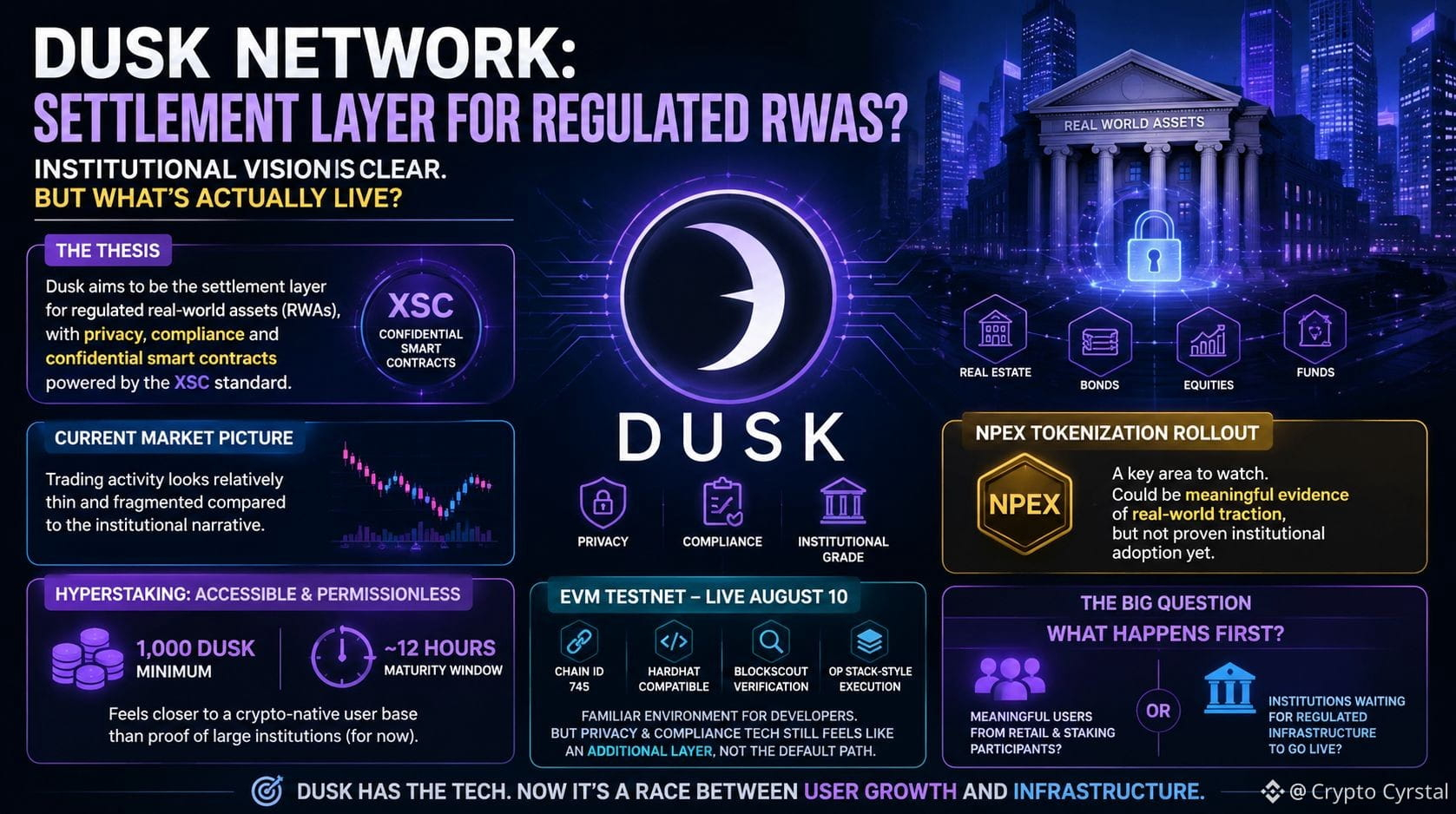
私はDuskを注視していて、機関投資家向けのピッチよりも、実際に稼働しているものを見て過ごす時間のほうが多くなりました。DUSKは規制されたRWAのための決済レイヤーになりたいと考えており、XSC標準を基盤にプライバシー、コンプライアンス、機密性のあるスマートコントラクトを組み込みます。論旨は筋が通っていますが、現状の市場の見え方はまだかなり小さく感じます。取引のアクティビティは、機関向けの語りと比べると相対的に薄く、分断されているように見えるのです。
さらに、Hyperstakingにも注目しました。最低1,000 DUSKで、約12時間の成熟期間という条件は、参加のハードルをかなり下げていて、許可不要(パーミッションレス)です。現時点では、大規模な機関が到来しているという証拠よりも、暗号ネイティブのユーザー層に近い印象です。
また、8月10日にローンチされたEVMテストネットにも注目しています。チェーンID 745、Hardhatとの互換性、Blockscoutの検証、OP Stack風の実行方式により、開発者にとって馴染みのある環境が用意されており、実験がしやすくなる可能性があります。とはいえ、ここには興味深い緊張関係があります。EVM側は馴染みがある一方で、Duskのより深いプライバシー/コンプライアンス技術は、デフォルトの開発導線というよりは“追加レイヤー”のようにまだ見えているのです。
NPEXのトークン化のロールアウトも、注意深く追っています。現実世界での実績が意味のある形で示される可能性はありますが、現時点では、それを機関による実証済みの採用だとはまだ見なしたくありません。
では最初に何が起きるのでしょう。Duskの“意味のあるユーザー”は、既存のリテールやステーキング参加者から現れるのか、それとも、規制対応のインフラが実際に稼働するのを待っている機関から生まれるのか。
@Dusk #dusk $DUSK
さらに、Hyperstakingにも注目しました。最低1,000 DUSKで、約12時間の成熟期間という条件は、参加のハードルをかなり下げていて、許可不要(パーミッションレス)です。現時点では、大規模な機関が到来しているという証拠よりも、暗号ネイティブのユーザー層に近い印象です。
また、8月10日にローンチされたEVMテストネットにも注目しています。チェーンID 745、Hardhatとの互換性、Blockscoutの検証、OP Stack風の実行方式により、開発者にとって馴染みのある環境が用意されており、実験がしやすくなる可能性があります。とはいえ、ここには興味深い緊張関係があります。EVM側は馴染みがある一方で、Duskのより深いプライバシー/コンプライアンス技術は、デフォルトの開発導線というよりは“追加レイヤー”のようにまだ見えているのです。
NPEXのトークン化のロールアウトも、注意深く追っています。現実世界での実績が意味のある形で示される可能性はありますが、現時点では、それを機関による実証済みの採用だとはまだ見なしたくありません。
では最初に何が起きるのでしょう。Duskの“意味のあるユーザー”は、既存のリテールやステーキング参加者から現れるのか、それとも、規制対応のインフラが実際に稼働するのを待っている機関から生まれるのか。
@Dusk #dusk $DUSK