

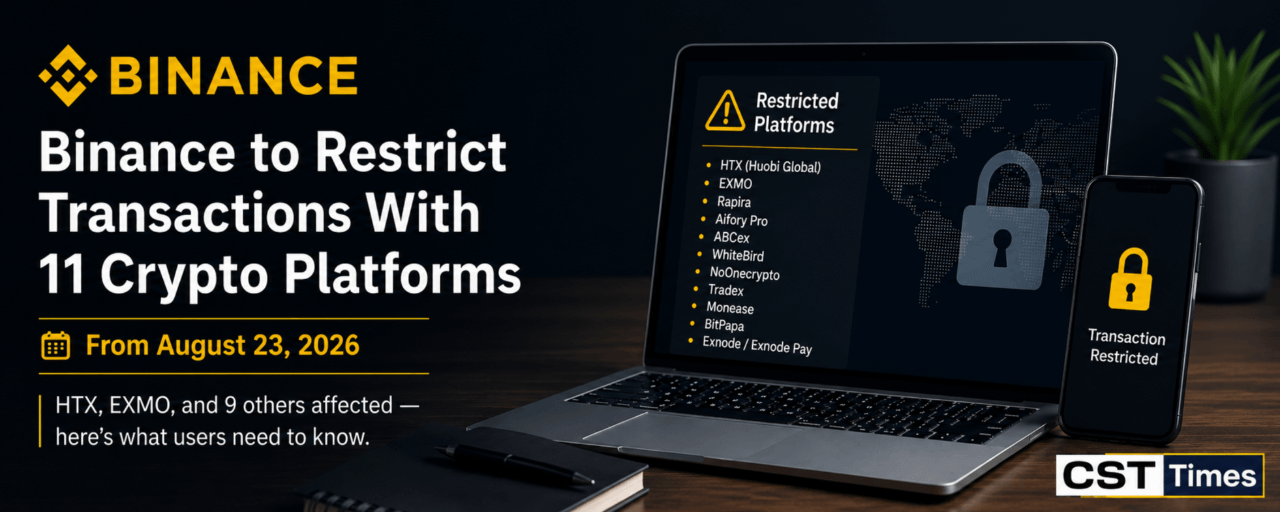

Binanceは2026年8月23日から、11の暗号資産プラットフォームとの取引を制限する
Binanceは利用者に対し、2026年8月23日から、HTXやEXMOのような主要取引所を含む11の暗号資産プラットフォームに関連した取引の処理を停止すると伝えました。今回の動きは、同取引所が今月初めに始めたコンプライアンス措置の3回目、かつ最大の段階であり、制限対象プラットフォームの総数は16に増えます。
要点
Binanceは2026年8月14日、「重要:特定の暗号資産プラットフォームとの取引について」という題名の通知を公開しました。
2026年8月23日以降、BinanceはHTX(旧Huobi)とEXMO Ltdを先頭に、11のプラットフォームを含む取引の処理を行わなくなります。
それ以外に、今月初めの時点ですでに制限されていたプラットフォームが5つあります。ShelbitとAban Tether Exchangeは8月7日から、A7 Nigeria、A7 Africa、PilotFinance Ltdは8月13日からです。
Binanceによると、これらのプラットフォームで、締切日以降に試みられた取引はコンプライアンス審査のため保留となる可能性があり、関連するウォレットには一時的な制限が課される可能性があります。
制限は、ロシアおよびイランに関連する制裁に回避のため資金を回すとされる事業体に対する、EU、英国、米国の制裁強化と結びついています。
Binanceは、これはいかなる暗号資産の上場廃止(デリスティング)でもないと強調しています。BTC、USDT、その他の資産は引き続き取引可能です。これは、特定の相手先との取引を行えないようにする措置です。
目次
Binanceが発表した内容
制限対象プラットフォームの完全リスト
タイムライン:制限が段階的に展開される仕組み
なぜBinanceはこれをするのか?
「取引を制限する」とは実際どういう意味か
仮に制限対象プラットフォームで取引したらどうなるか
Binanceの利用者が今すぐやるべきこと
全体像:Binanceのコンプライアンス推進
次に何が起こるか
最新情報・ガイドを &フォロー:私たちをフォロー & CST Timesサイトへ
Binanceが発表した内容
2026年8月14日に公開された公式発表で、Binanceは「最近の規制上の動き」を理由に、暗号資産サービス提供者のリストに紐づく取引の処理を停止すると利用者に伝えました。同社は、発効日が到来した後は、指定されたいずれのプラットフォームについてもBinanceへ資金を送金したり、資金を受け取ったり、その他の方法でBinance経由の取引を行わないよう利用者に求めています。
Binanceは今回の動きを「ビジネス判断」ではなく「コンプライアンス要件」として位置づけました。通知には「Binanceは、自社が事業を行う各法域における規制要件を遵守することが求められている」とあり、さらに「このステップは、プラットフォームおよびその利用者の資産を安全に保つことを目的としている」と付け加えています。
制限対象プラットフォームの完全リスト
8月23日のバッチは3段階のうち最大です。以下に、Binanceが各プラットフォームに併記した法的主体名を含めた完全なリストを示します:
プラットフォーム 法的主体(Binanceによる)
HTX Huobi Global SA
EXMO EXMO Ltd
Rapira —
Aifory Pro Sooty Ltd.
ABCeX Nueva Cryptología S.A.S. DE C.V.
WhiteBird —
NoOnecrypto NoOnecrypto INC.
Tradex Brightum LLC
Monease Monease Ltd
BitPapa —
Exnode / Exnode Pay Arvix
旧称Huobiとして知られるHTXは、リストの中でも群を抜いて最も有名です。長年続いている取引所のEXMOは、別途、自社の運営を縮小していくと表明しています。
タイムライン:制限が段階的に展開される仕組み
Binanceは16のすべてのプラットフォームを一度に遮断するわけではありません。3つの発効日それぞれで制限を段階的に適用します:
フェーズ 発効日 プラットフォーム
1 2026年8月7日 Shelbit(Shelbit General Trading LLC)、Aban Tether Exchange
2 2026年8月13日 A7 Nigeria、A7 Africa、PilotFinance Ltd
3 2026年8月23日 HTX、EXMO、Rapira、Aifory Pro、ABCeX、WhiteBird、
No Onecrypto、Tradex、Monease、BitPapa、Exnode/Exnode Pay
段階的な展開から見ると、Binanceは単一の出来事ではなく、複数の重複する制裁措置に紐づいたリストを処理していることが示唆されます。
なぜBinanceはこれをするのか?
Binance自身の通知には、特定の法律や規制当局名は挙げられていません。「最近の規制上の動き」を指すだけです。しかし、リストに載っているプラットフォームは、ここ数か月に発表された複数の制裁措置とかなり整合しています:
ロシア関係のプラットフォームに対するEU制裁。今回の発表に関する報道では、8月23日のバッチが、2026年7月に採択されたロシアに対するEUの第21次制裁パッケージに結び付けられており、そのパッケージにより、当局がロシアへの制裁回避に役立ってきたとみなす海外の暗号資産プラットフォームへの取引禁止が拡大されました。
「A7」ネットワークに対する英国の制裁。英国の外務・英連邦・開発省は、2026年5月26日、HTX、EXMO、BitPapa、Rapiraを含む18の事業体・個人を指定しました。これは、A7ネットワーク(制裁回避に結びつくと英国当局が関連づけている一連のプラットフォーム群)を狙い撃ちにした措置です。
イラン関係のプラットフォームに対する米国財務省の措置。最初に制限された2つのShelbitとAban Tether Exchangeは、イランのイスラム革命防衛隊に関する制裁回避の疑いをめぐって、米国財務省の外国資産管理局(OFAC)が対象としているイラン拠点のサービスだと報じられています。
今回の通知以前から、HTXとEXMOはいずれもEUおよび英国の制裁対象下にありました。そのため、8月23日のバッチに含まれることは、取引所の制裁に関する動きを追う観測者の間では当然視されていましたが、Binanceはこれまで「いつ対応するか」については明確にしていませんでした。
「取引を制限する」とは実際どういう意味か
ここが読者が最も誤解しやすい点です。Binanceは、今回の通知とは無関係に、いかなる暗号資産もデリスティングしていません。Bitcoin、USDT、その他の資産は、今回の通知が出た後でもBinance上で引き続き完全に取引可能です。
変わるのはより限定的な点です。Binanceは、相手方がリストに挙がっているプラットフォームのいずれかである場合の送金処理を停止します。実務上は、資産そのものを制限するのではなく、取引の相手側――利用者が送ろうとしている先のウォレットや口座、または受け取っている先のそれ――を審査することになります。その相手方がリストに入っていれば、発効日以降、その送金は通常どおりには通りません。
仮に制限対象プラットフォームで取引したらどうなるか
Binanceの通知によれば、指定プラットフォームで発効日当日またはそれ以降に試みられた取引は次のいずれかになります:
処理されるかどうかは別として、コンプライアンス審査のため保留となる可能性があります。
その審査が進行中の間、利用者のウォレットに対して一時的な制限が課される可能性があります。
Binanceの利用規約に対する可能性のある違反として扱われ、その結果として、アカウント単位での影響が生じることもあります。
Binanceは、コンプライアンス審査にどれくらいの期間がかかるかについて固定のタイムラインを公表していないため、すべてのケースで即時に一律でブロックされるのではなく、遅延が発生する可能性を見込むべきです。
Binanceの利用者が今すぐやるべきこと
8月23日リストにあるHTX、EXMO、またはその他9つのプラットフォームに関わる、直近もしくは反復する送金がないか、取引履歴を確認してください。
該当する発効日までに、掲載されているいずれかのプラットフォームへの/からの資金の送受信をBinance経由で行うのをやめてください。
HTX、EXMO、またはその他のリスト掲載取引所に直接資産を保有している場合は、後でそれをBinanceに持ち込む予定なら、影響を受けたプラットフォームから先に資金を移してください。8月23日より前に行い、8月23日以降ではありません。
Binanceの公式告知ページで全文を確認してください。適用される事業体と日付の決定的な情報源です。
特定の送金や取引の相手方が対象かどうか不明な場合は、Binanceのサポートに直接連絡してください。
全体像:Binanceのコンプライアンス推進
今回の発表は単独ではありません。Binanceは、複数の法域における継続的な規制圧力の中で、この2年間の大半をかけてコンプライアンス機能を構築してきました。また同取引所は、制裁関連のエクスポージャーが、2024年1月から2025年7月の間に大きく減少したことをこれまでに説明しています。さらに、現在はそのコンプライアンスチームの人数が数千人規模にまで増えています。8月23日の制限に関する報道は、単一の制裁リストへの単発の対応というより、そうした広範な取り組みの延長だと位置づけています。
Binanceのような規模の大きい取引所では、制裁対象の事業体に紐づく相手先を審査することは、現在では米国、EU、英国などの規制市場で事業を行う上での、日常的で繰り返し発生する業務になっています。規制当局が自国のリストに新たな名称を追加すれば、今後も制限対象プラットフォームの追加バッチが出てくる可能性は十分あります。
次に何が起こるか
注目すべき日付は2026年8月23日です。これを過ぎると、新たにリスト入りした11の各プラットフォームとの取引は、今月初めに最初に制限された5つのプラットフォームに対してBinanceがすでに適用しているのと同じコンプライアンス審査プロセスの対象になります。その先、Binanceがリストをさらに拡大するかどうかは、EU、英国、米国の規制当局による今後の制裁措置に左右される可能性が高い――もっとも、その決定を直接コントロールしているのはBinanceではありませんが、Binanceはそれらに従って当該市場での事業継続に必要な要件を満たす必要があると述べています。
免責事項
この記事は情報提供のみを目的としており、金融・法律・投資助言を構成するものではありません。暗号資産の取引や規制要件は急速に変わり得ます。資金を動かす前に、必ずBinanceの公式発表で最新の詳細を直接確認してください。


