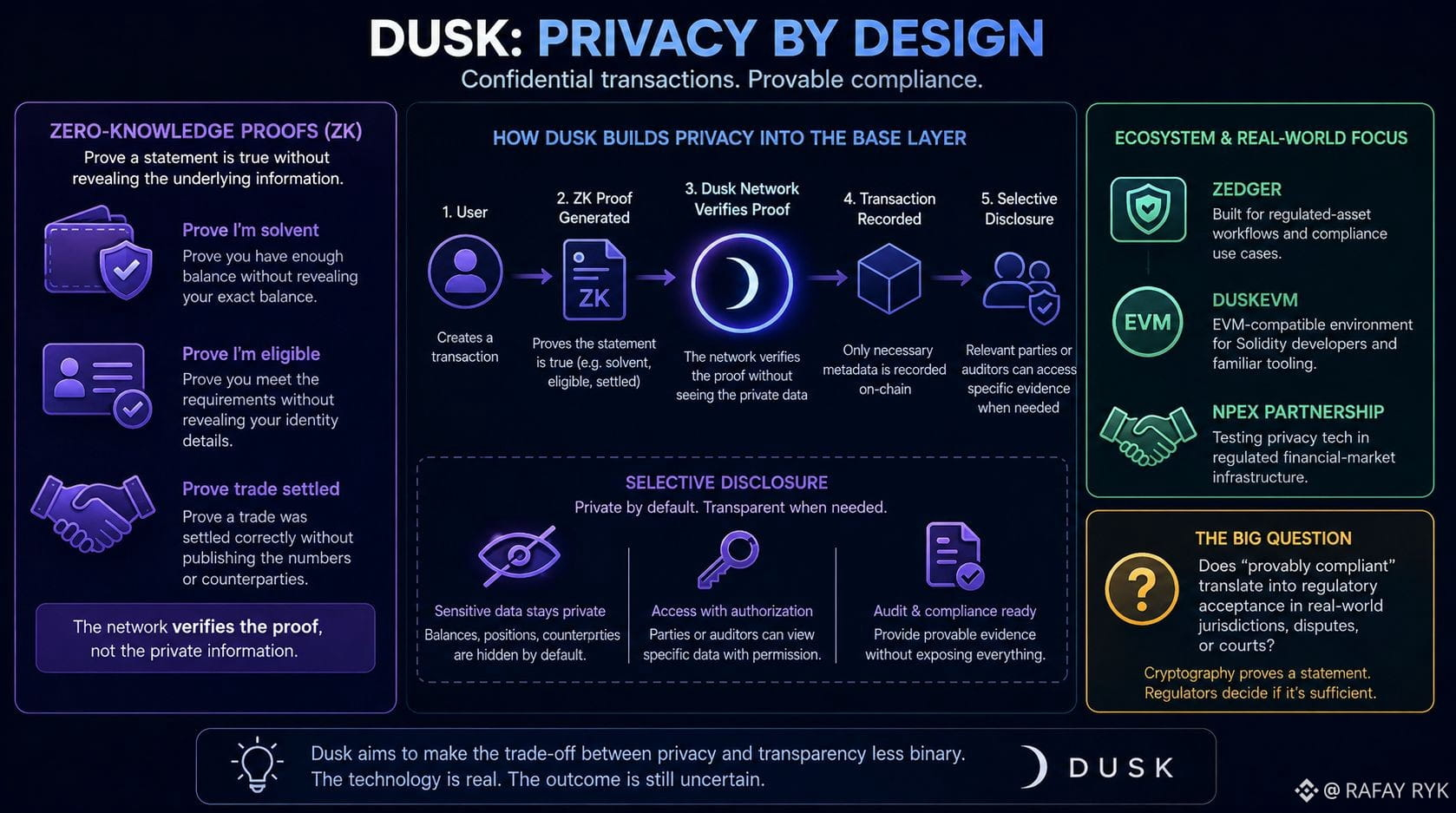
午前中、Duskが機密トランザクションにどのように取り組んでいるかを読み進める中で、ある点が特に目に留まりました。ここでのプライバシーは、透明なチェーンに後付けで組み込むアプリケーション層の機能にとどまるものではありません。ゼロ知識暗号によって基盤層に設計から組み込まれているのです。
この考え方は、例で見ると理解しやすくなります。ZK証明(ゼロ知識証明)なら、正確な残高を公開せずに自分が支払い能力(ソルベンシー)を持っていることを証明できます。また、身元に関するあらゆる詳細を明かさずに、特定の資産を購入する資格があることを証明できます。さらに、基盤となる数値をすべて公開することなく、取引が正しく決済されたことを証明することも可能です。ネットワークが検証するのは、当人の秘密情報そのものではなく、証明内容です。
これは重要です。というのも、暗号資産の世界ではこれまで、かなり不快な二者択一を迫られることが多かったからです。すべてを公開して監査を容易にするか、すべてを非公開にしてプライバシーを優先するか。その結果、透明性は弱くなってしまう。それを、Duskは選択的開示によってより二択でない形にしようとしています。機微な残高、ポジション、取引相手はデフォルトで非公開のままにしつつ、必要に応じて関連当事者や監査人が特定の証拠にアクセスできるようにするのです。
また、これがZedgerやRWA(現実世界資産)という広い文脈で重要になる理由も説明できます。Zedgerは規制された資産のワークフローを中心に作られています。一方でDuskのネイティブ・スタックは、プライバシーを意識した金融コントラクトをターゲットにしています。さらにDusk EVMは、Solidity開発者にとって、EVM対応ツールによるより馴染みのある形でエコシステムへ入っていける道を提供します。
とはいえ、私がまだ懐疑的なのは最も難しい部分です。たとえば「立証可能な準拠(provably compliant)」というものが、実在する法域や規制当局との争い、あるいは裁判が絡む状況で、実際に規制当局の受け入れにつながるのか?暗号は命題の真偽を証明できても、規制当局が十分な証拠だと考えるものを自動的に決着させるわけではありません。
NPEXがここで興味深いのは、パートナーシップが、理論上のユースケースとして語られているだけでなく、規制された金融市場インフラの周辺で技術が試されていることを示しているからです。とはいえ、それは大規模な成功の証明ではなく、実験の証拠に過ぎません。
私にとっては、まさにそこがDuskの面白さの一方で、結果は依然として本当に不確実です。
@Dusk #dusk $DUSK
この考え方は、例で見ると理解しやすくなります。ZK証明(ゼロ知識証明)なら、正確な残高を公開せずに自分が支払い能力(ソルベンシー)を持っていることを証明できます。また、身元に関するあらゆる詳細を明かさずに、特定の資産を購入する資格があることを証明できます。さらに、基盤となる数値をすべて公開することなく、取引が正しく決済されたことを証明することも可能です。ネットワークが検証するのは、当人の秘密情報そのものではなく、証明内容です。
これは重要です。というのも、暗号資産の世界ではこれまで、かなり不快な二者択一を迫られることが多かったからです。すべてを公開して監査を容易にするか、すべてを非公開にしてプライバシーを優先するか。その結果、透明性は弱くなってしまう。それを、Duskは選択的開示によってより二択でない形にしようとしています。機微な残高、ポジション、取引相手はデフォルトで非公開のままにしつつ、必要に応じて関連当事者や監査人が特定の証拠にアクセスできるようにするのです。
また、これがZedgerやRWA(現実世界資産)という広い文脈で重要になる理由も説明できます。Zedgerは規制された資産のワークフローを中心に作られています。一方でDuskのネイティブ・スタックは、プライバシーを意識した金融コントラクトをターゲットにしています。さらにDusk EVMは、Solidity開発者にとって、EVM対応ツールによるより馴染みのある形でエコシステムへ入っていける道を提供します。
とはいえ、私がまだ懐疑的なのは最も難しい部分です。たとえば「立証可能な準拠(provably compliant)」というものが、実在する法域や規制当局との争い、あるいは裁判が絡む状況で、実際に規制当局の受け入れにつながるのか?暗号は命題の真偽を証明できても、規制当局が十分な証拠だと考えるものを自動的に決着させるわけではありません。
NPEXがここで興味深いのは、パートナーシップが、理論上のユースケースとして語られているだけでなく、規制された金融市場インフラの周辺で技術が試されていることを示しているからです。とはいえ、それは大規模な成功の証明ではなく、実験の証拠に過ぎません。
私にとっては、まさにそこがDuskの面白さの一方で、結果は依然として本当に不確実です。
@Dusk #dusk $DUSK