I used to assume tokenized assets and regulated brokerage were two separate categories that just happened to overlap sometimes. changed my mind once I looked at how Dusk Trade is actually structured.
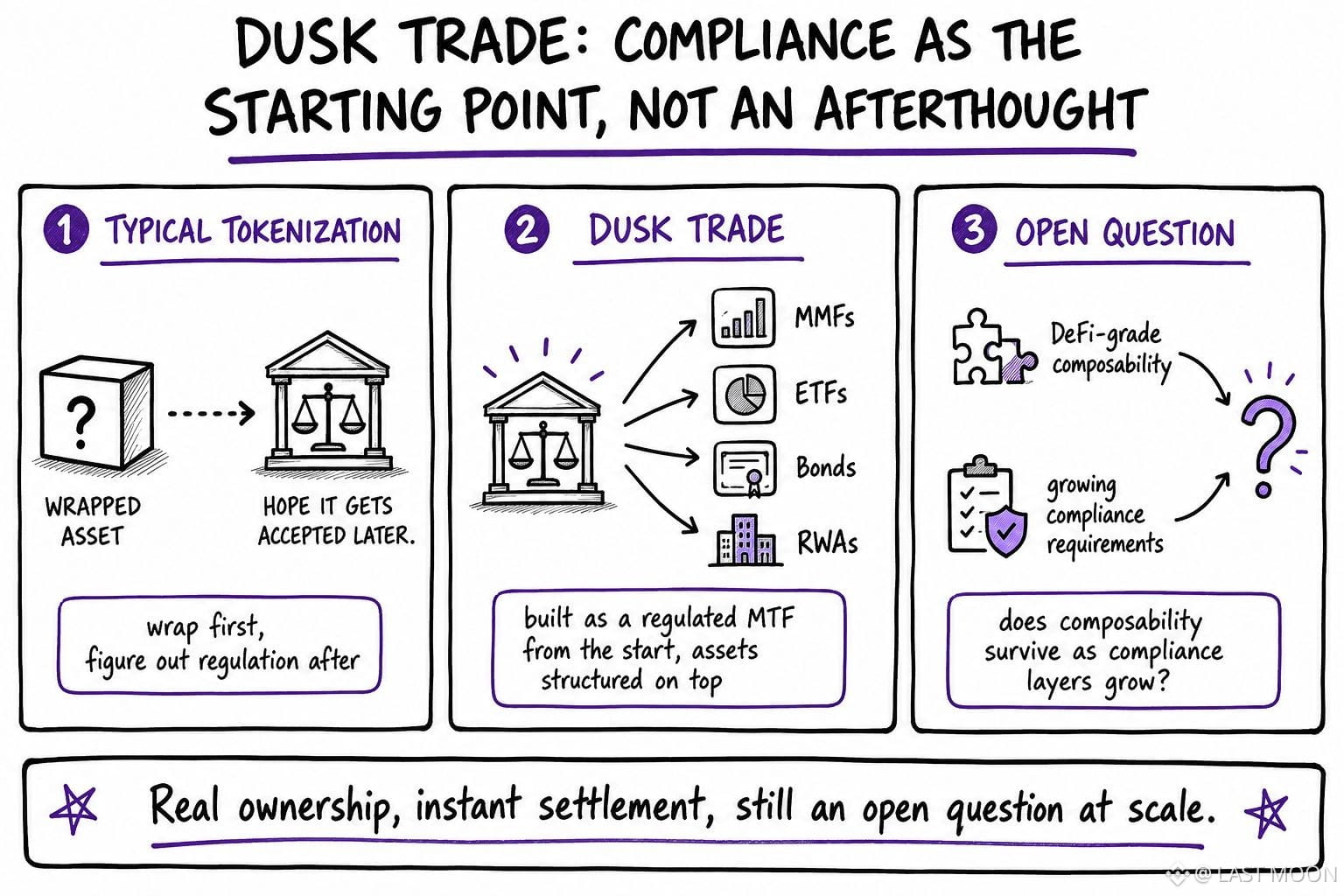
most tokenization platforms wrap an asset and hope the wrapper gets treated seriously by regulators eventually. Dusk Trade goes the other direction, it's built from the start to operate as a regulated MTF and investment platform under EU rules, with MMFs, ETFs, bonds, and RWAs sitting on top of DuskEVM as the actual application layer. the compliance isn't an afterthought bolted onto a DeFi product, it's the starting constraint the whole thing was designed around.
that's a harder path than launching a permissionless app first and figuring out regulation later. but it also means the assets aren't synthetic exposure to something else, they're structured as real ownership with instant settlement, while still keeping DeFi-grade composability instead of getting locked inside a closed institutional system the way most regulated products end up.
what I keep wondering is whether that composability actually survives contact with real regulatory constraints once volume grows, or whether "DeFi-grade" ends up quietly narrowing in practice as more compliance requirements get layered on top over time.
@Dusk $DUSK #dusk
most tokenization platforms wrap an asset and hope the wrapper gets treated seriously by regulators eventually. Dusk Trade goes the other direction, it's built from the start to operate as a regulated MTF and investment platform under EU rules, with MMFs, ETFs, bonds, and RWAs sitting on top of DuskEVM as the actual application layer. the compliance isn't an afterthought bolted onto a DeFi product, it's the starting constraint the whole thing was designed around.
that's a harder path than launching a permissionless app first and figuring out regulation later. but it also means the assets aren't synthetic exposure to something else, they're structured as real ownership with instant settlement, while still keeping DeFi-grade composability instead of getting locked inside a closed institutional system the way most regulated products end up.
what I keep wondering is whether that composability actually survives contact with real regulatory constraints once volume grows, or whether "DeFi-grade" ends up quietly narrowing in practice as more compliance requirements get layered on top over time.
@Dusk $DUSK #dusk