I have spent enough time in crypto to see that permissionless is often treated like it covers the whole system. In reality, it may only describe one part. When regulated assets enter the picture, that difference becomes much more important.
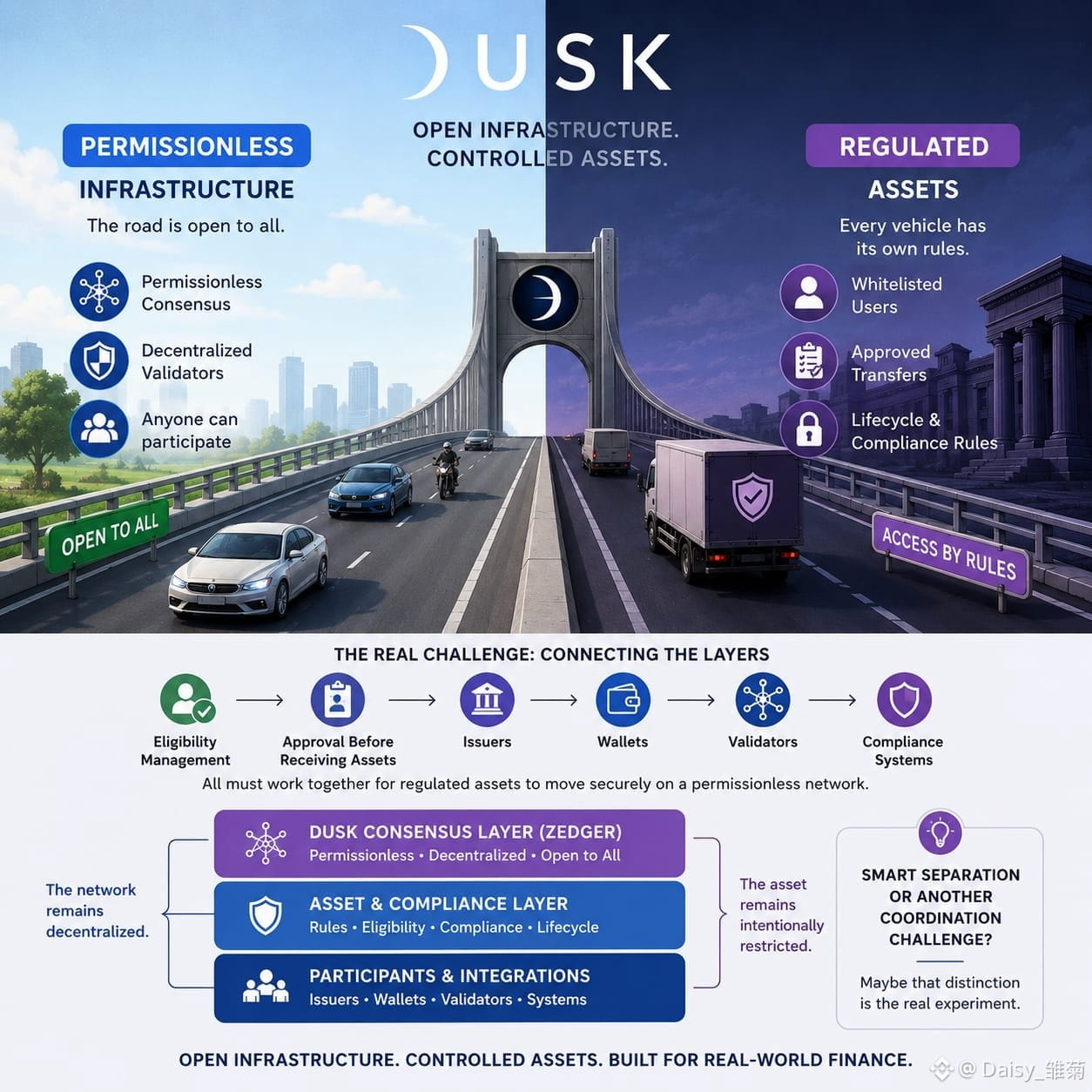
@Dusk stands out because its consensus can stay permissionless while the assets built on top can still follow strict rules. Validators can help secure the network, while a regulated security can require approved users, allowed transfers, or clear lifecycle rules.
At first, that sounds like a conflict. But maybe it isn’t.
Think of it like a public road: anyone can use the road, but different vehicles can still have different access rules.
The real challenge begins when these layers connect. Eligibility must be managed. Users may need approval before receiving assets. Issuers, wallets, validators, and compliance systems all need to work together.
The network can stay decentralized while the asset itself remains intentionally restricted.
Dusk’s Zedger model was built around whitelisted users and regulated security lifecycle requirements, making this balance very clear.
So the big question is:
Is this a smart separation between open infrastructure and controlled assets or simply another coordination challenge?
Maybe that distinction is the real experiment.
@Dusk #dusk $DUSK
@Dusk stands out because its consensus can stay permissionless while the assets built on top can still follow strict rules. Validators can help secure the network, while a regulated security can require approved users, allowed transfers, or clear lifecycle rules.
At first, that sounds like a conflict. But maybe it isn’t.
Think of it like a public road: anyone can use the road, but different vehicles can still have different access rules.
The real challenge begins when these layers connect. Eligibility must be managed. Users may need approval before receiving assets. Issuers, wallets, validators, and compliance systems all need to work together.
The network can stay decentralized while the asset itself remains intentionally restricted.
Dusk’s Zedger model was built around whitelisted users and regulated security lifecycle requirements, making this balance very clear.
So the big question is:
Is this a smart separation between open infrastructure and controlled assets or simply another coordination challenge?
Maybe that distinction is the real experiment.
@Dusk #dusk $DUSK