#dusk $DUSK
私はDusk自身の論文の中で監査人の制限を探しに行った
規制された暗号におけるプライバシー主張は、たいてい復号鍵を誰が保持しているかに帰着する。ローンチ投稿の前に仕様を読み始めた。というのも、その2つはめったに同じ製品を説明していないからだ。
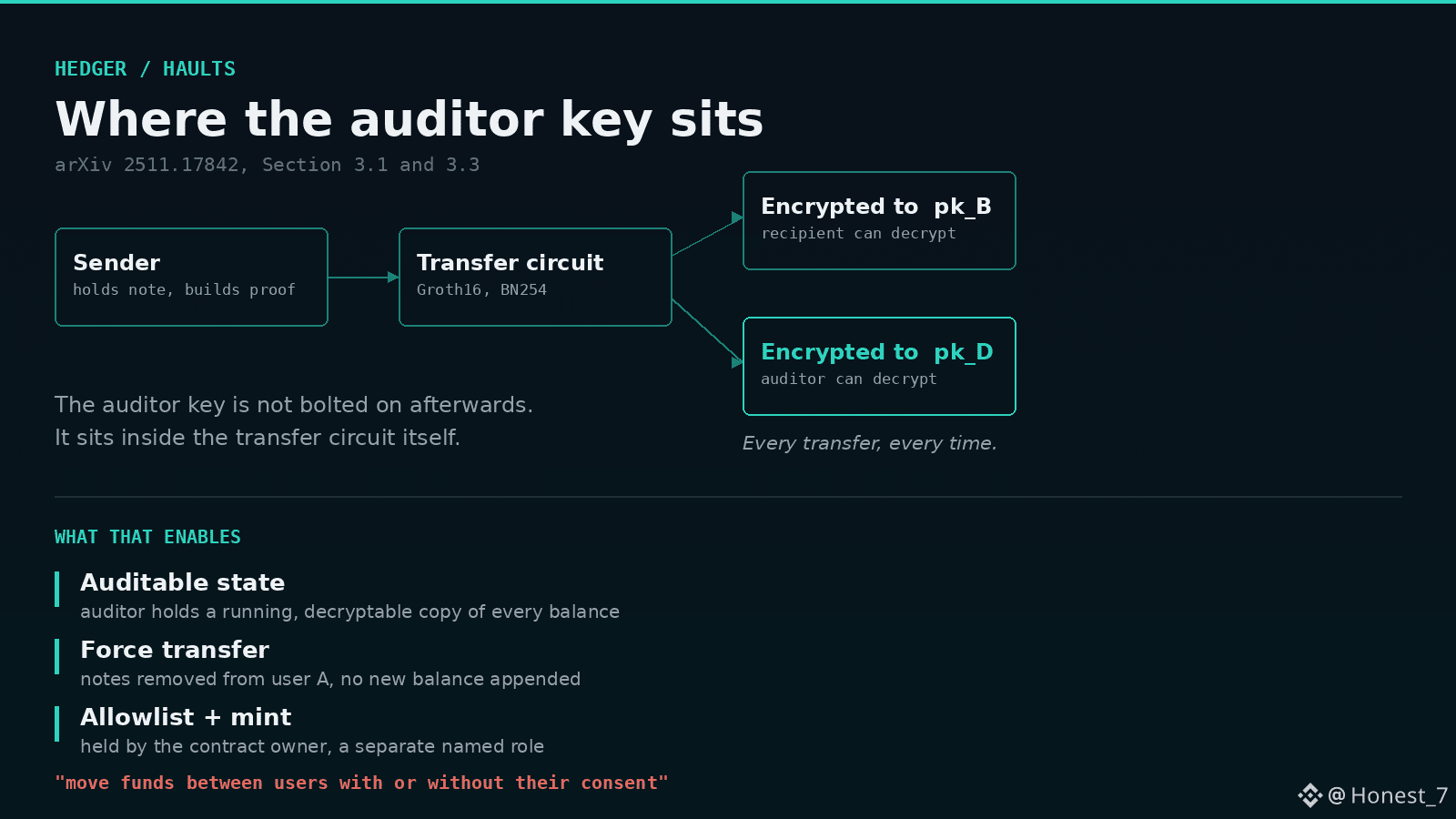
Dusk(@DuskFoundation)では、そのギャップは1つの文に収まっている。Hedgerの背後にある論文(arXiv 2511.17842、Haultsという名称で公開)は、監査人を「資金をユーザー間で『同意の有無にかかわらず』移転する強制送金(force transfers)を実行することを許可された唯一の参加者」と呼んでいる。すべての送金額は監査人の鍵ごとに個別に暗号化されるため、差し押さえ(seizure)の能力も、システムをそもそも監査可能にするのと同じ仕組みを通って動く。
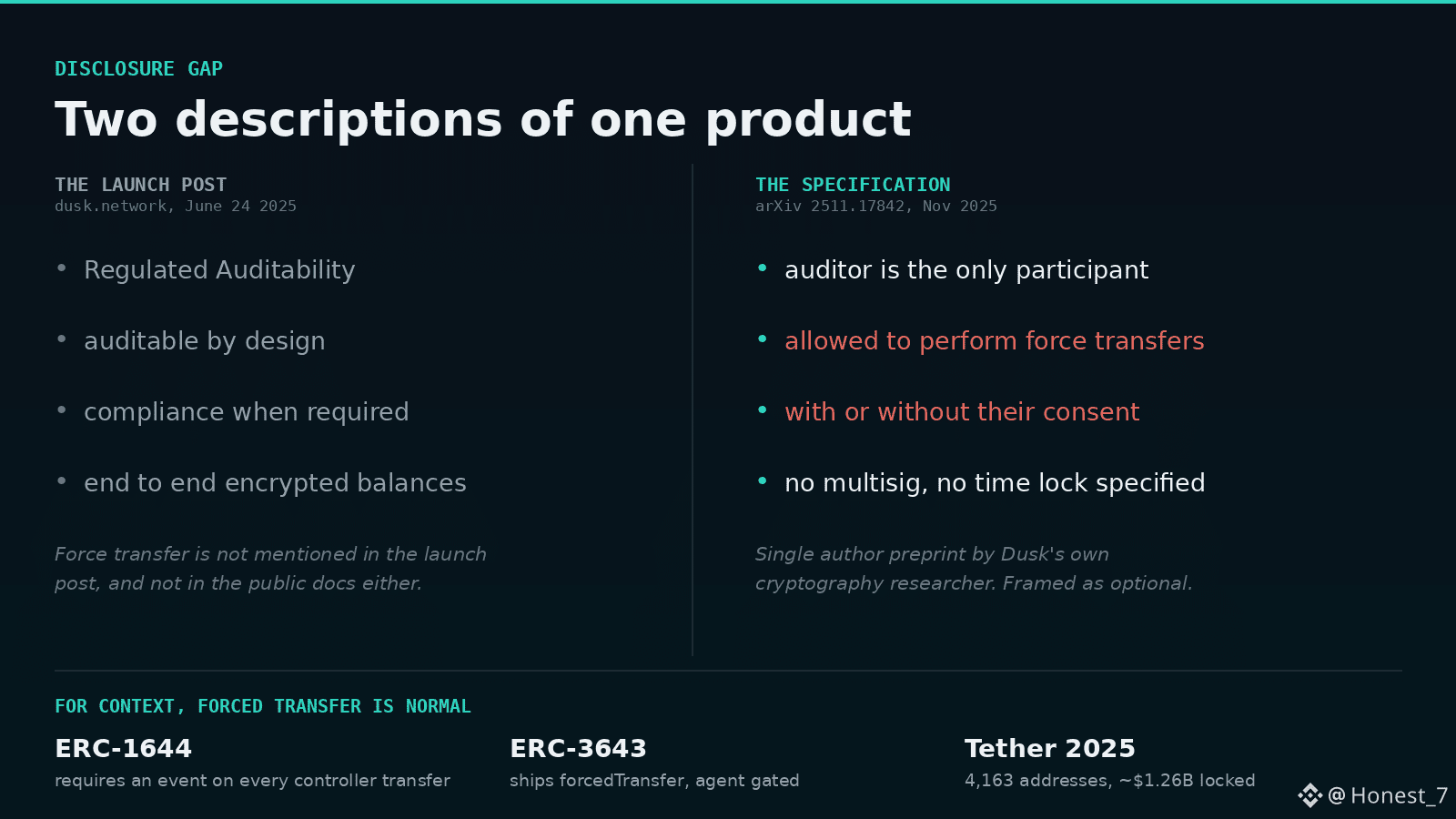
@Dusk の2025年6月のローンチ投稿は、Regulated Auditability(規制下の監査可能性)を売りにしており、Hedgerは設計上監査可能だと述べている。強制送金については触れられていない。公開ドキュメントでも同様だ。
ここは公平に見たい。強制送金は、規制されたトークン化では普通のことだ。ERC-3643にはforcedTransferが搭載されている。Tetherは4,163のアドレスをブラックリストに載せ、2025年には約12.6億ドル相当をロックした。裁判所の命令や鍵の喪失は現実の問題であり、Duskはライセンス供与された場に向けて構築している。
ただ、私の懸念はより絞り込まれている。ERC-1644は少なくとも、イベントを発するにはコントローラによる送金が必要だ。ところがHaultsの論文では、マルチシグも、タイムロックも、監査人に対する開示義務も一切指定されていない。
では、そのセットアップで自己管理(self-custody)は実際に何を守っているのだろう?
私はDusk自身の論文の中で監査人の制限を探しに行った
規制された暗号におけるプライバシー主張は、たいてい復号鍵を誰が保持しているかに帰着する。ローンチ投稿の前に仕様を読み始めた。というのも、その2つはめったに同じ製品を説明していないからだ。
Dusk(@DuskFoundation)では、そのギャップは1つの文に収まっている。Hedgerの背後にある論文(arXiv 2511.17842、Haultsという名称で公開)は、監査人を「資金をユーザー間で『同意の有無にかかわらず』移転する強制送金(force transfers)を実行することを許可された唯一の参加者」と呼んでいる。すべての送金額は監査人の鍵ごとに個別に暗号化されるため、差し押さえ(seizure)の能力も、システムをそもそも監査可能にするのと同じ仕組みを通って動く。
@Dusk の2025年6月のローンチ投稿は、Regulated Auditability(規制下の監査可能性)を売りにしており、Hedgerは設計上監査可能だと述べている。強制送金については触れられていない。公開ドキュメントでも同様だ。
ここは公平に見たい。強制送金は、規制されたトークン化では普通のことだ。ERC-3643にはforcedTransferが搭載されている。Tetherは4,163のアドレスをブラックリストに載せ、2025年には約12.6億ドル相当をロックした。裁判所の命令や鍵の喪失は現実の問題であり、Duskはライセンス供与された場に向けて構築している。
ただ、私の懸念はより絞り込まれている。ERC-1644は少なくとも、イベントを発するにはコントローラによる送金が必要だ。ところがHaultsの論文では、マルチシグも、タイムロックも、監査人に対する開示義務も一切指定されていない。
では、そのセットアップで自己管理(self-custody)は実際に何を守っているのだろう?