私は、ステーキング報酬は主に資本をロックする対価だと思っていました。@Dusk を見ると、報酬設計が特定のコンセンサス作業に対して本当に支払っているのだと気づかされます。
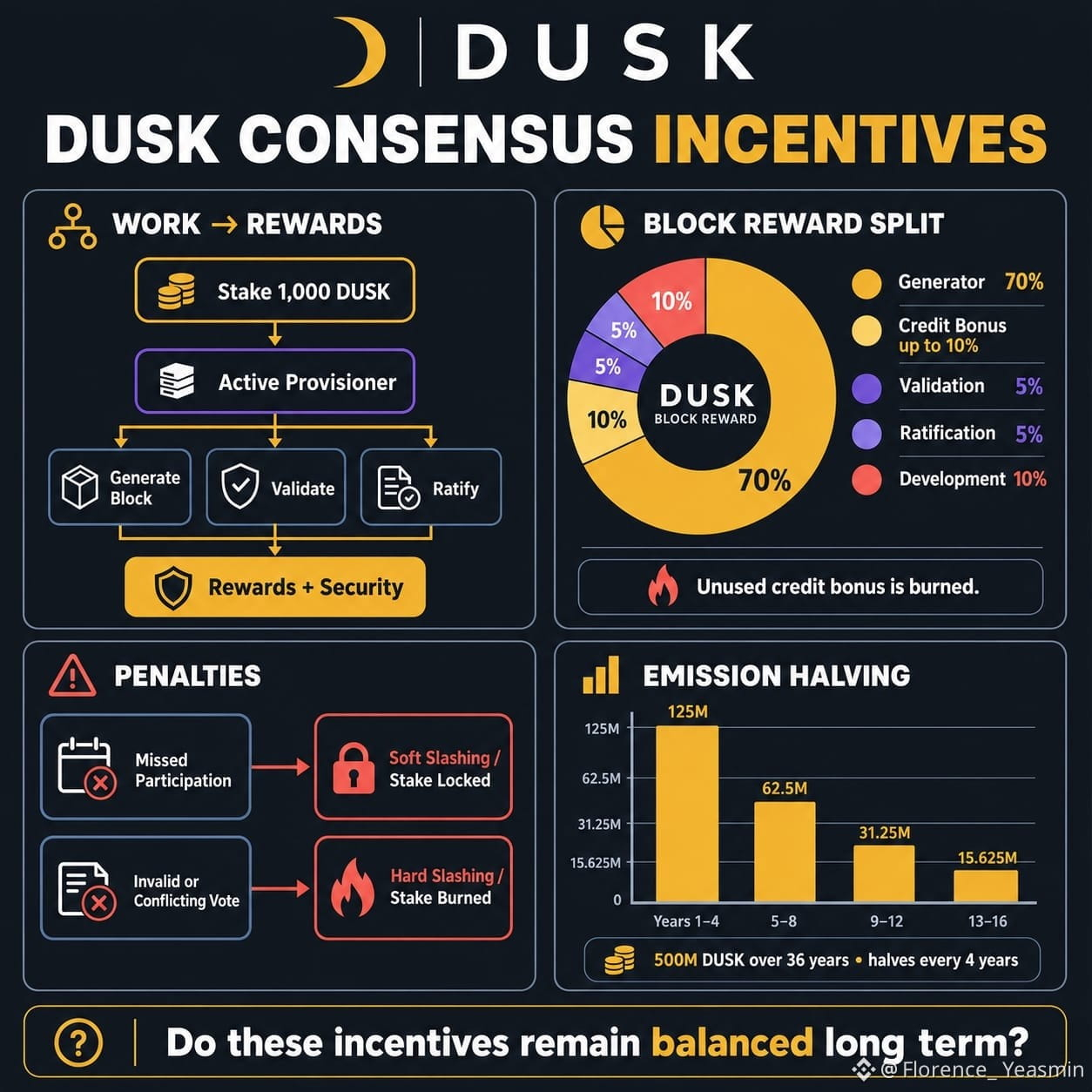
Provisioners(プロビジョナー)は、少なくとも1,000 $DUSK をステークしてこのシステムに参加します。アクティブになると、ブロックを生成するよう選ばれるか、DuskのSuccinct Attestationコンセンサスの下で検証・承認委員会に参加できます。
各ブロック報酬は、新たに発行されるDUSKと、そのブロックで回収されたすべての取引手数料を組み合わせます。ジェネレーターは70%を受け取り、さらにブロック証明書に含まれるクレジットに応じて最大で追加の10%を受け取ります。この可変部分が重要です。つまり、ジェネレーターが有用なコンセンサス証拠を無視するのではなく、既知の委員会の投票を含めることを促します。その追加10%のうち配分されない分は焼却(burn)されます。
残りの配分は、他の責務を明確に分けます。5%は検証委員会、5%は承認委員会、そして10%は開発基金に回ります。したがって報酬は、すべての参加者を同じ仕事をしたかのように扱うのではなく、貢献に応じて決まります。
ペナルティが、この設計を完成させます。失敗した参加はソフトスラッシングを引き起こし、プロビジョナーを停止させ、アクティブなステークをロックされたステークに移します。無効な投票や、矛盾する提案または投票への署名など、証明可能な不正行為はハードスラッシングを引き起こし、違反者のステークの一部が焼却されます。
Duskは、このインセンティブを、36年間で5億DUSKを発行し、発行量は4年ごとに半減させることで支えます。その結果、報酬、手数料、焼却、そして信頼できるペナルティから組み立てられたセキュリティループが実現します。#dusk $AKE $LAB
この報酬の分配は、長期にわたってジェネレーターと委員会に適切なインセンティブを与えると思いますか?
Provisioners(プロビジョナー)は、少なくとも1,000 $DUSK をステークしてこのシステムに参加します。アクティブになると、ブロックを生成するよう選ばれるか、DuskのSuccinct Attestationコンセンサスの下で検証・承認委員会に参加できます。
各ブロック報酬は、新たに発行されるDUSKと、そのブロックで回収されたすべての取引手数料を組み合わせます。ジェネレーターは70%を受け取り、さらにブロック証明書に含まれるクレジットに応じて最大で追加の10%を受け取ります。この可変部分が重要です。つまり、ジェネレーターが有用なコンセンサス証拠を無視するのではなく、既知の委員会の投票を含めることを促します。その追加10%のうち配分されない分は焼却(burn)されます。
残りの配分は、他の責務を明確に分けます。5%は検証委員会、5%は承認委員会、そして10%は開発基金に回ります。したがって報酬は、すべての参加者を同じ仕事をしたかのように扱うのではなく、貢献に応じて決まります。
ペナルティが、この設計を完成させます。失敗した参加はソフトスラッシングを引き起こし、プロビジョナーを停止させ、アクティブなステークをロックされたステークに移します。無効な投票や、矛盾する提案または投票への署名など、証明可能な不正行為はハードスラッシングを引き起こし、違反者のステークの一部が焼却されます。
Duskは、このインセンティブを、36年間で5億DUSKを発行し、発行量は4年ごとに半減させることで支えます。その結果、報酬、手数料、焼却、そして信頼できるペナルティから組み立てられたセキュリティループが実現します。#dusk $AKE $LAB
この報酬の分配は、長期にわたってジェネレーターと委員会に適切なインセンティブを与えると思いますか?