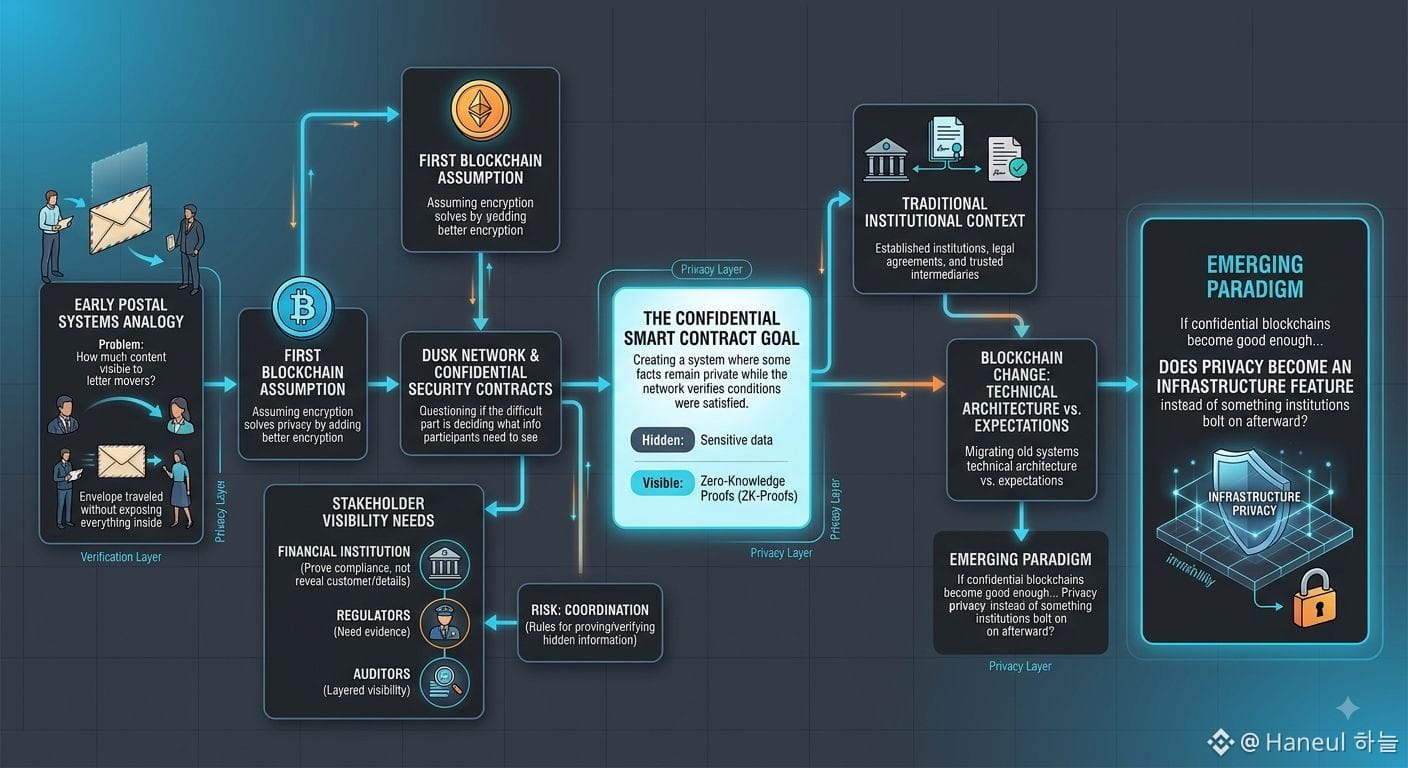
伝統的な金融を見れば見るほど、それが「管理された可視性」にどれだけ依存しているかに気づきます。銀行、監査人、規制当局、取引先は、同じ情報をすべて見たくなくても構いません。必要なのは、何かが有効だと信じられるだけの情報です。
最初は、ブロックチェーンの金融は、より良い暗号化によって最終的にこれを解決し、そこで終わるのだと思っていました。しかし、$DUSK ネットワークが考えを変えさせてくれました。
その焦点である機密スマートコントラクトは、すべてを隠すことが目的というわけではありません。重要な条件を検証できるようにしつつ、機微な金融情報を非公開に保つことが狙いです。
読むほど、そのトレードオフがますます興味深くなります。たとえば、トークン化された資産を巡って2つの機関が決済するとします。彼らは取引がルールに従っていることを知る必要がありますが、双方がそれぞれの金融ポジションをすべて公開したいとは必ずしも思っていません。
もしかすると、ここでプライバシーは単なる「便利な機能」以上のものになります。
ただ、確信はありません。情報を非公開にすることは、検証、規制、そして調整に関する疑問も生み出します。隠された情報が正当なものであることを、誰かがやはり証明する必要があります。
私はその緊張関係に何度も立ち返ってしまいます。おそらく本当の課題は、ブロックチェーンをプライベートにすることではなく、金融市場がどの程度のプライバシーを持てるのか、そしてそれでも皆が参加して大丈夫だと感じられるのかを突き止めることにあります。
#dusk
@Dusk
$DUSK
最初は、ブロックチェーンの金融は、より良い暗号化によって最終的にこれを解決し、そこで終わるのだと思っていました。しかし、$DUSK ネットワークが考えを変えさせてくれました。
その焦点である機密スマートコントラクトは、すべてを隠すことが目的というわけではありません。重要な条件を検証できるようにしつつ、機微な金融情報を非公開に保つことが狙いです。
読むほど、そのトレードオフがますます興味深くなります。たとえば、トークン化された資産を巡って2つの機関が決済するとします。彼らは取引がルールに従っていることを知る必要がありますが、双方がそれぞれの金融ポジションをすべて公開したいとは必ずしも思っていません。
もしかすると、ここでプライバシーは単なる「便利な機能」以上のものになります。
ただ、確信はありません。情報を非公開にすることは、検証、規制、そして調整に関する疑問も生み出します。隠された情報が正当なものであることを、誰かがやはり証明する必要があります。
私はその緊張関係に何度も立ち返ってしまいます。おそらく本当の課題は、ブロックチェーンをプライベートにすることではなく、金融市場がどの程度のプライバシーを持てるのか、そしてそれでも皆が参加して大丈夫だと感じられるのかを突き止めることにあります。
#dusk
@Dusk
$DUSK