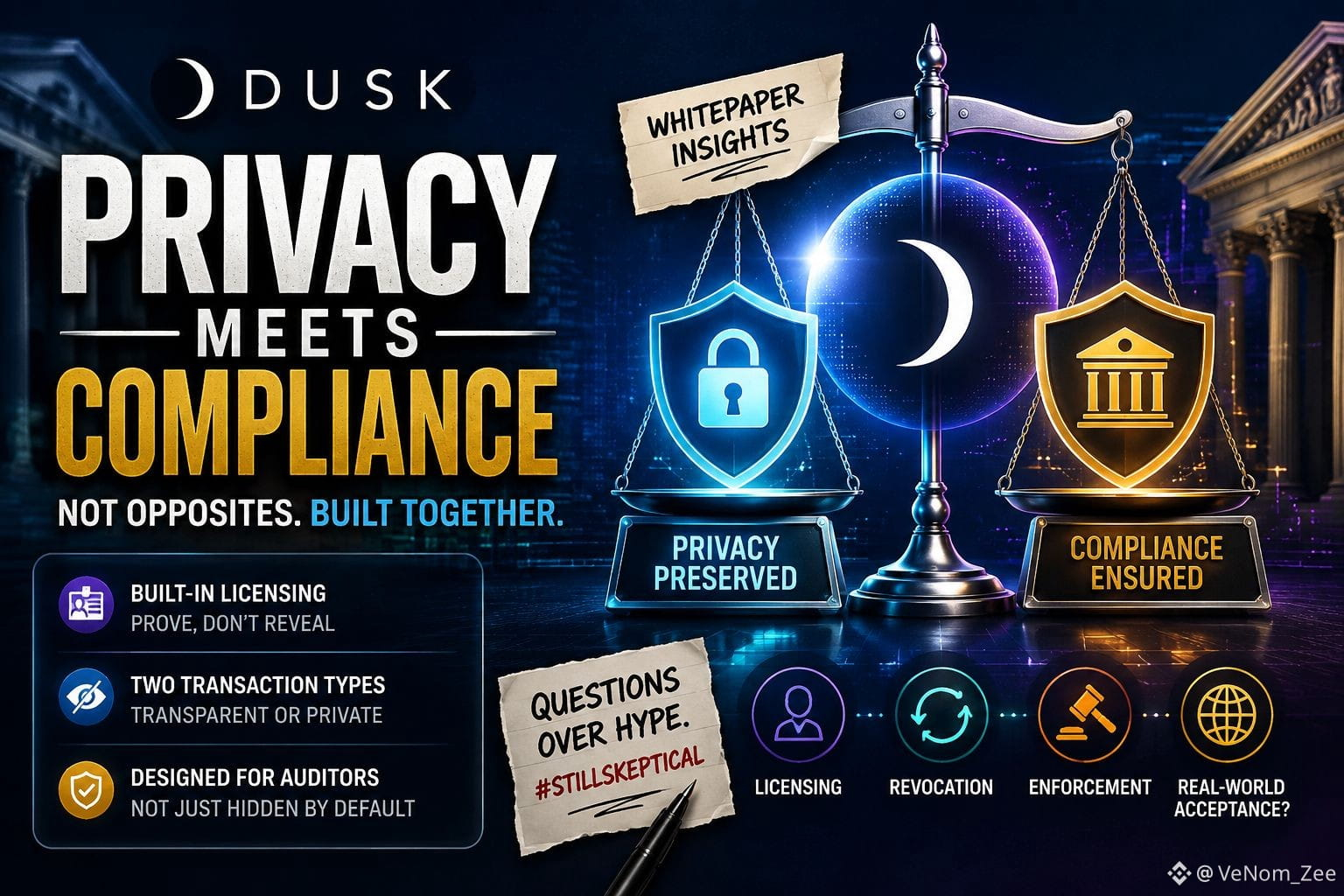
最近いくつかのブロックチェーンのホワイトペーパーを読んでいて、ほとんどは「プライバシー」についてよく語りますが、実際にどう規制当局の目の前で成り立つのかを聞くと急に黙ってしまいます。Duskの論文を読んで、その点が少し私の中で変わりました。ひとつ引っかかったのは、プライバシーとコンプライアンスを対立するものとして扱っていないことです。つまり、誰かが自分の完全な身元を明かさずに「そうする権限がある」ことを証明できる仕組みがライセンスとして組み込まれていて、さらに取引タイプが2種類あります。1つは完全に透明、もう1つはプライバシーを保護するものです。だから、公開されるべき情報が偶然に任されていないんです。
それが、いつもの売り込み文句よりも現実に根ざしているように感じさせました。「信じてください、プライベートだから。」というだけではありません。監査人や機関が、いずれ何かを確認する必要が出てくることを前提に作られている文章に読めました。後付けでくっつけるのではなく、最初から設計に織り込まれている。
とはいえ、私は「コンプライアンスについて書かれたホワイトペーパー=どこかの規制当局が実際に受け入れてくれる」というわけではないことも、引き続き自分に言い聞かせています。国ごとに法律は違い、金融ルールも変わります。そして「コンプライアンスのために作られている」は、実際の機関がテストして初めて主張として成立するものです。システムが数学的に証明できることと、裁判所が実際に認めることの間には、確かなギャップがあります。ライセンス、取消(レボケーション)、執行――これらは、コードが存在するだけではなく、人と機関に依存します。
だから私は、プライバシー対規制という問題が解決すると考えて立ち去るわけではありません。むしろ、もっと疑問を持って帰ってきます。そして正直、それが正しい反応だと思っています。暗号資産の世界は、提案をただ信じる人よりも、好奇心を保ち懐疑的でいられる人に報いる傾向があります。
学び続ける、問い続ける――そして、それこそがあるべき姿だと思います。
@Dusk $DUSK #dusk
それが、いつもの売り込み文句よりも現実に根ざしているように感じさせました。「信じてください、プライベートだから。」というだけではありません。監査人や機関が、いずれ何かを確認する必要が出てくることを前提に作られている文章に読めました。後付けでくっつけるのではなく、最初から設計に織り込まれている。
とはいえ、私は「コンプライアンスについて書かれたホワイトペーパー=どこかの規制当局が実際に受け入れてくれる」というわけではないことも、引き続き自分に言い聞かせています。国ごとに法律は違い、金融ルールも変わります。そして「コンプライアンスのために作られている」は、実際の機関がテストして初めて主張として成立するものです。システムが数学的に証明できることと、裁判所が実際に認めることの間には、確かなギャップがあります。ライセンス、取消(レボケーション)、執行――これらは、コードが存在するだけではなく、人と機関に依存します。
だから私は、プライバシー対規制という問題が解決すると考えて立ち去るわけではありません。むしろ、もっと疑問を持って帰ってきます。そして正直、それが正しい反応だと思っています。暗号資産の世界は、提案をただ信じる人よりも、好奇心を保ち懐疑的でいられる人に報いる傾向があります。
学び続ける、問い続ける――そして、それこそがあるべき姿だと思います。
@Dusk $DUSK #dusk