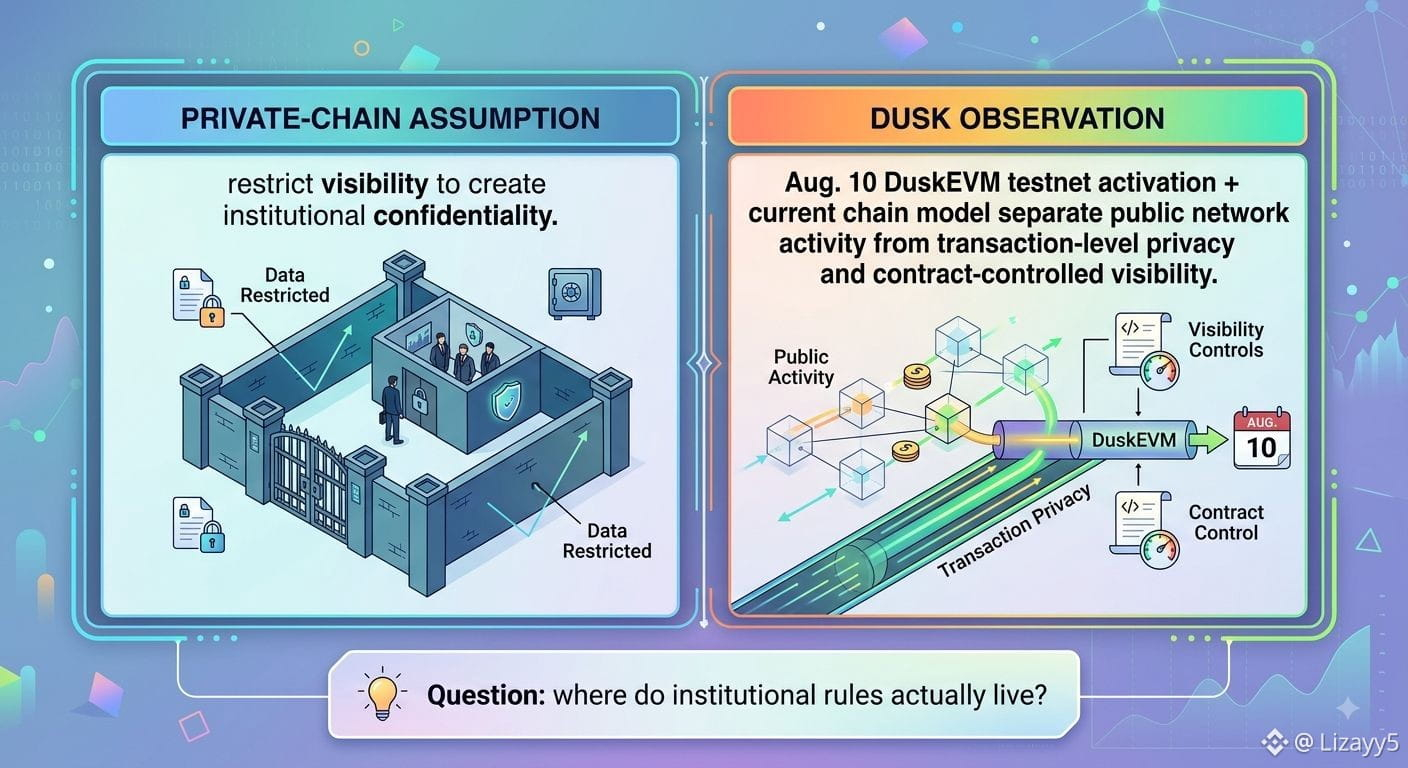
私が立ち止まったのは、@Dusk Foundationが突然、単純な「官民の対立」というより、制度上のルールが実際にどこに根づいているのかという問いに見えてきたことです。
最近のエクスプローラー上の活動も、同じ理由で興味深いです。Duskのチェーンは、通常のネットワークの仕組みをあらわにしますが、そのプライバシーモデルはPhoenixの取引で送信者・受信者・金額を隠すことができます。ドキュメントでも、他の相互作用における可視性はコントラクトとプライバシー設計に依存すると明記されています。この分岐が私の引っかかりになりました。#dusk $DUSK
最初は、プライベートチェーンのほうが制度的な説得材料が得やすいだろうと思っていました。つまり、すべてを閉ざされた場所に閉じ込め、それを「機密性」と呼ぶだけで済む、という具合です。でもDuskは私をためらわせました。もし、取引そのものに関しては制度が機密性を必要としつつ、同時に資産をめぐる執行可能なルールも必要としているなら、ネットワーク全体をプライベートにすることは、間違った問題を解いてしまっている可能性があります。より難しい問いは、それらの統制が実際の有価証券によって本当に運用されるのか、それともただインフラとしてそこに置かれているだけなのか、という点です。
私は今もそこで決めきれていません。制度的な信頼は最終的に、誰が台帳を見られるかを制限することから生まれるのか、それとも、すべてをさらけ出さずに正しい人々が正しいルールのもとで行動できることを証明することから生まれるのか?
最近のエクスプローラー上の活動も、同じ理由で興味深いです。Duskのチェーンは、通常のネットワークの仕組みをあらわにしますが、そのプライバシーモデルはPhoenixの取引で送信者・受信者・金額を隠すことができます。ドキュメントでも、他の相互作用における可視性はコントラクトとプライバシー設計に依存すると明記されています。この分岐が私の引っかかりになりました。#dusk $DUSK
最初は、プライベートチェーンのほうが制度的な説得材料が得やすいだろうと思っていました。つまり、すべてを閉ざされた場所に閉じ込め、それを「機密性」と呼ぶだけで済む、という具合です。でもDuskは私をためらわせました。もし、取引そのものに関しては制度が機密性を必要としつつ、同時に資産をめぐる執行可能なルールも必要としているなら、ネットワーク全体をプライベートにすることは、間違った問題を解いてしまっている可能性があります。より難しい問いは、それらの統制が実際の有価証券によって本当に運用されるのか、それともただインフラとしてそこに置かれているだけなのか、という点です。
私は今もそこで決めきれていません。制度的な信頼は最終的に、誰が台帳を見られるかを制限することから生まれるのか、それとも、すべてをさらけ出さずに正しい人々が正しいルールのもとで行動できることを証明することから生まれるのか?